Specimens in Suspension
Specimens in Suspension
Specimens in Suspension
A tactile interface for ecological looking: three rotating resin lenses turn pressed kelp, sea glass, and urchin spines into a kaleidoscope, holding a fragile ecosystem in resin.
A tactile interface for ecological looking: three rotating resin lenses turn pressed kelp, sea glass, and urchin spines into a kaleidoscope, holding a fragile ecosystem in resin.
A tactile interface for ecological looking: three rotating resin lenses turn pressed kelp, sea glass, and urchin spines into a kaleidoscope, holding a fragile ecosystem in resin.
Created in collaboration with Keeley Rideout
Created in collaboration with Keeley Rideout
Created in collaboration with Keeley Rideout
Timeline
Rodeo Beach, Marin Headlands
North Coast Kelpfest, Mendocino
Role
Timeline
Interaction design
Material prototyping
Lens fabrication
Visual system refinement
Experience documentation
Exhibition design
Feb 2025 - May 2025
My Role
My Role
Featured
Featured
Rodeo Beach, Marin Headlands
North Coast Kelpfest, Mendocino
Timeline
Timeline
Interaction design
Material prototyping
Lens fabrication
Visual system refinement
Experience documentation
Exhibition design
Feb 2025 - May 2025
Feb 2025 - May 2025
Specimens in Suspension is a tactile optical interface built from three 14-inch resin lenses, preserved coastal specimens, and a mirror kaleidoscope housing.
Created with Keeley Rideout, the project invites viewers to look through the structure, spin the resin lens, and observe how light, reflection, and repetition transform seaweed, bull kelp, urchin spines, and carnelians into shifting visual fields.
Specimens in Suspension is a tactile optical interface built from three 14-inch resin lenses, preserved coastal specimens, and a mirror kaleidoscope housing.
Created with Keeley Rideout, the project invites viewers to look through the structure, spin the resin lens, and observe how light, reflection, and repetition transform seaweed, bull kelp, urchin spines, and carnelians into shifting
visual fields.
Our Goal
Our Goal
Our Goal
Our goal was to return collected coastal materials to the shoreline and transform them into a viewing instrument that made kelp-forest ecology visible through light, rotation, and reflection.
The goal was to make overlooked coastal materials worth stopping for. Kelp, urchin spines, carnelians, sea glass: these are things people step over or collect without really looking. Specimens in Suspension was built to change that, to make the structure and detail of a fragile ecosystem visible through light, rotation, and a kaleidoscope lens.
The goal was to make overlooked coastal materials worth stopping for. Kelp, urchin spines, carnelians, sea glass: these are things people step over or collect without really looking. Specimens in Suspension was built to change that, to make the structure and detail of a fragile ecosystem visible through light, rotation, and a kaleidoscope lens.
Ecological Context
Ecological Context
Ecological Context
Sea urchin spines entered the project through the larger story of kelp forest decline. Along parts of the North Coast, the loss of key predators like sunflower sea stars has been associated with increases in purple urchin populations, intensifying grazing pressure on kelp.
We used seaweed, bull kelp, urchin spines, and carnelians to connect close looking to a larger ecological system. Even when the materials become formal and abstract inside resin, they still point back to the coastal conditions that shaped them.
Sea urchin spines entered the project through the larger story of kelp forest decline. Along parts of the North Coast, the loss of key predators like sunflower sea stars has been associated with increases in purple urchin populations, intensifying grazing pressure on kelp.
We used seaweed, bull kelp, urchin spines, and carnelians to connect close looking to a larger ecological system. Even when the materials become formal and abstract inside resin, they still point back to the coastal conditions that shaped them.
Purple urchins in dense quantity on rocky seafloor.
Credit: Steve Lonhart/NOAA.

Purple urchins in dense quantity on rocky seafloor.
Credit: Steve Lonhart/NOAA.
Design Challenge
Design Challenge
Design Challenge
How might we preserve fragile coastal specimens so they could spin, transmit light, withstand outdoor viewing, and still reveal the translucency, branching, and detail that made them worth studying?
How might we preserve fragile coastal specimens so they could spin, transmit light, withstand outdoor viewing, and still reveal the translucency, branching, and detail that made them worth studying?
The Lens System
The Lens System
The Lens System
Each resin lens holds a different material composition, creating a distinct visual field when spun, backlit, and viewed through the kaleidoscope.
Each resin lens holds a different material composition, creating a distinct visual field when spun, backlit, and viewed through the kaleidoscope.
Each resin lens holds a different material composition, creating a distinct visual field when spun, backlit, and viewed through the kaleidoscope.
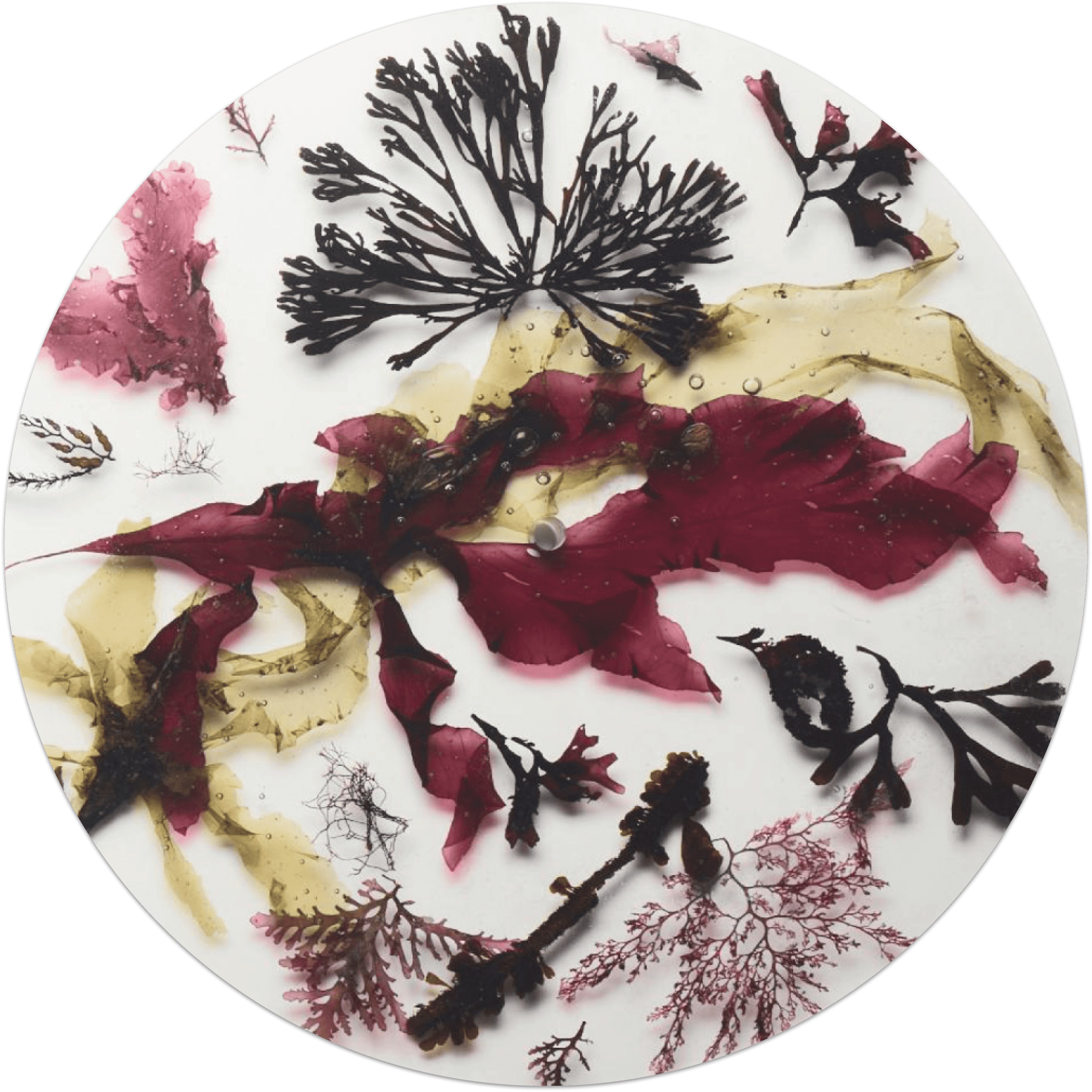
Pressed green seaweed, red sheet algae, dark branching fronds, and lace-like seaweed
This lens foregrounds translucency, branching, and color variation.
Pressed green seaweed, red sheet algae, dark branching fronds, and lace-like seaweed
This lens foregrounds translucency, branching, and color variation.
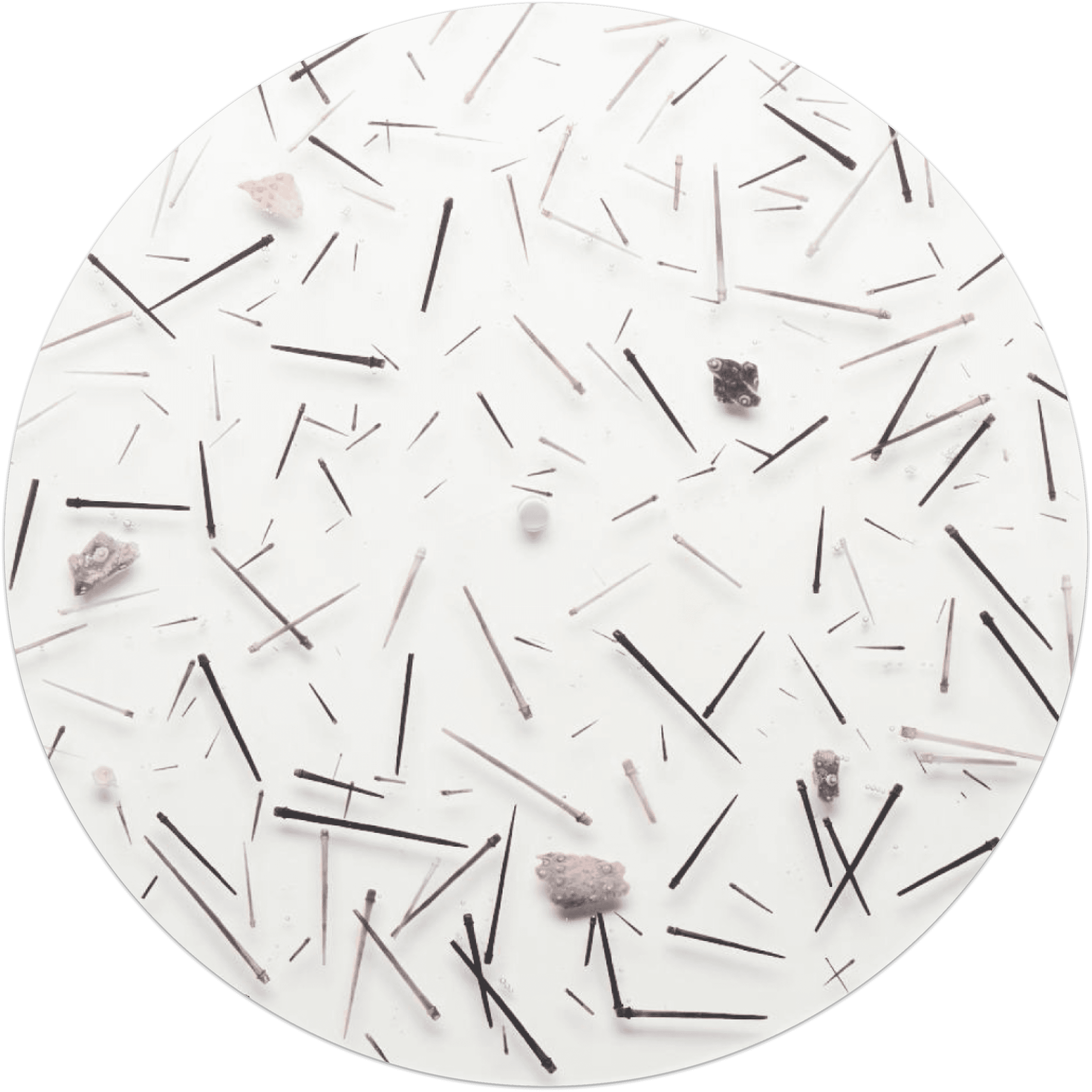
Sea urchin spines with a few small shell fragments
This lens turns small linear fragments into patterns of direction, density, and rhythm.
Sea urchin spines with a few small shell fragments
This lens turns small linear fragments into patterns of direction, density, and rhythm.
Sea urchin spines with a few small shell fragments
This lens turns small linear fragments into patterns of direction, density, and rhythm.
Pressed green seaweed, deep red sheet algae, dark branching fronds, and delicate lace-like seaweed
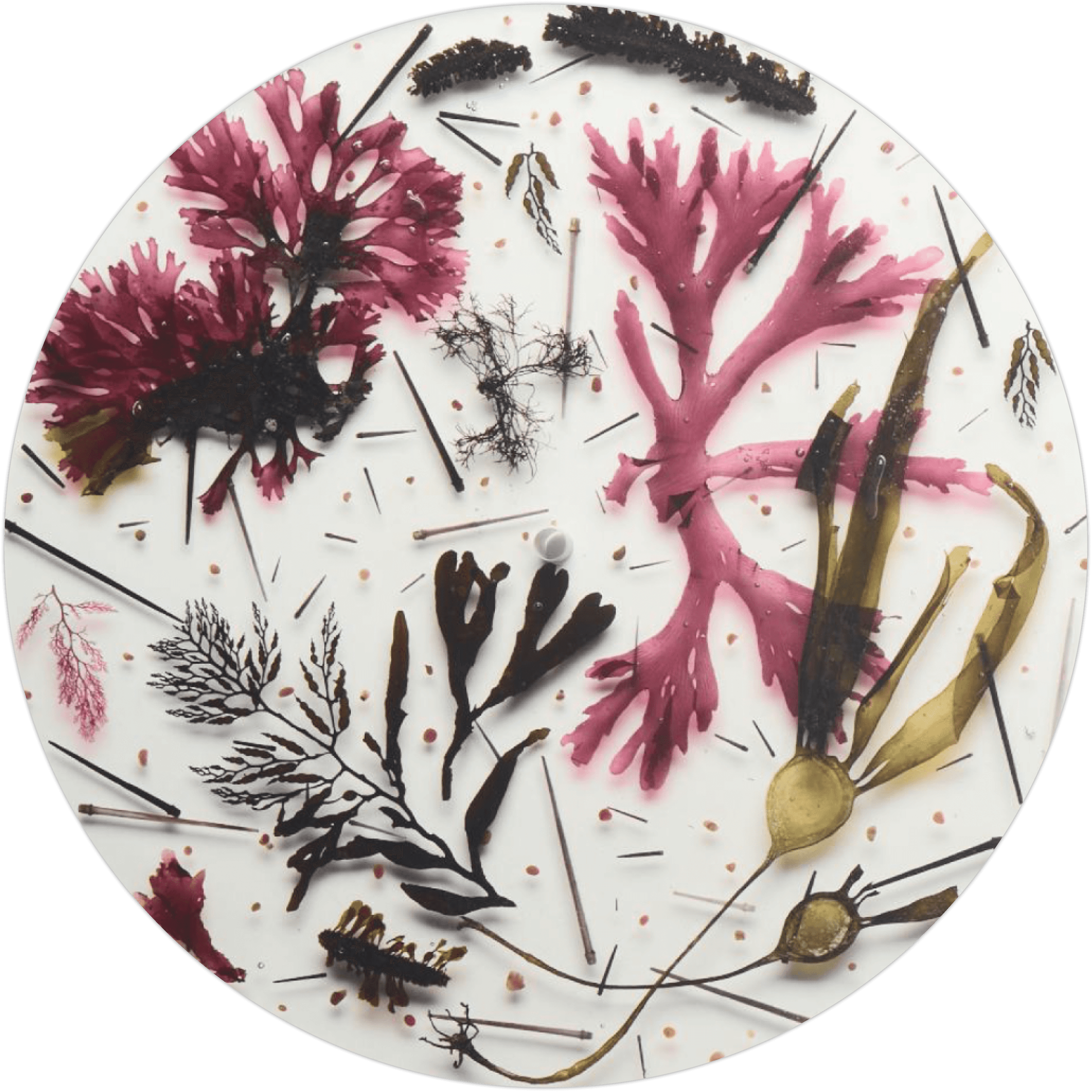
Bull kelp pods, stipe pieces, red algae fronds, dark branching seaweed, sea urchin spines, and carnelian fragments
This lens combines branching forms, mineral color, opacity, and suspended points of detail.
Bull kelp pods, stipe pieces, red algae fronds, dark branching seaweed, sea urchin spines, and carnelian fragments
This lens combines branching forms, mineral color, opacity, and suspended points of detail.
Pressed green seaweed, deep red sheet algae, dark branching fronds, and delicate lace-like seaweed
How the Viewing System Works
How the Viewing
System Works
How the Viewing System Works
Each resin lens holds a different material composition, creating a distinct visual field when spun, backlit, and viewed through
the kaleidoscope.
Each resin lens holds a different material composition, creating a distinct visual field when spun, backlit, and viewed through
the kaleidoscope.
Each resin lens holds a different material composition, creating a distinct visual field when spun, backlit, and viewed through the kaleidoscope.
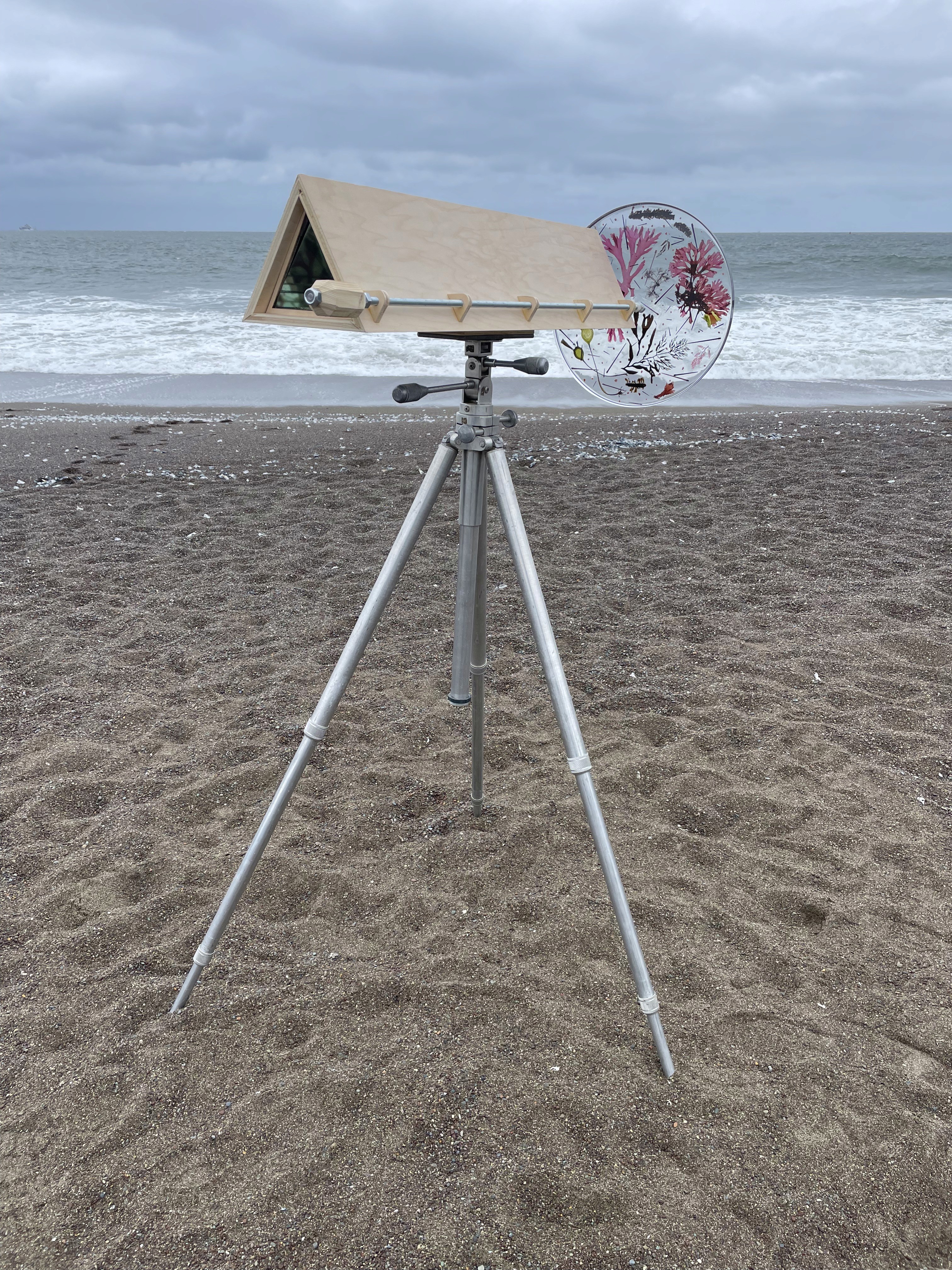
Viewing end
Mirror housing
Dowel system
Tripod support
Tripod support
Spinning resin lens
Spinning resin lens
Spinning resin lens
Tripod support
Viewing end
Mirror housing
Dowel system
Tripod support
Tripod support
Spinning resin lens
Spinning resin lens
Spinning resin lens
Tripod support
Viewing end
Mirror housing
Dowel system
Tripod support
Tripod support
Spinning resin lens
Spinning resin lens
Spinning resin lens
Tripod support
Interaction Model
Interaction Model
Interaction Model
The experience unfolds through a simple sequence of looking, spinning, shifting position, and comparing what changes.
The experience unfolds through a simple sequence of looking, spinning, shifting position, and comparing what changes.
The experience unfolds through a simple sequence of looking, spinning, shifting position, and comparing what changes.
The tripod-mounted structure gives viewers a clear entry point on the shoreline.
The tripod-mounted structure gives viewers a clear entry point on the shoreline.
The tripod-mounted structure gives viewers a clear entry point on the shoreline.
1 Approach
1 Approach
1 Approach
The housing directs attention through one viewing path, focusing the eye on the suspended lens.
The housing directs attention through one viewing path, focusing the eye on the suspended lens.
2 Look
2 Look

2 Look
The resin lens rotates on
the dowel, changing which specimens enter the
mirror system.
The resin lens rotates on
the dowel, changing which specimens enter the
mirror system.
3 Spin
3 Spin
3 Spin

Light and mirrors turn the specimens into repeated fields of color, structure, and texture.
Light and mirrors turn the specimens into repeated fields of color, structure, and texture.
4 Transform
4 Transform
4 Transform

Longer looking reveals differences in branching, density, edges, and translucency.
Longer looking reveals differences in branching, density, edges, and translucency.
5 Compare
5 Compare
5 Compare

Material and Fabrication Decisions
Material and Fabrication Decisions
Material and Fabrication Decisions
The project depended on turning fragile organic matter into stable optical components.
The project depended on turning
fragile organic matter into stable
optical components.
The project depended on turning fragile organic matter into stable optical components.
Protected the specimens, but risked making them feel like flat display objects. It also raised concerns around glare, edge quality, thickness, and spinning.
Acrylic sandwich
Protected the specimens, but risked making them feel like flat display objects. It also raised concerns around glare, edge quality, thickness, and spinning.
Protected the specimens, but risked making them feel like flat display objects. It also raised concerns around glare, edge quality, thickness, and spinning.
Acrylic sandwich
Suggested as a possible suspension method, but felt too temporary for an object that needed to be handled, transported, and viewed outdoors.
Suggested as a possible suspension method, but felt too temporary for an object that needed to be handled, transported, and viewed outdoors.
Suggested as a possible suspension method, but felt too temporary for an object that needed to be handled, transported, and viewed outdoors.
Agar agar
Agar agar
Chosen because I had prior experience with it and knew it could create clear, durable lenses with controlled thickness, edge consistency, and strength.
Chosen because I had prior experience with it and knew it could create clear, durable lenses with controlled thickness, edge consistency, and strength.
Resin
Chosen because I had prior experience with it and knew it could create clear, durable lenses with controlled thickness, edge consistency, and strength.
Resin
Lens Fabrication Process
Lens Fabrication Process
Lens Fabrication Process
The final method used cleaning, pressing, dry arrangement, and a layered resin pour to preserve detail, depth, and durability.
The final method used cleaning, pressing, dry arrangement, and a layered resin pour to preserve detail, depth, and durability.
The final method used cleaning, pressing, dry arrangement, and a layered resin pour to preserve detail, depth, and durability.
Clean and sort coastal materials.
Some specimens were contributed by Josie Iselin.
Clean and sort coastal materials.
Some specimens were contributed by Josie Iselin.
Clean and sort coastal materials.
Some specimens were contributed by Josie Iselin.
Collect
Collect
Collect

Flatten and dry specimens to preserve branching and translucency.
Flatten and dry specimens to preserve branching and translucency.
Flatten and dry specimens to preserve branching and translucency.
Press
Press
Press

Compose specimens inside the 14-inch molds before casting.
Compose specimens inside the 14-inch molds before casting.
Compose specimens inside the 14-inch molds before casting.
Arrange
Arrange
Arrange

Use layered resin pours to suspend the materials.
Use layered resin pours to suspend the materials.
Use layered resin pours to suspend the materials.
Cast
Cast
Cast

Let the lenses stabilize before mounting them onto the dowel system.
Let the lenses stabilize before mounting them onto the
dowel system.
Let the lenses stabilize before mounting them onto the dowel system.
Cure
Cure
Cure

Process System I Created
Process System I Created
Process System I Created
To make the fabrication process repeatable, I documented the specimen preparation and resin casting methods as step-by-step systems that could be followed, tested, and adapted by others.
The collaboration archive includes my Seaweed Pressing Protocol and Three-Layer Resin Pour System.
View our collaboration archive here ↗
To make the fabrication process repeatable, I documented the specimen preparation and resin casting methods as step-by-step systems that could be followed, tested, and adapted by others.
The collaboration archive includes my Seaweed Pressing Protocol and Three-Layer Resin Pour System.
View our collaboration archive here ↗
To make the fabrication process repeatable, I documented the specimen preparation
and resin casting methods as step-by-step systems that could be followed, tested,
and adapted by others.
The collaboration archive includes my Seaweed Pressing Protocol and Three-Layer
Resin Pour System.
View our collaboration archive here ↗
Housing Development
Housing Development
Housing Development
The kaleidoscope housing created the viewing path, supported the spinning lens, and made the optical transformation repeatable.
Keeley’s housing design created the viewing path for the spinning resin lenses. My focus was the optical experience, including material legibility, light, lens behavior, and how viewers encountered the work. The inner kaleidoscope was provided by Rowan Limbach.
The kaleidoscope housing created the viewing path, supported the spinning lens, and made the optical transformation repeatable.
Keeley’s housing design created the viewing path for the spinning resin lenses. My focus was the optical experience, including material legibility, light, lens behavior, and how viewers
encountered the work. The inner kaleidoscope was provided by
Rowan Limbach.


Looking Through
Looking Through
Looking Through
Views captured through the kaleidoscope
Views captured through the kaleidoscope


At North Coast Kelpfest
At North Coast Kelpfest
At North Coast Kelpfest
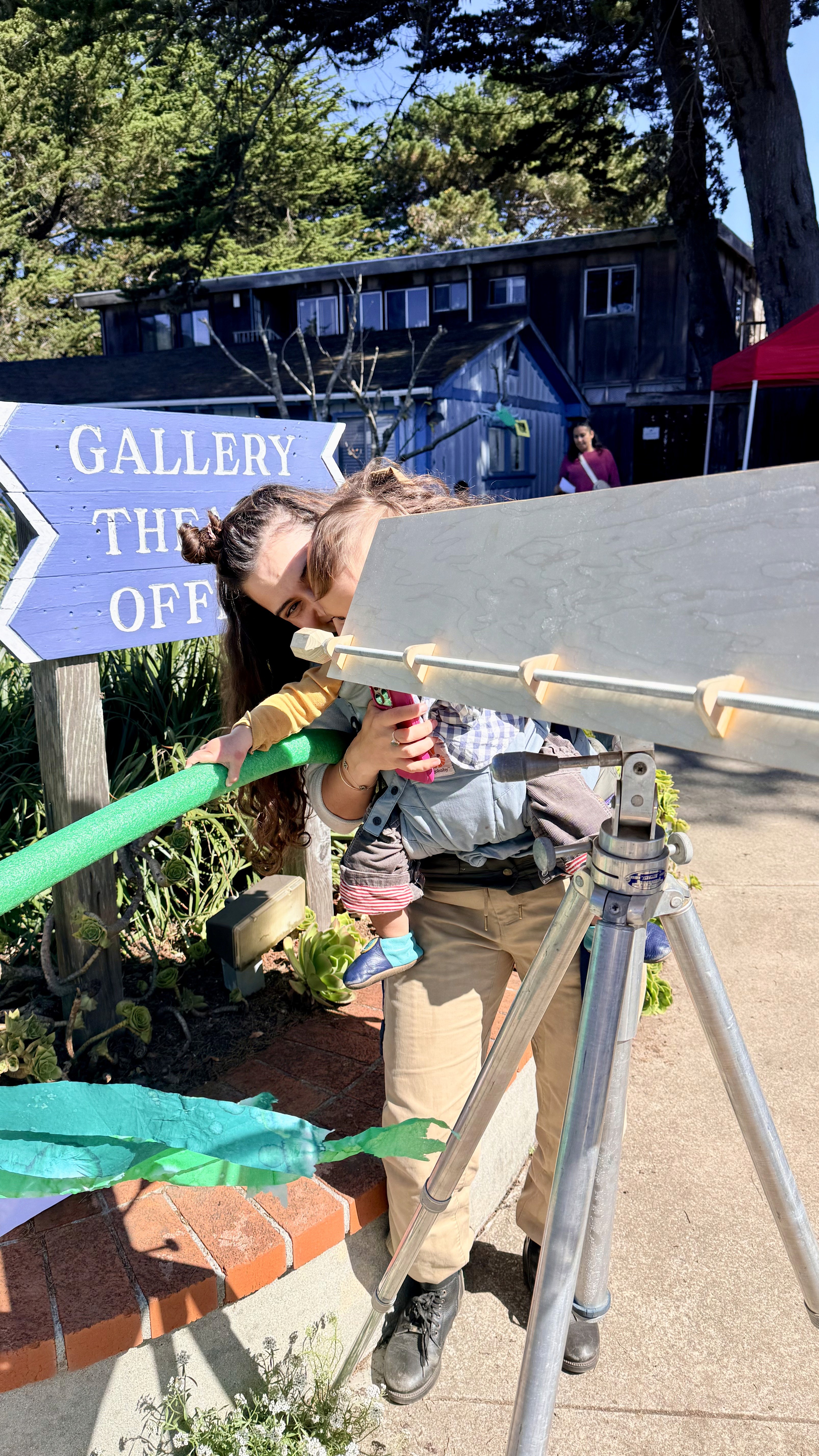
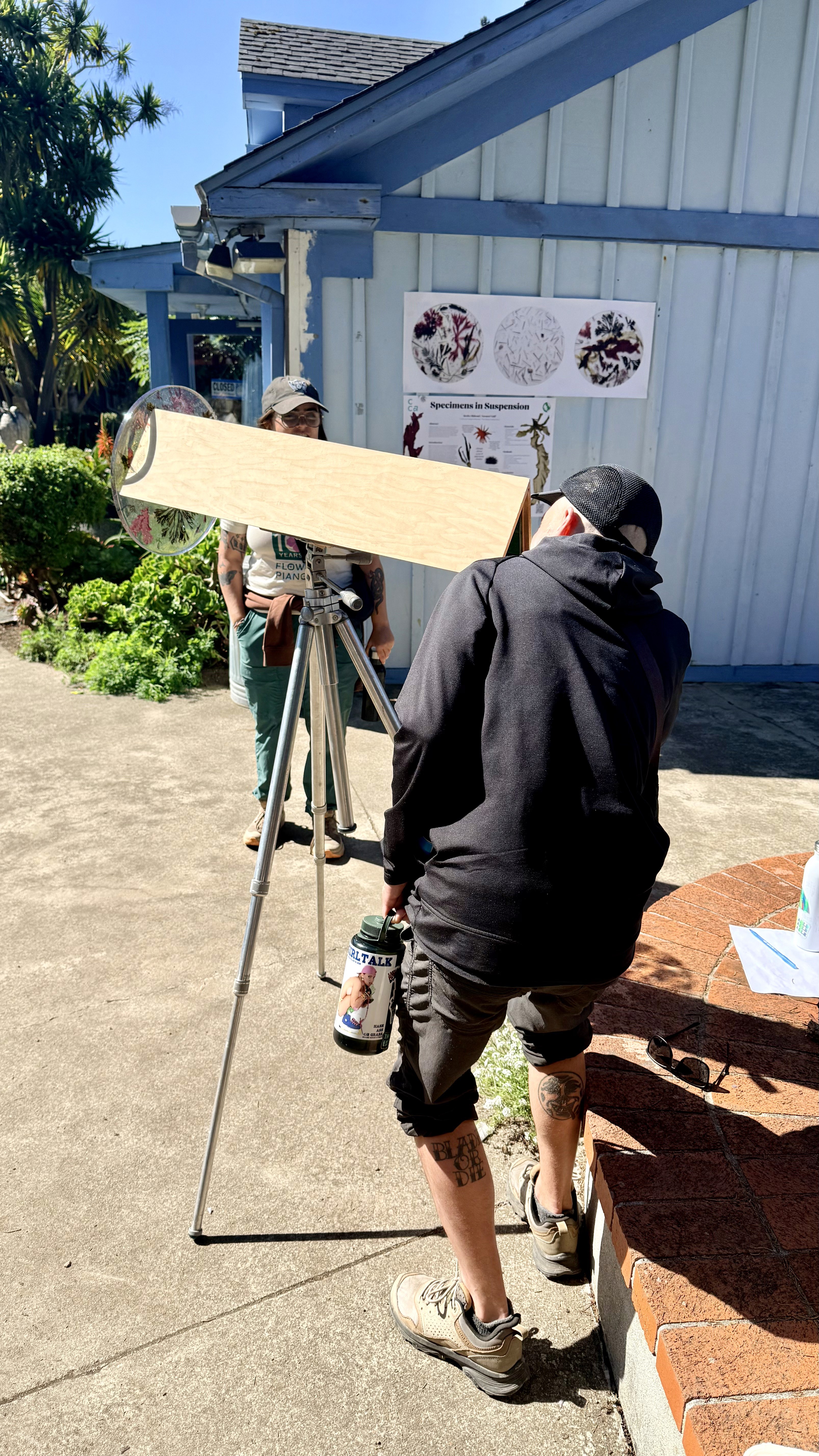


Keeley and I were invited by Josie Iselin, artist, author, and co-director of the Above/Below ocean literacy campaign, to show Specimens in Suspension at North Coast Kelpfest in Mendocino. Josie had also contributed some of the specimens used in the lenses.
The audience at Kelpfest was public: families, children, and adults who came because they care about the coast. Children would look through once, leave, and come back. Some returned alone. Others brought a sibling. A few came back with their whole family.
Keeley and I were invited by Josie Iselin, artist, author, and co-director of the Above/Below ocean literacy campaign, to show Specimens in Suspension at North Coast Kelpfest in Mendocino. Josie had also contributed some of the specimens used in the lenses.
The audience at Kelpfest was public: families, children, and adults who came because they care about the coast. Children would look through once, leave, and come back. Some returned alone. Others brought a sibling. A few came back with their whole family.