When the Noise Settles
When the Noise Settles
When the Noise Settles
On attention, duration, and noticing
On attention, duration, and noticing
On attention, duration, and noticing
Context
Scott Minneman (Thesis),
Mathew Kneebone (Writing),
Jon Sueda (Program Chair),
Saraleah Fordyce, Cristina Gaitán
Type
Advisors
Thesis body of work: durational studies,
time-based interactions, physical prototypes
MFA Design, California College of the Arts
January - May 2026
Raspberry Pi, ToF proximity sensing, thermal photography, video, thermochromic pigment, resin, silk organza
Tools
Context
Context
MFA Design, California College of the Arts
January - May 2026
MFA Design,
California College of the Arts
January - May 2026
Type
Type
Thesis body of work: durational studies,
time-based interactions, physical prototypes
Advisors
Advisors
Scott Minneman (Thesis), Mathew Kneebone (Writing),
Jon Sueda (Program Chair), Saraleah Fordyce, Cristina Gaitán
Scott Minneman (Thesis),
Mathew Kneebone (Writing),
Jon Sueda (Program Chair), Saraleah Fordyce, Cristina Gaitán
Tools
Tools
Raspberry Pi, ToF proximity sensing, thermal photography,
video, thermochromic pigment, resin, silk organza
Raspberry Pi, ToF proximity sensing, thermal photography, video, thermochromic pigment, resin, silk organza
What might design look like if it trained stillness and attunement, rather than speed and output?
What might design look like if it trained stillness and attunement, rather than speed and output?
THE THESIS
THE THESIS
THE THESIS
Designing conditions for noticing
Designing conditions for noticing
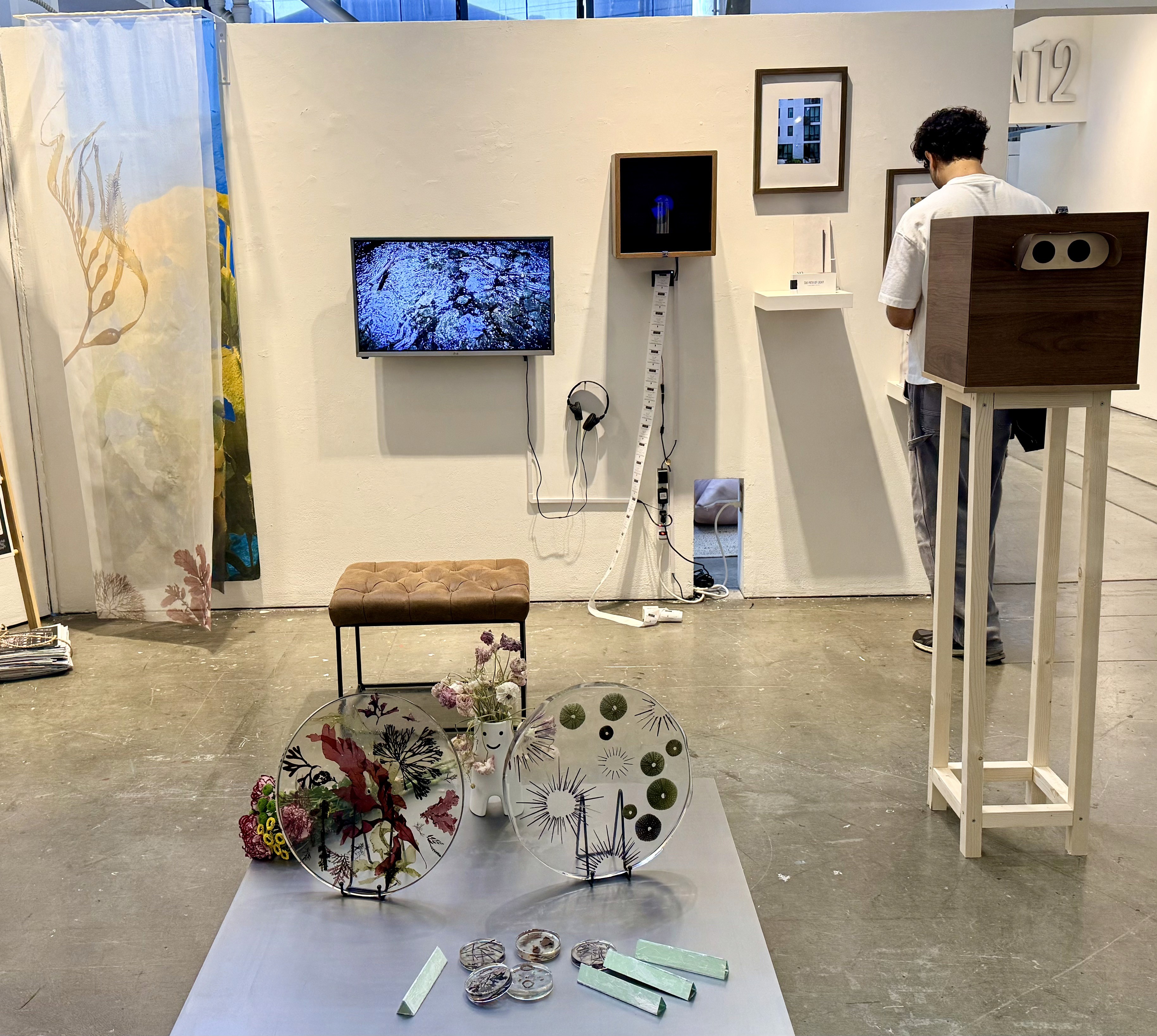
Seven interaction prototypes exploring how pacing, material, and sensing can shape attention.
When the Noise Settles asks what design becomes when it trains stillness and attunement instead of speed and output. Through durational studies, time-based interactions, and quiet observations in real settings, I build conditions where pacing, light, and material shift slowly enough to be noticed, so that small changes in the body, the environment, and shared time become legible through sustained attention. The result is work that invites a slower relationship to time, where presence is practiced rather than idealized.
The thesis grows from a simple observation: habit streamlines perception. Repetition makes familiar environments feel known, and that sense of knowing thins out what we actually register. My work creates just enough friction to slow recognition into seeing, without turning the moment into spectacle. Subtle shifts become legible through sustained exposure. Presence becomes practiced rather than idealized.
The work runs from material experiments to sensor-based interactive pieces, from solitary encounters to shared ones. Each study asks the same question in a different form: what changes when someone stays?
Seven interaction prototypes exploring how pacing, material, and sensing can shape attention.
When the Noise Settles asks what design becomes when it trains stillness and attunement instead of speed and output. Through durational studies, time-based interactions, and quiet observations in real settings, I build conditions where pacing, light, and material shift slowly enough to be noticed, so that small changes in the body, the environment, and shared time become legible through sustained attention. The result is work that invites a slower relationship to time, where presence is practiced rather than idealized.
The thesis grows from a simple observation: habit streamlines perception. Repetition makes familiar environments feel known, and that sense of knowing thins out what we actually register. My work creates just enough friction to slow recognition into seeing, without turning the moment into spectacle. Subtle shifts become legible through sustained exposure. Presence becomes practiced rather than idealized.
The work runs from material experiments to sensor-based interactive pieces, from solitary encounters to shared ones. Each study asks the same question in a different form: what changes when someone stays?
STUDY 01
STUDY 01
STUDY 01
Thermochromic Study: Permission to Settle
Thermochromic Study: Permission to Settle
I began working with thermochromic pigment, mixed with a liquid medium and painted onto paper, as a way to make change visible without spectacle. The material shifts quietly in response to body heat, revealing itself only through contact and time spent near it.
Early tests taught me that duration could be embedded in a surface. When Cristina Gaitán suggested scaling to the MFA studio sofa, the project shifted from a tactile experiment into a spatial question. I wanted to bring people to the sofa and make the comfort of settling there feel legitimate.
I began working with thermochromic pigment, mixed with a liquid medium and painted onto paper, as a way to make change visible without spectacle. The material shifts quietly in response to body heat, revealing itself only through contact and time spent near it.
Early tests taught me that duration could be embedded in a surface. When Cristina Gaitán suggested scaling to the MFA studio sofa, the project shifted from a tactile experiment into a spatial question. I wanted to bring people to the sofa and make the comfort of settling there feel legitimate.
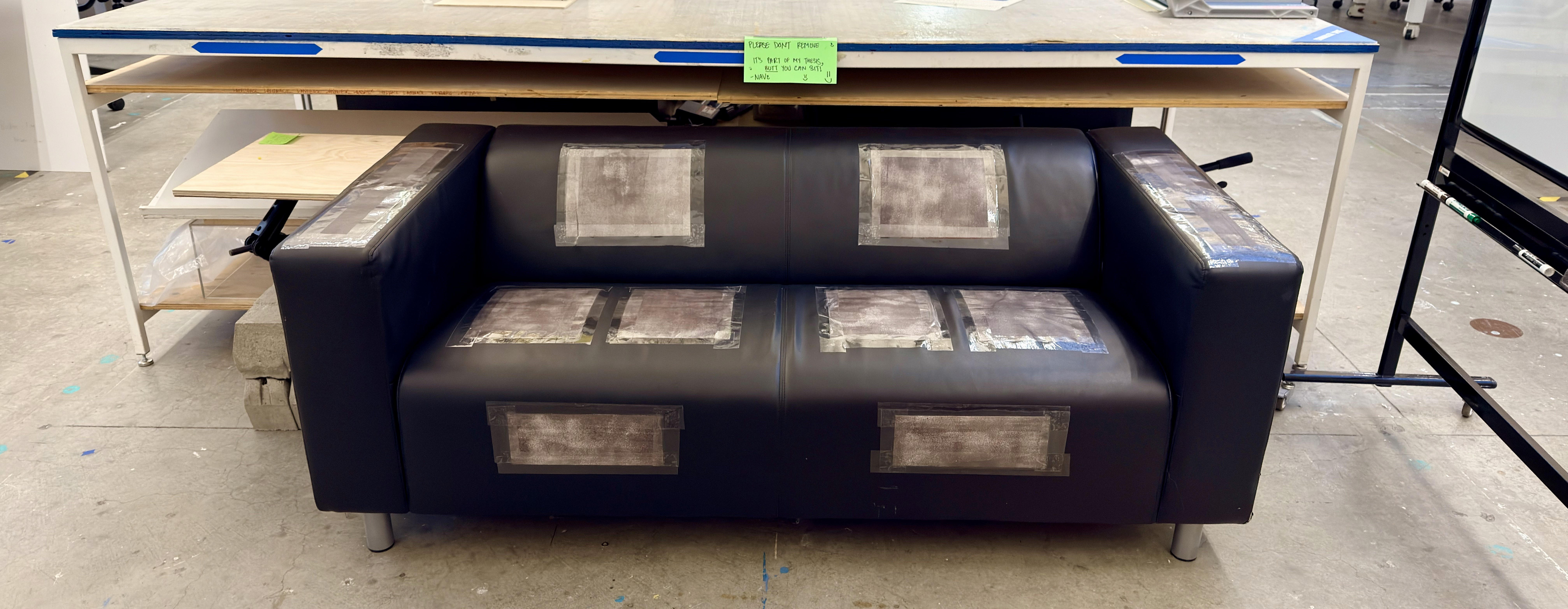
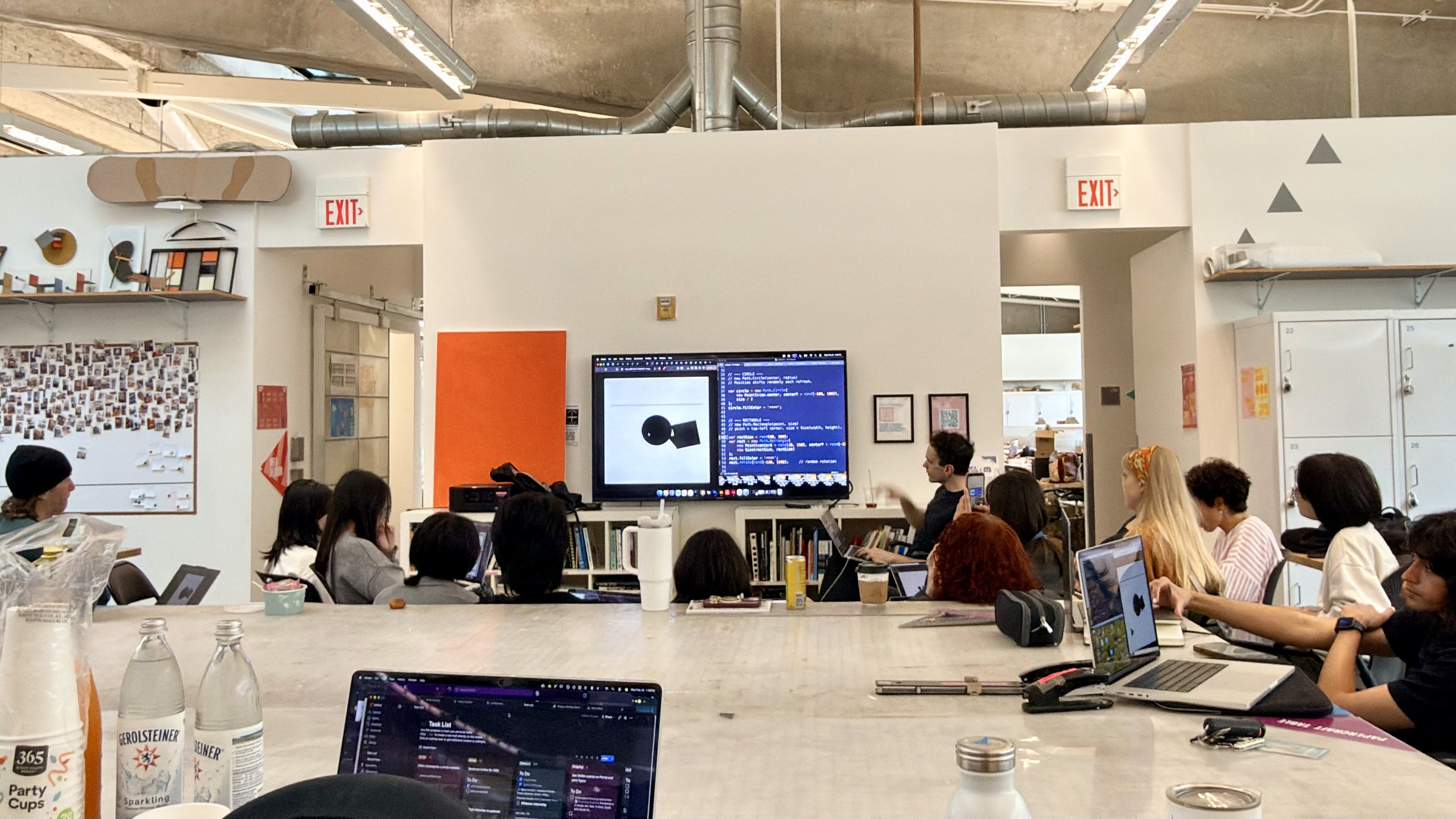
Studio sofa during a workshop, February 2026. The thermochromic surface invited people to approach, sit, and stay.
Studio sofa during a workshop, February 2026. The thermochromic surface invited people to approach, sit, and stay.
With body heat, the surface shifted. The sofa began to record presence through temporary color change. The pace of the shift mattered: subtle enough to encourage lingering, clear enough to reward the decision to settle.
With body heat, the surface shifted. The sofa began to record presence through temporary color change. The pace of the shift mattered: subtle enough to encourage lingering, clear enough to reward the decision to settle.
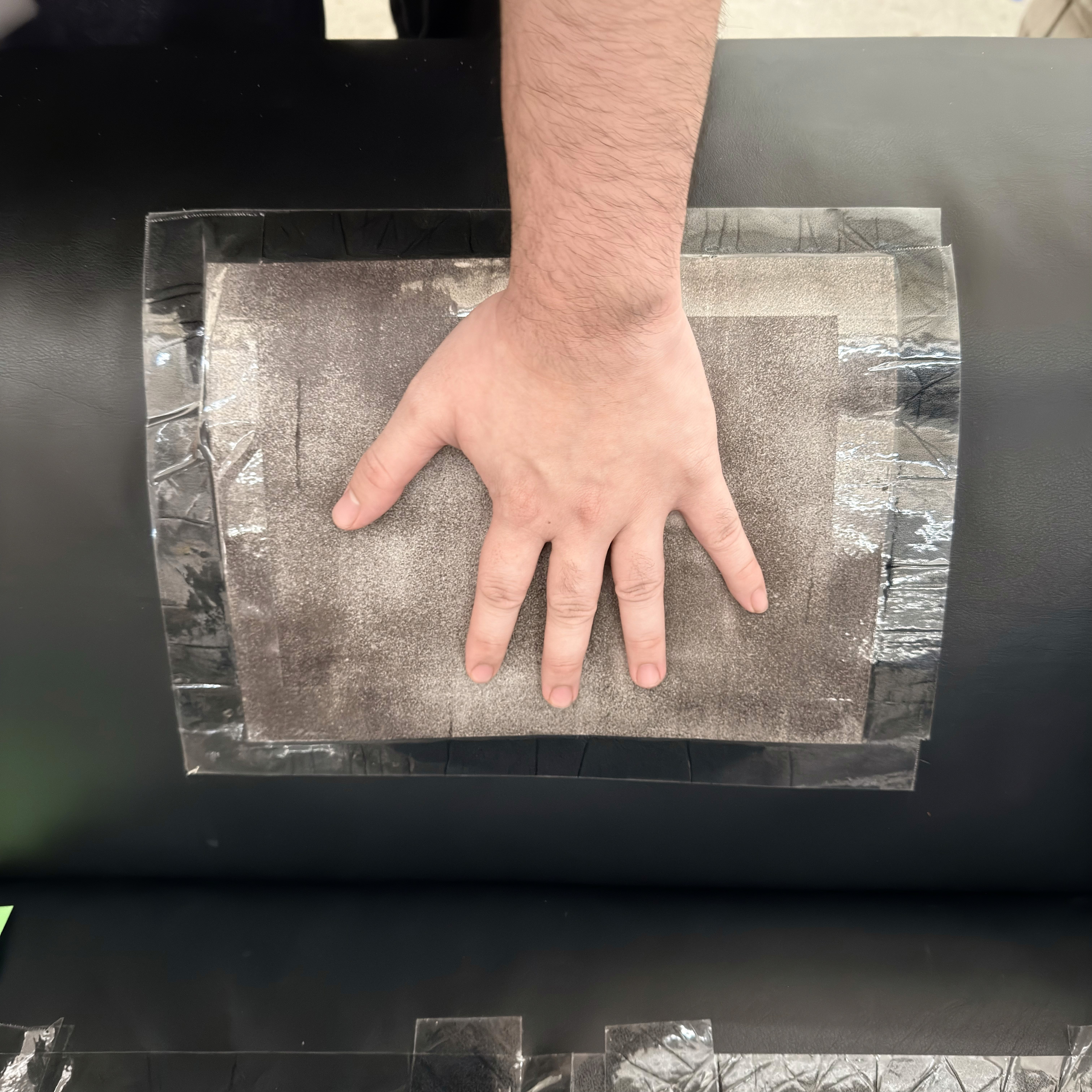
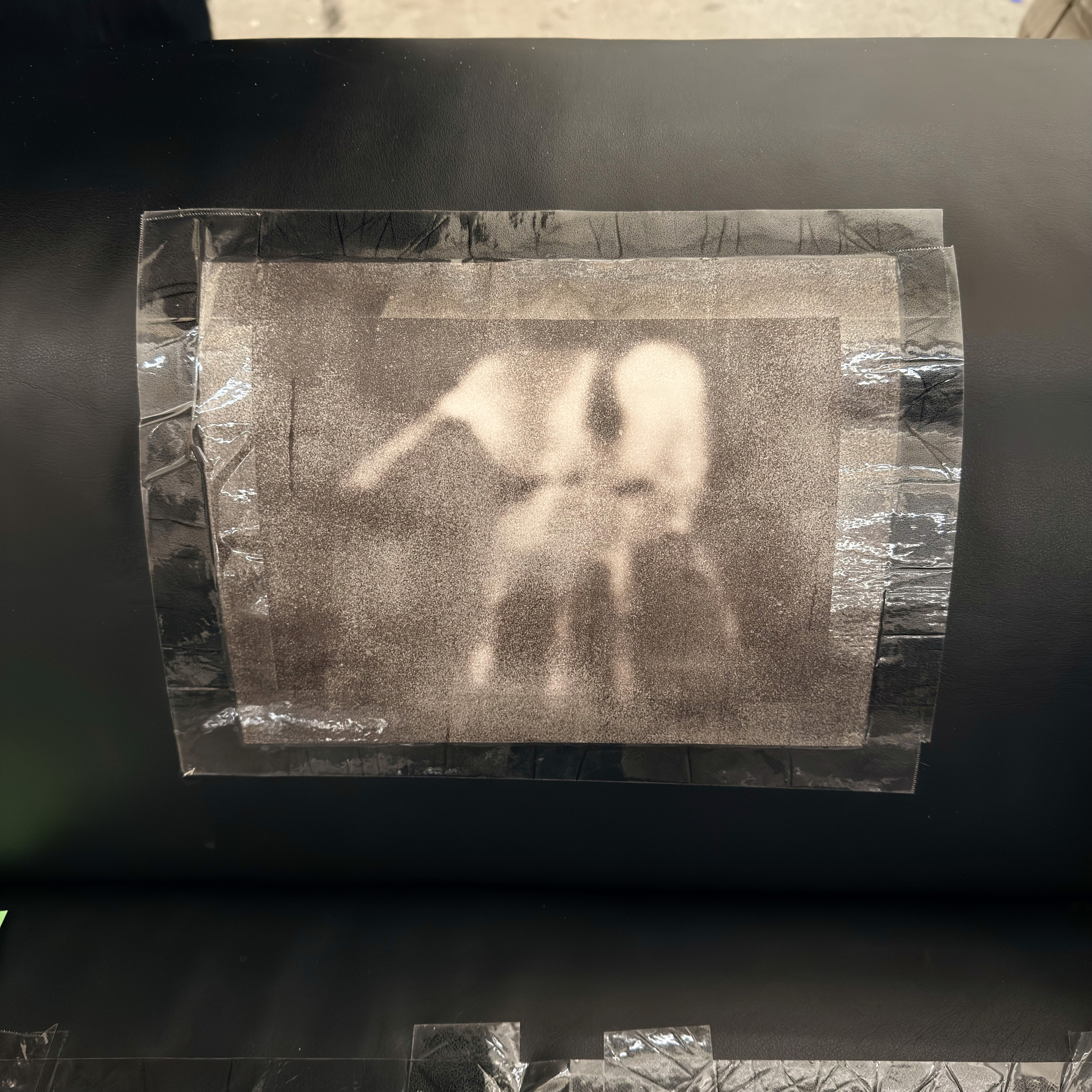


Thermal camera images taken with Scott Minneman's camera. Heat traces on the sofa made presence visible as
a pattern.
Thermal camera images taken with Scott Minneman's camera. Heat traces on the sofa made presence visible as a pattern.
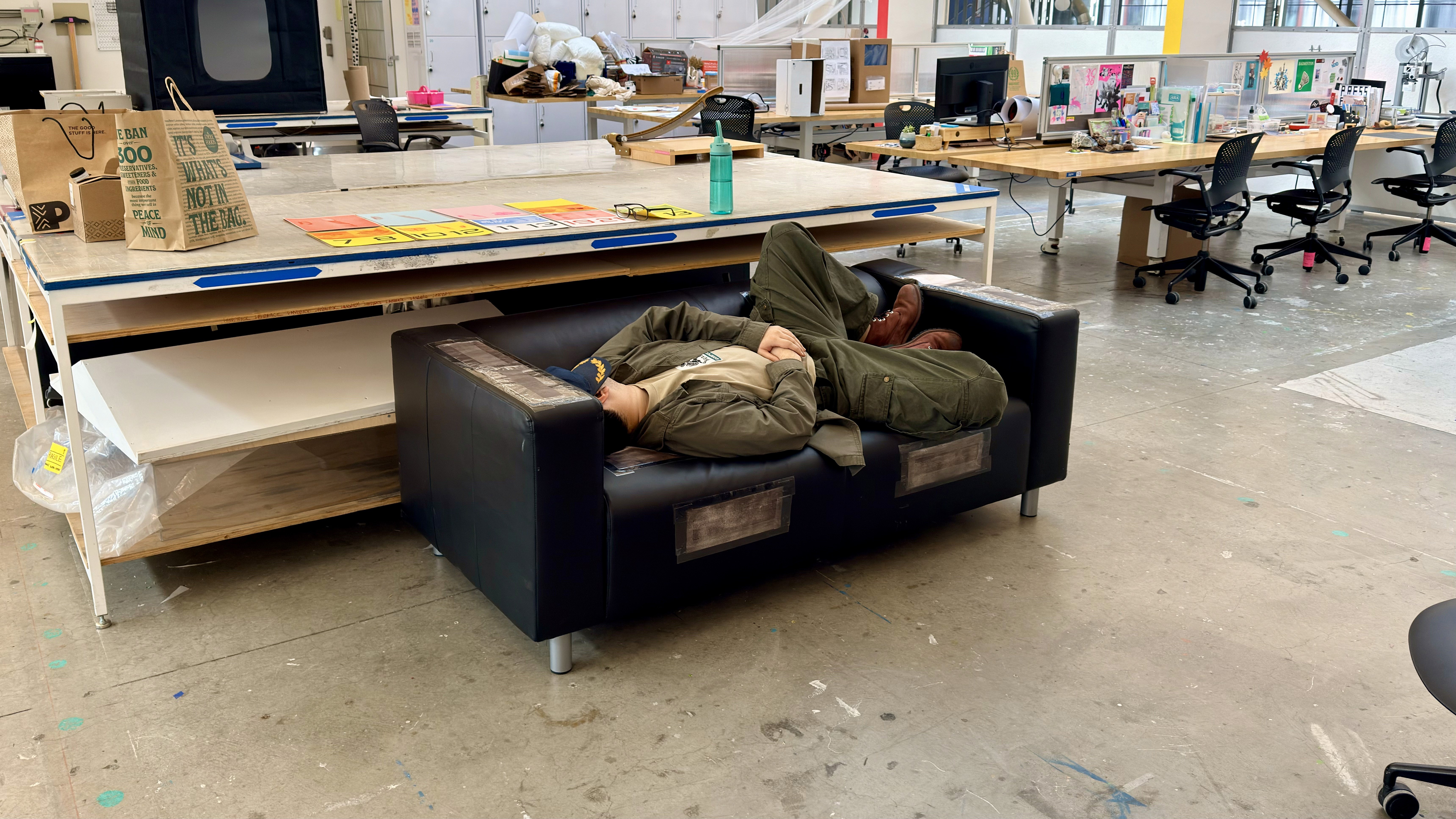
A classmate napping on the sofa after midterm reviews. The sofa had become a place where settling
felt permitted.
A classmate napping on the sofa after midterm reviews. The sofa had become a place where settling felt permitted.
A classmate napping on the sofa after midterm reviews. The sofa had become a place where settling felt permitted.
Designing for attunement often begins with designing for the body's ability to settle.
Designing for attunement often begins with designing for the body's ability to settle.
STUDY 02
STUDY 02
STUDY 02
Seafloor Studies
Seafloor Studies
Silk organza panels, 22 by 82 inches each. I wanted the material language of seaweed to become an atmosphere, something a viewer could enter rather than simply look through.
Organza carries light rather than blocking it. When panels overlap, the image gains depth through interference and drift. As a person moves, the layers recompose. The panels change without needing animation. The attunement here is to translucency and depth: the way a material can hold information that only appears when viewed slowly and through light.
Silk organza panels, 22 by 82 inches each. I wanted the material language of seaweed to become an atmosphere, something a viewer could enter rather than simply look through.
Organza carries light rather than blocking it. When panels overlap, the image gains depth through interference and drift. As a person moves, the layers recompose. The panels change without needing animation. The attunement here is to translucency and depth: the way a material can hold information that only appears when viewed slowly and through light.
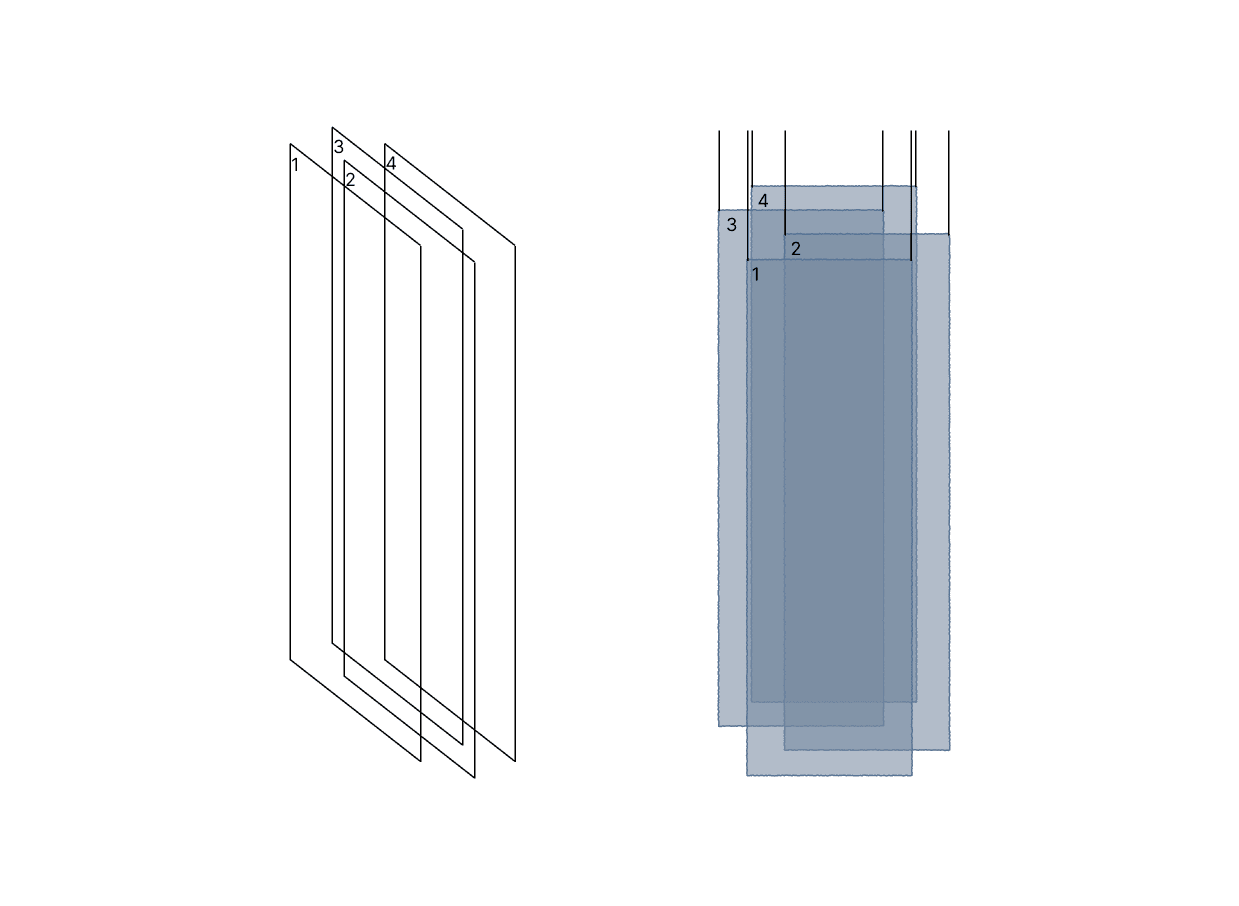
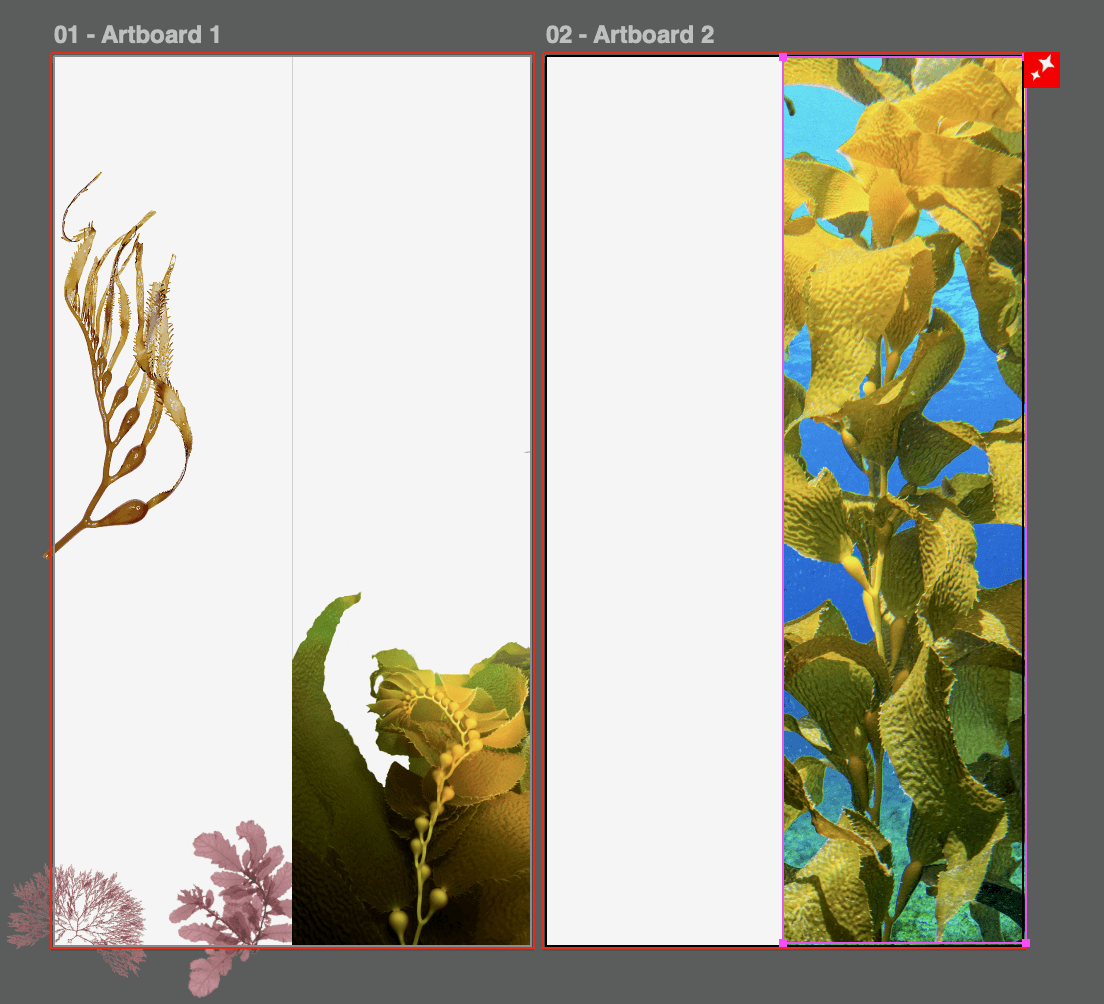
The full concept is a four-panel room-scale installation where the space gradually thickens as you look through it.

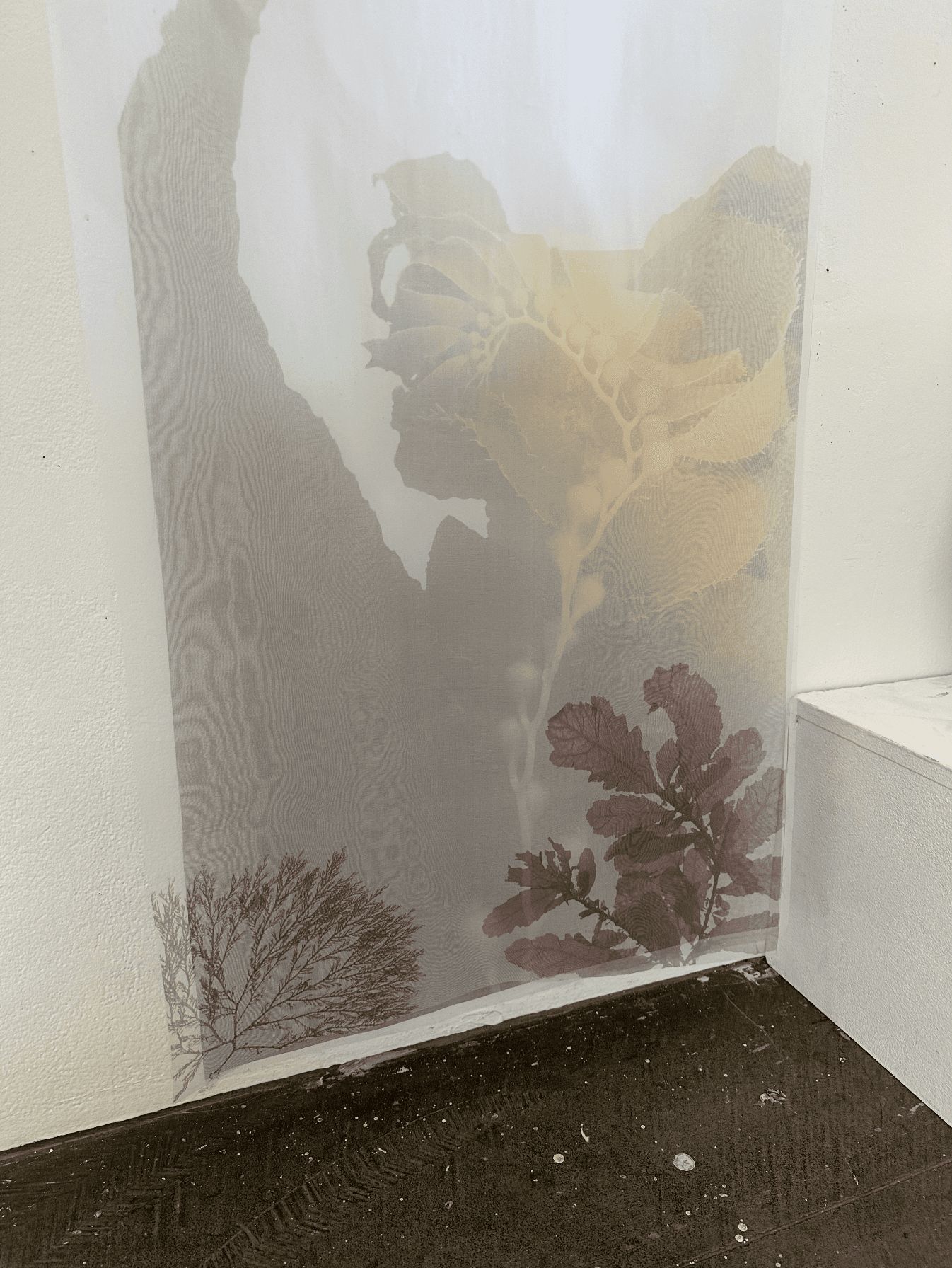
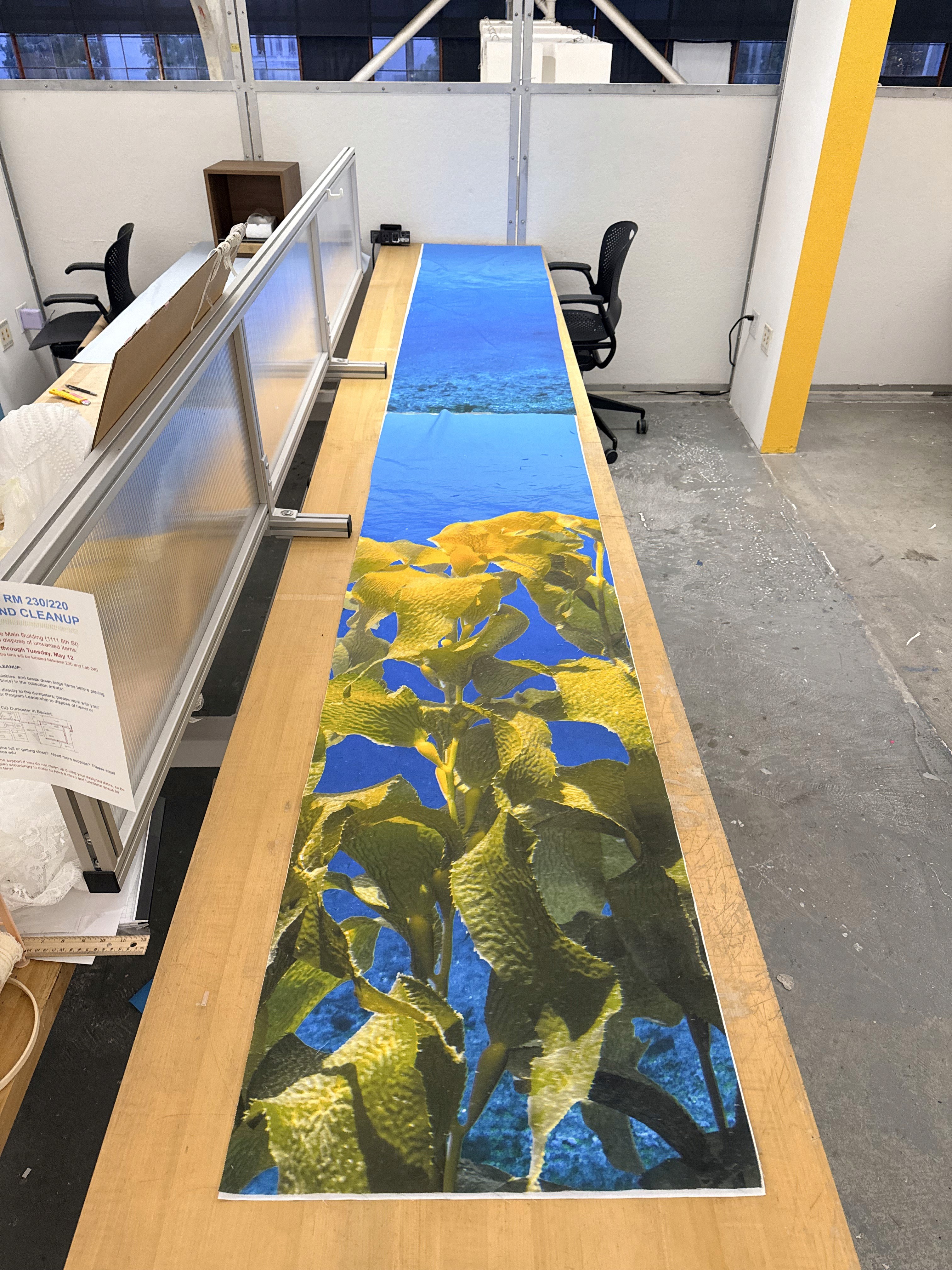
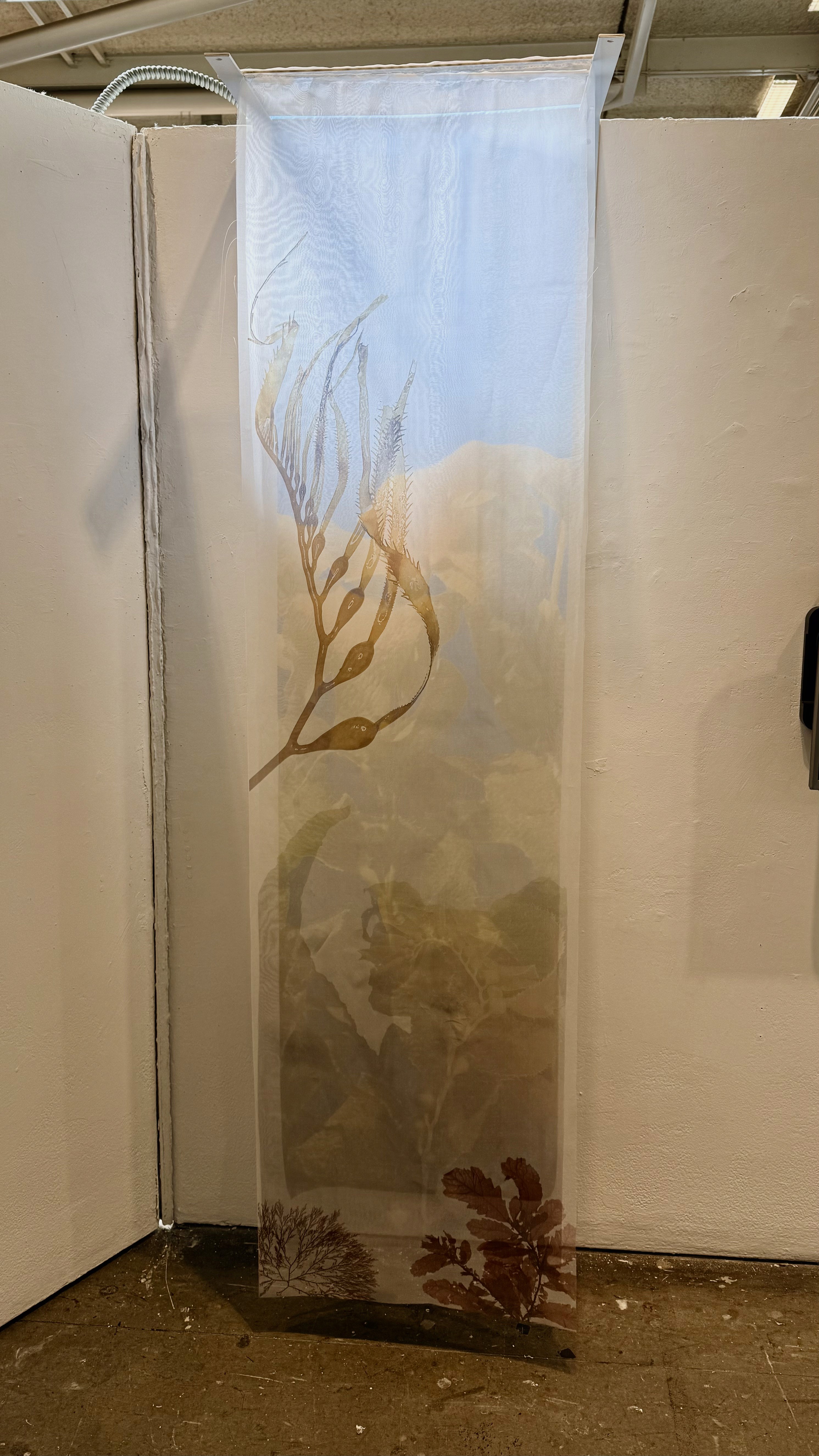
Panels on display during thesis final reviews and the MFA Design Exhibition.
The full concept moves from trace to immersion: the first panel sparse, the second introducing density, the third introducing more balanced density,
and the final holding a fuller underwater scene with kelp present across the surface. Together they build a resting space where attention can settle
without instruction.
The full concept moves from trace to immersion: the first panel sparse, the second introducing density, the third introducing more balanced density,
and the final holding a fuller underwater scene with kelp present across the surface. Together they build a resting space where attention can settle without instruction.
The full concept moves from trace to immersion: the first panel sparse, the second introducing density, the third introducing more balanced density, and the final holding a fuller underwater scene with kelp present across the surface. Together they build a resting space where attention can settle without instruction.
STUDY 03
STUDY 03
STUDY 03
Caustic Light Study
Caustic Light Study
I have always been drawn to sunlight on water. The caustic pattern, shifting light refracted through moving water, changes continuously but never repeats.
I built a durational study to record it.
I filmed at Hidden Villa hiking trails, just after a weekend of rain. The stream running alongside the trail was the right place. After arriving, I noticed signage about mountain lions. That changed the conditions of the study immediately. I had planned to stay three hours and left after one. The shift was not about losing interest in the water; it was about what fear does to attention. It became clear that staying is shaped by context and safety, and that the body does not settle on command.
I have always been drawn to sunlight on water. The caustic pattern, shifting light refracted through moving water, changes continuously but never repeats. I built a durational study to record it.
I filmed at Hidden Villa hiking trails, just after a weekend of rain. The stream running alongside the trail was the right place. After arriving, I noticed signage about mountain lions. That changed the conditions of the study immediately. I had planned to stay three hours and left after one. The shift was not about losing interest in the water; it was about what fear does to attention. It became clear that staying is shaped by context and safety, and that the body does not settle on command.
I have always been drawn to sunlight on water. The caustic pattern, shifting light refracted through moving water, changes continuously but never repeats. I built a durational study to record it.
I filmed at Hidden Villa hiking trails, just after a weekend of rain. The stream running alongside the trail was the right place. After arriving, I noticed signage about mountain lions. That changed the conditions of the study immediately. I had planned to stay three hours and left after one. The shift was not about losing interest in the water; it was about what fear does to attention. It became clear that staying is shaped by context and safety, and that the body does not settle on command.
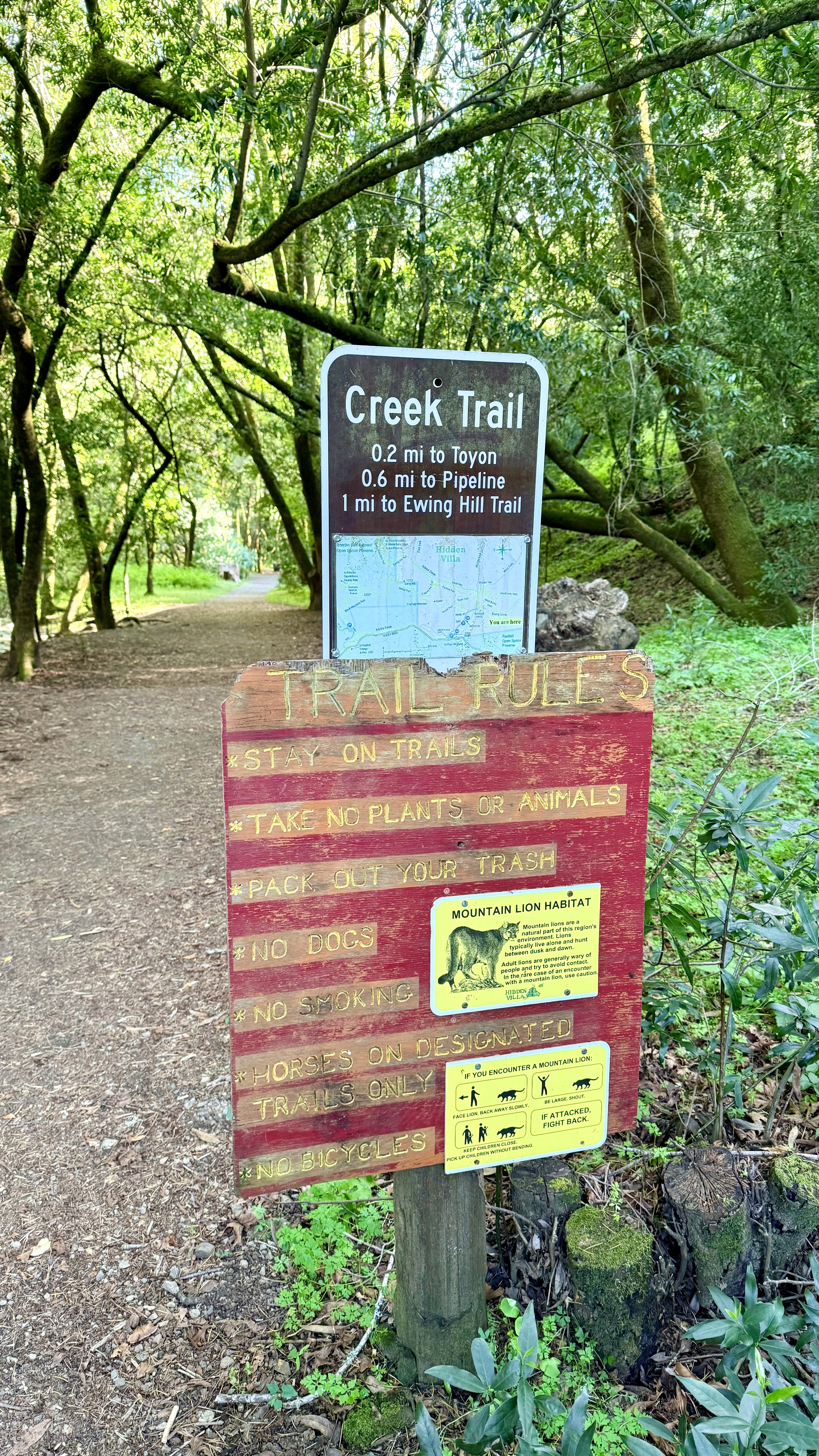
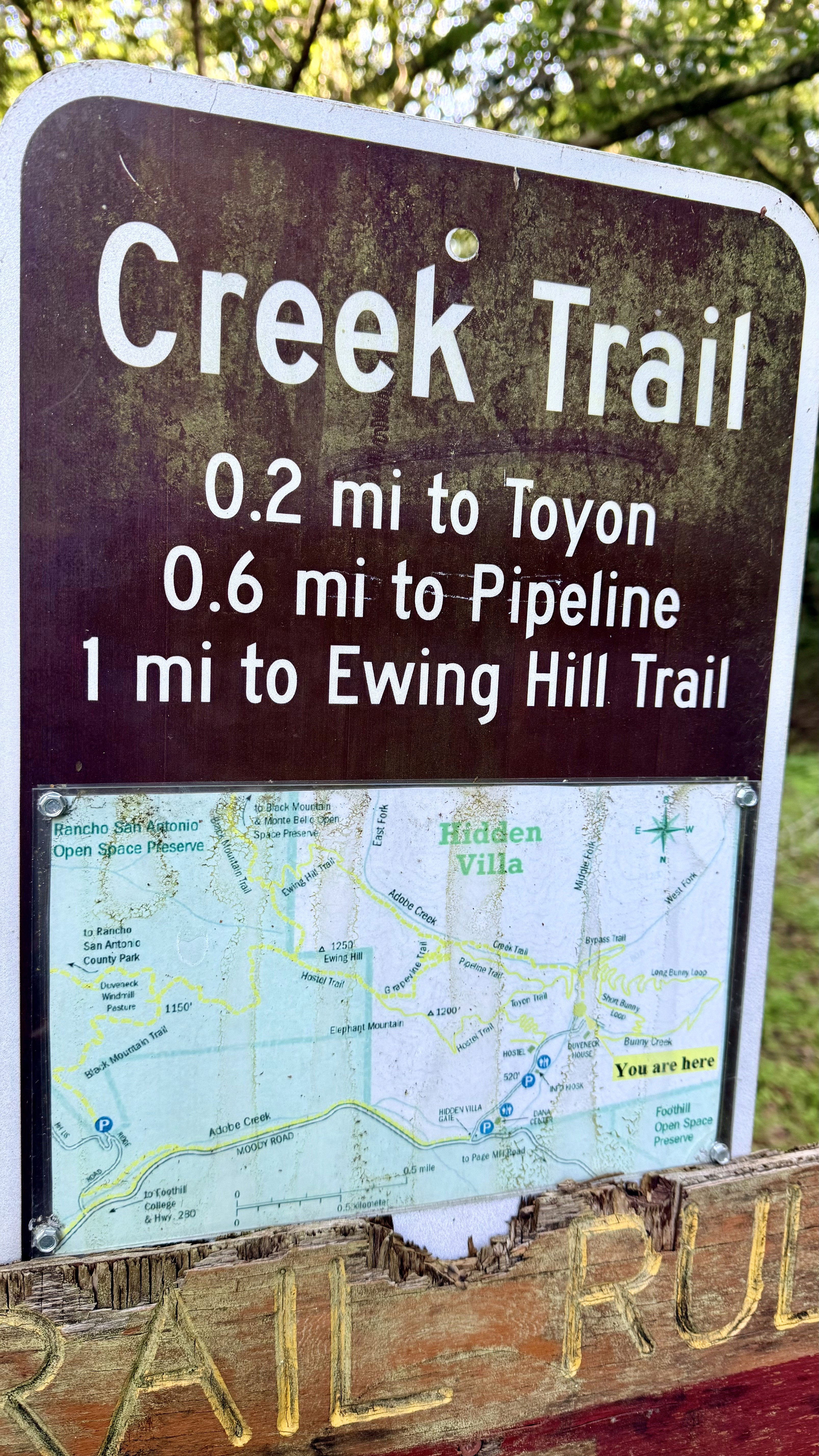

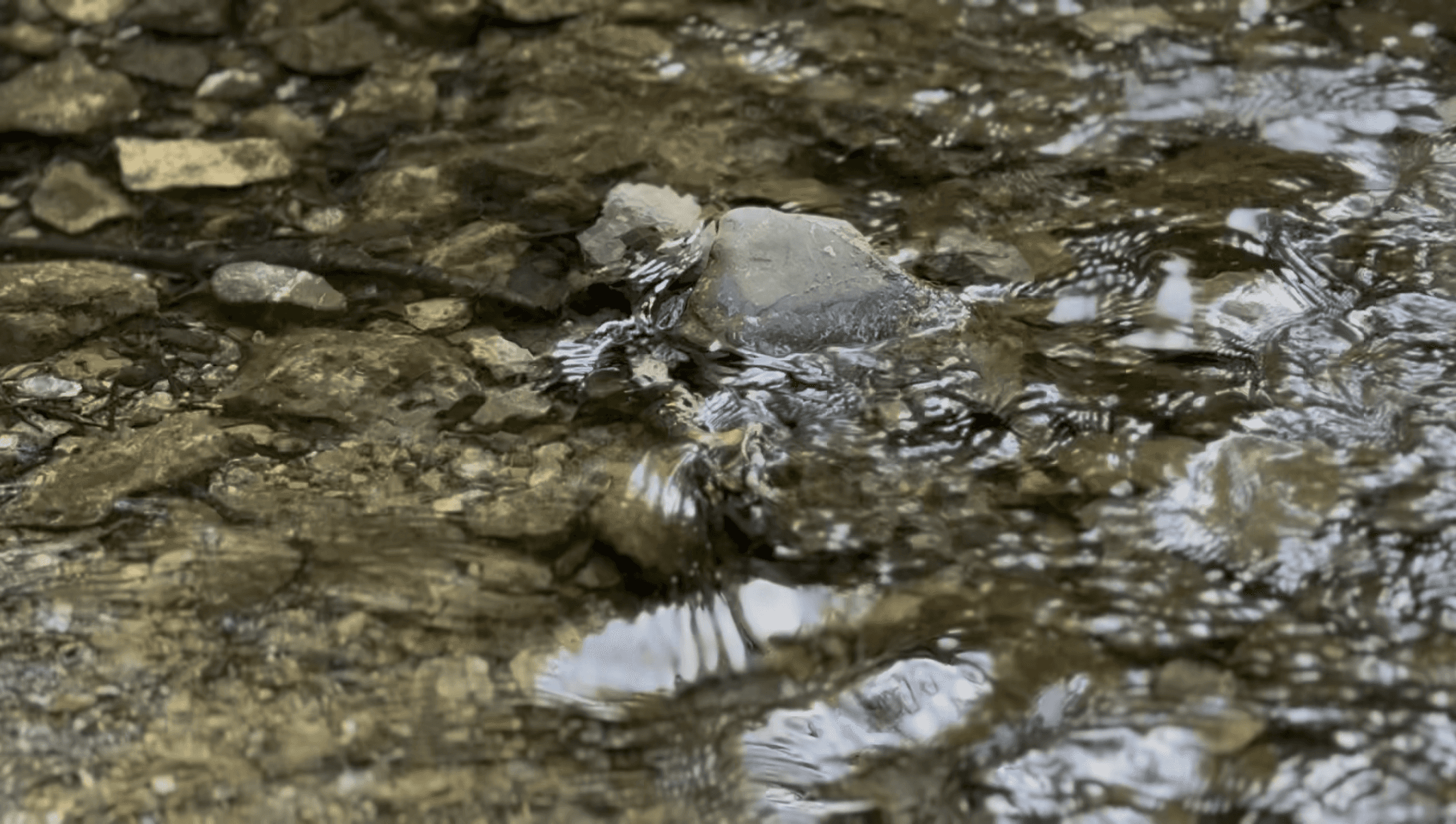
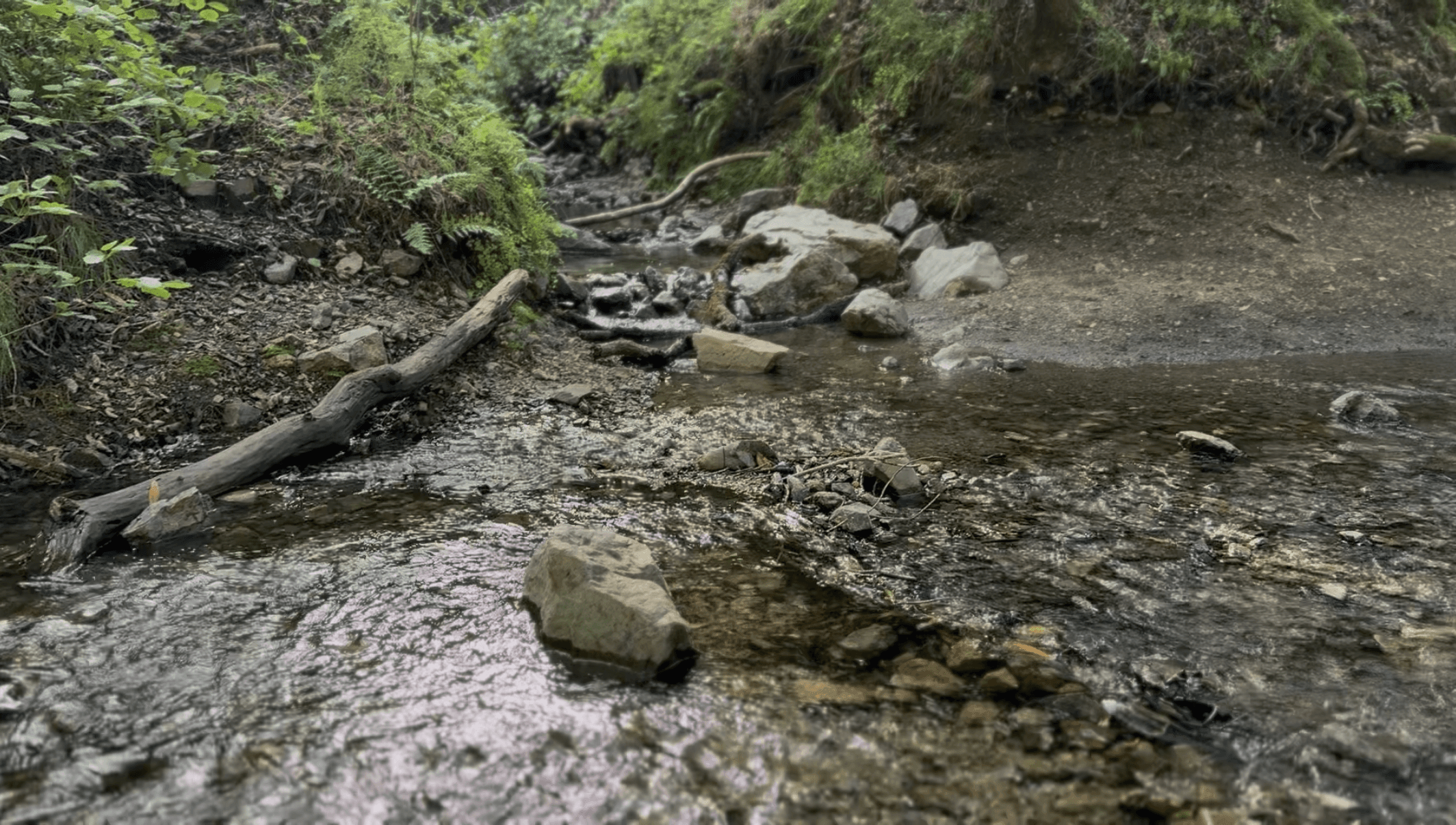

Stills from the durational GoPro recording. The fixed frame holds one view long enough for the pattern to develop. Over time the bright area shifts, the water stays clear, and the surface keeps rewriting the view.
Stills from the durational GoPro recording. The fixed frame holds one view long enough for the pattern to develop. Over time the bright area shifts, the water stays clear, and the surface keeps rewriting the view.
In the exhibition, the GoPro recording plays with on-site audio. At the end of each full recording, the screen shifts to a "no signal" state reading: "next viewing in 5 minutes." The countdown updates each minute. That pause adds another layer of duration and makes time visible even when the image is gone.
In the exhibition, the GoPro recording plays with on-site audio. At the end of each full recording, the screen shifts to a "no signal" state reading: "next viewing in 5 minutes." The countdown updates each minute.
That pause adds another layer of duration and makes time visible even when the image is gone.
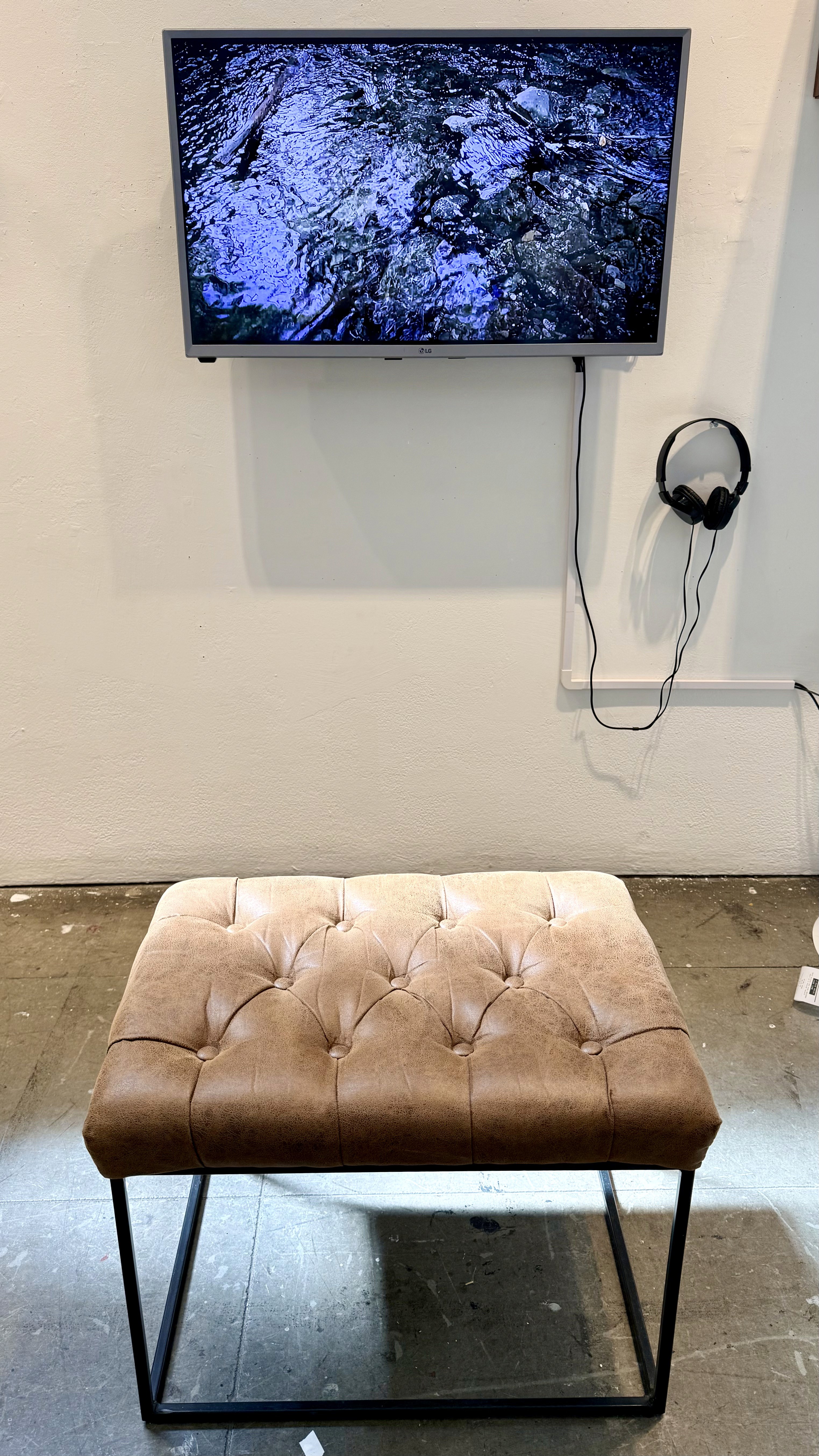
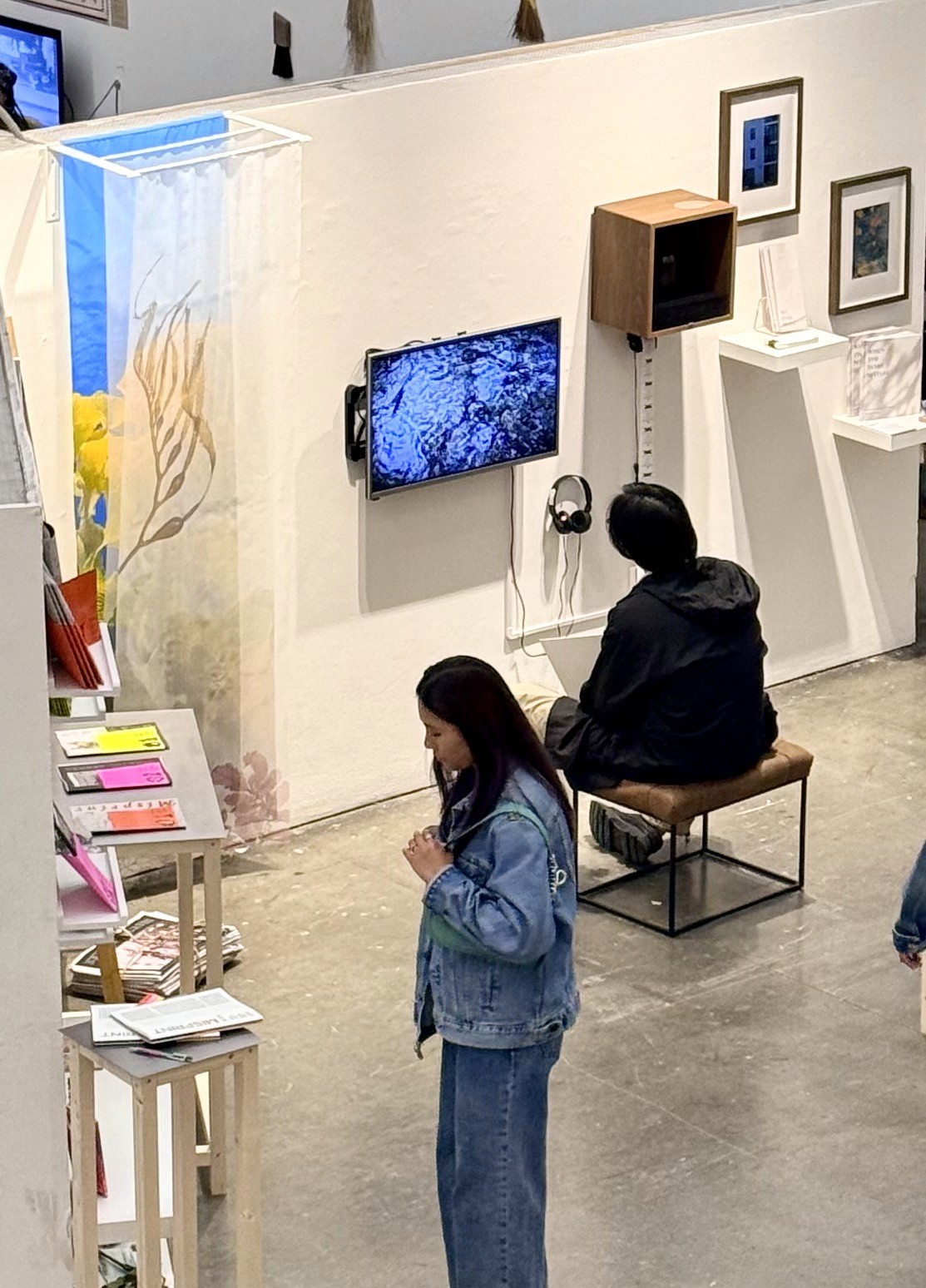
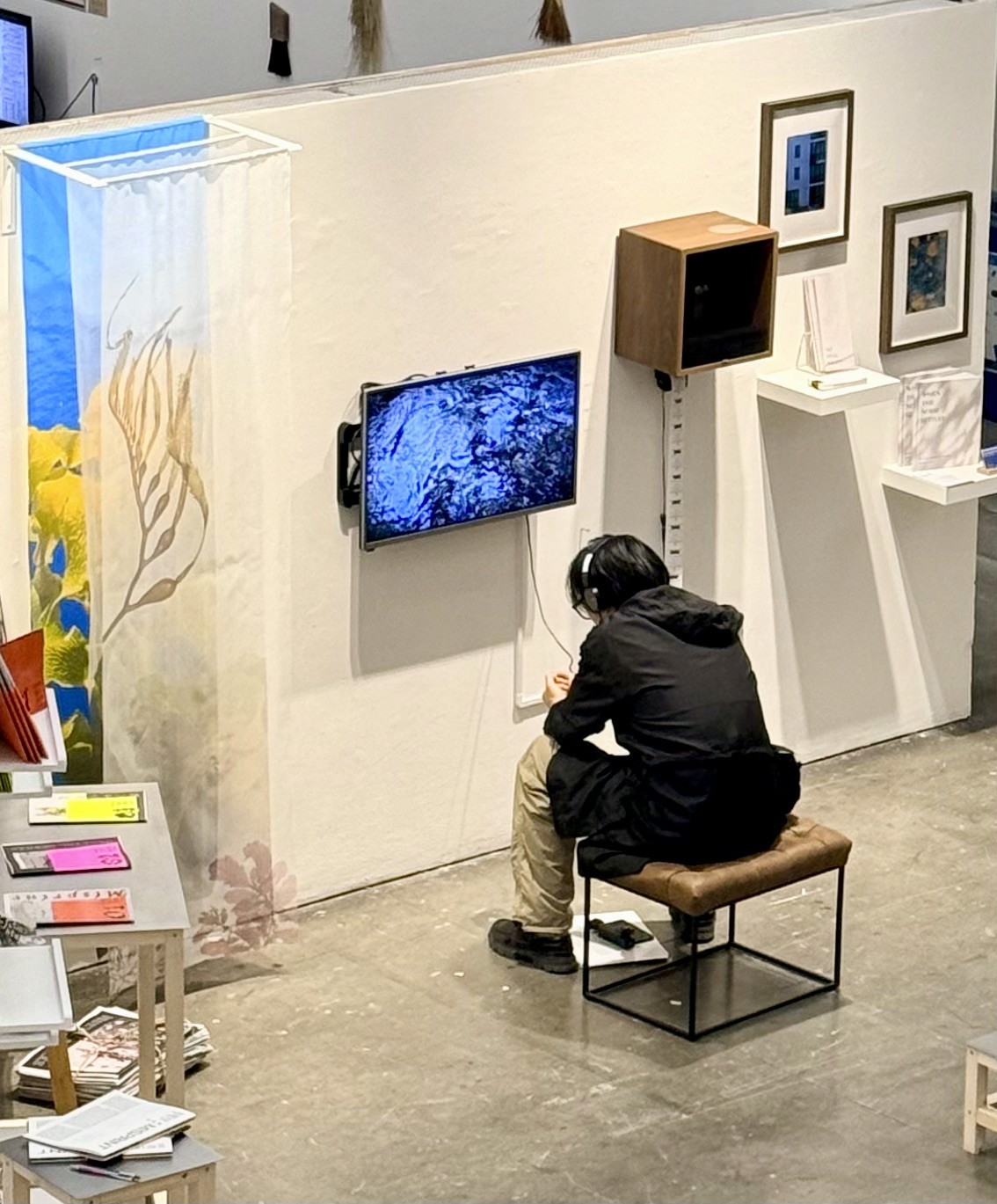
Listening changes the posture of viewing. It gives people a reason to sit, settle, and watch rather than stand and hover.
Listening changes the posture of viewing. It gives people a reason to sit, settle, and watch rather than stand and hover.
Listening changes the posture of viewing. It gives people a reason to sit, settle, and watch rather than stand and hover.
STUDY 04
STUDY 04
Window-view Study
Window-view Study
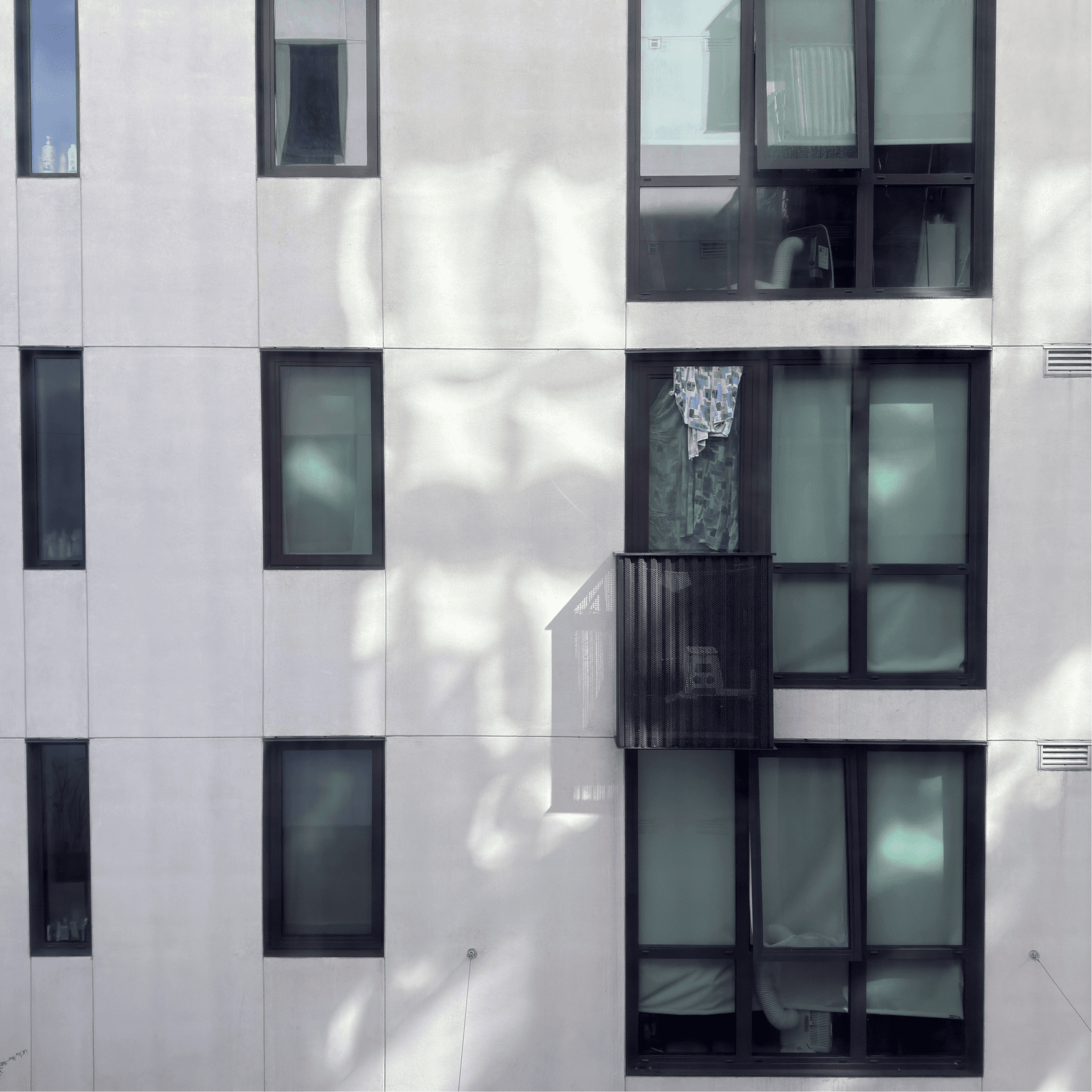
A daily practice. I returned to the same spot at the same time each day and took a photograph, building consistency: one frame, one time, one set of conditions.
Over time, what held my attention was not sameness but how the building across from me began to draw on my view as the sun lowered. Balconies and railings cast shadows that moved slowly across the facade, turning the surface into a kind of clock. The scene kept reconfiguring itself without announcing that it was doing so.
A daily practice. I returned to the same spot at the same time each day and took a photograph, building consistency: one frame, one time, one set of conditions.
Over time, what held my attention was not sameness but how the building across from me began to draw on my view as the sun lowered. Balconies and railings cast shadows that moved slowly across the facade, turning the surface into a kind of clock. The scene kept reconfiguring itself without announcing that it was doing so.

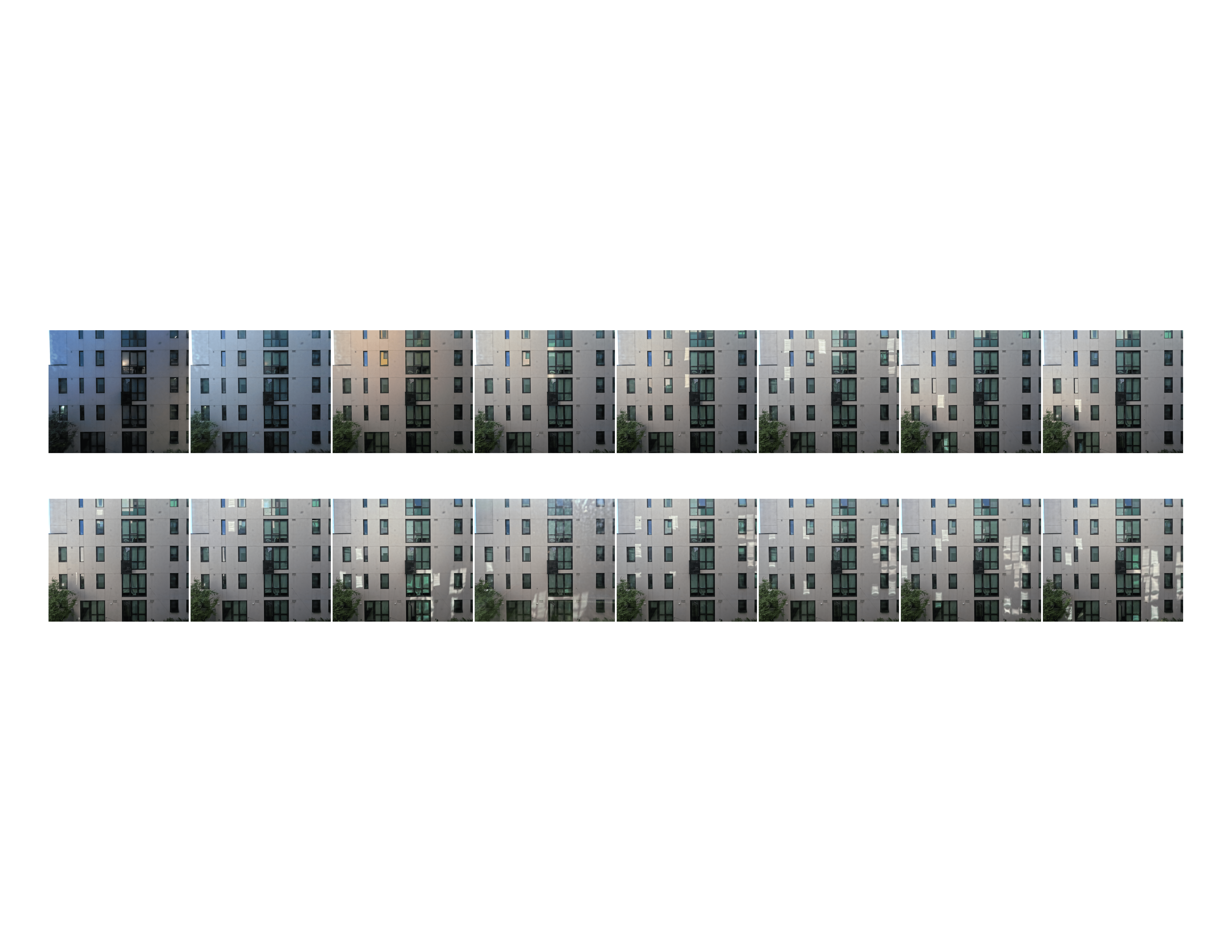


A morning to afternoon view across from my window. The same surface, different light.
A morning to afternoon view across from my window. The same surface, different light.
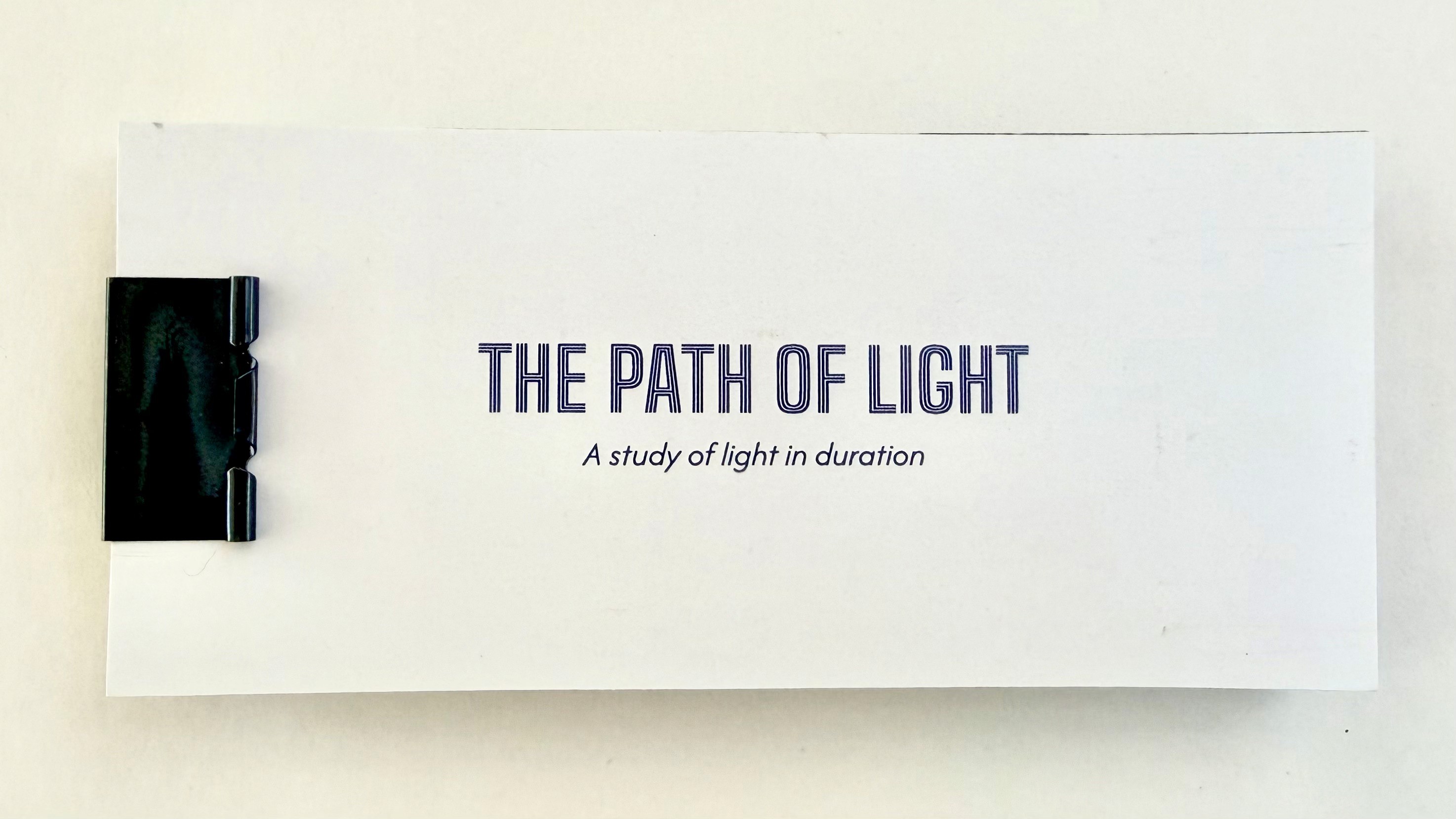
The window-view flipbook alongside a framed iPad playing the timelapse in the exhibition.
I moved from daily capture into a twelve-hour photo timelapse, making the underlying structure of the scene legible as continuous motion. In the exhibition, the work is presented as a framed iPad alongside a flipbook that translates the same study into a hand-held sequence. The flipbook changes the encounter: the viewer controls the speed. They can slow down on a single moment, repeat a section, or stop entirely. Pacing becomes visible and adjustable.
I moved from daily capture into a twelve-hour photo timelapse, making the underlying structure of the scene legible as continuous motion. In the exhibition, the work is presented as a framed iPad alongside a flipbook that translates the same study into a hand-held sequence. The flipbook changes the encounter: the viewer controls the speed. They can slow down on a single moment, repeat a section, or stop entirely. Pacing becomes visible and adjustable.
STUDY 05
STUDY 05
STUDY 05
California Poppies Study
California Poppies Study
I am drawn to California poppies because they make environmental change visible in a living body. A poppy can read as fully open in one moment, then close in response to shifting conditions, as if the bloom has its own quiet timing.
This study grows from the same approach as the window-view work: returning to a single patch repeatedly and recording over time. Poppies close under low-light conditions and reopen when light returns. That movement, nyctinasty, gives a visible marker for changes in brightness and time of day. The work is built from return and record. In the exhibition, a timelapse of the poppies opening and closing plays on a wall-mounted, framed iPad.
I am drawn to California poppies because they make environmental change visible in a living body. A poppy can read as fully open in one moment, then close in response to shifting conditions, as if the bloom has its own quiet timing.
This study grows from the same approach as the window-view work: returning to a single patch repeatedly and recording over time. Poppies close under low-light conditions and reopen when light returns. That movement, nyctinasty, gives a visible marker for changes in brightness and time of day. The work is built from return and record. In the exhibition, a timelapse of the poppies opening and closing plays on a wall-mounted, framed iPad.
I am drawn to California poppies because they make environmental change visible in a living body. A poppy can read as fully open in one moment, then close in response to shifting conditions, as if the bloom has its own quiet timing.
This study grows from the same approach as the window-view work: returning to a single patch repeatedly and recording over time. Poppies close under low-light conditions and reopen when light returns. That movement, nyctinasty, gives a visible marker for changes in brightness and time of day. The work is built from return and record. In the exhibition, a timelapse of the poppies opening and closing plays on a wall-mounted, framed iPad.
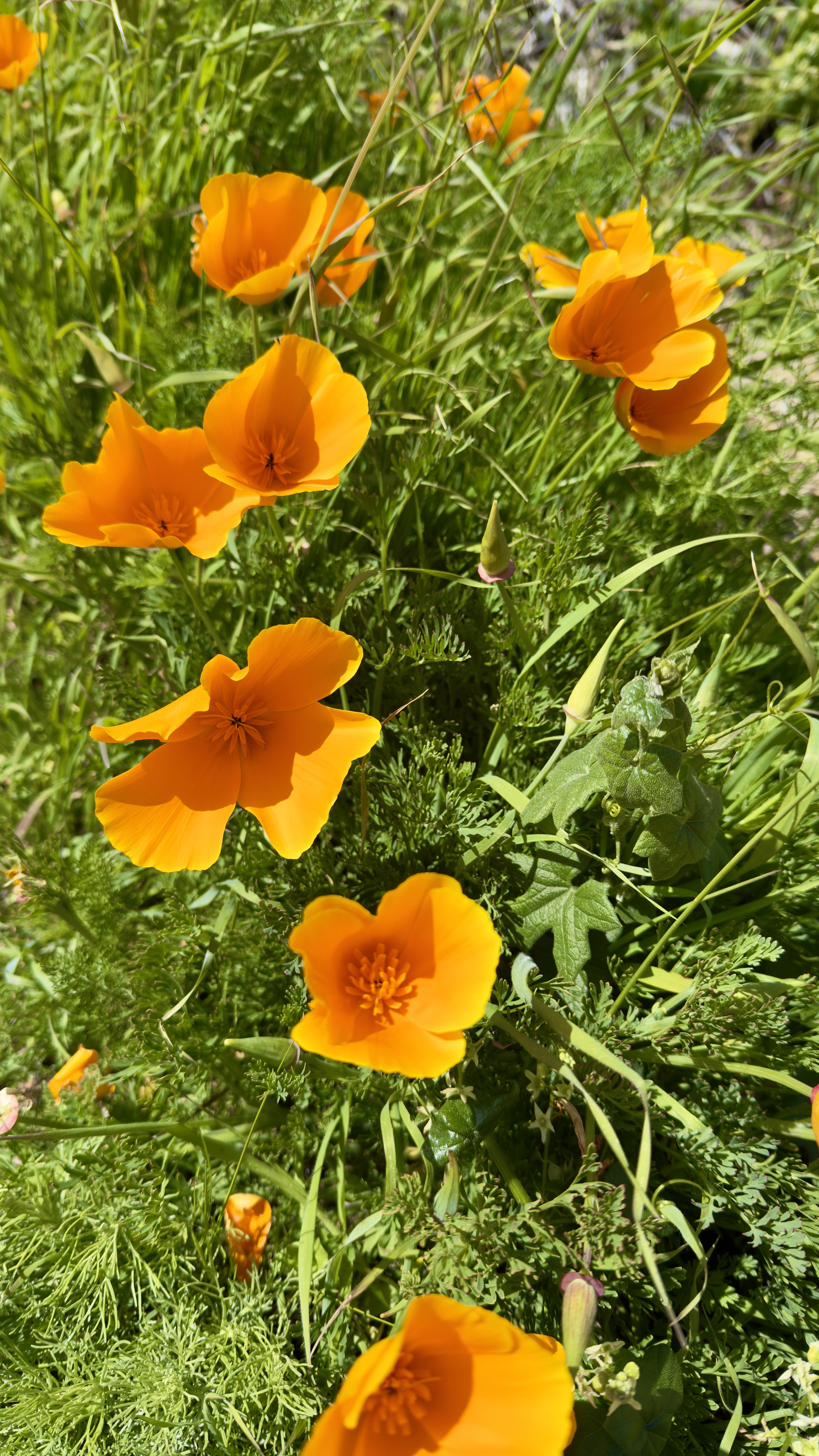
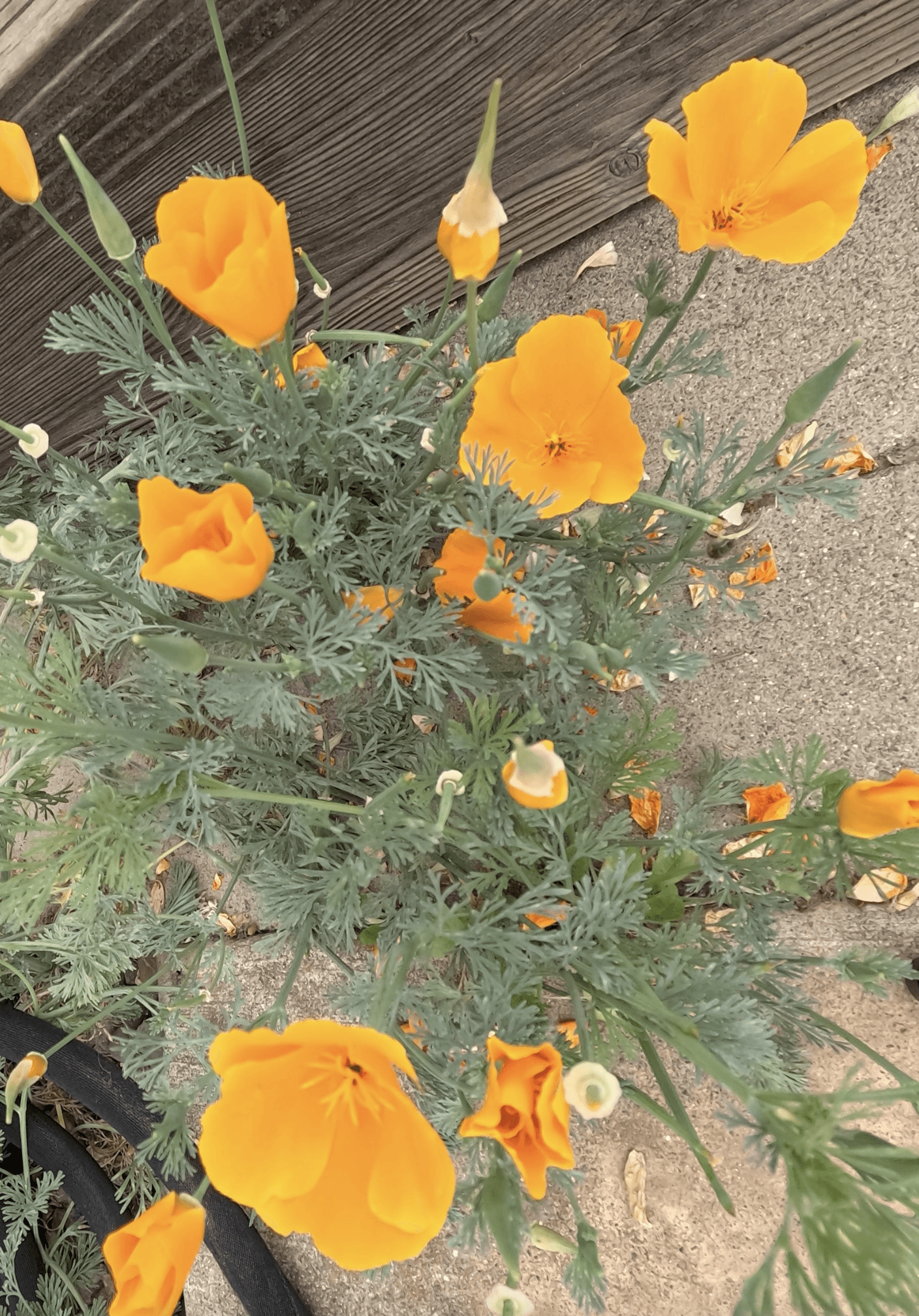

California poppies in the field and in a backyard. The same patch looks different with each visit. The goal is observation, not taking: the work is built from return and record.
STUDY 06
STUDY 06
STUDY 06
A Rose Holds Your Time
A Rose Holds Your Time
This is the piece where the work shifts from observation into participation. Duration becomes the material the project records, measured minute by minute through staying.
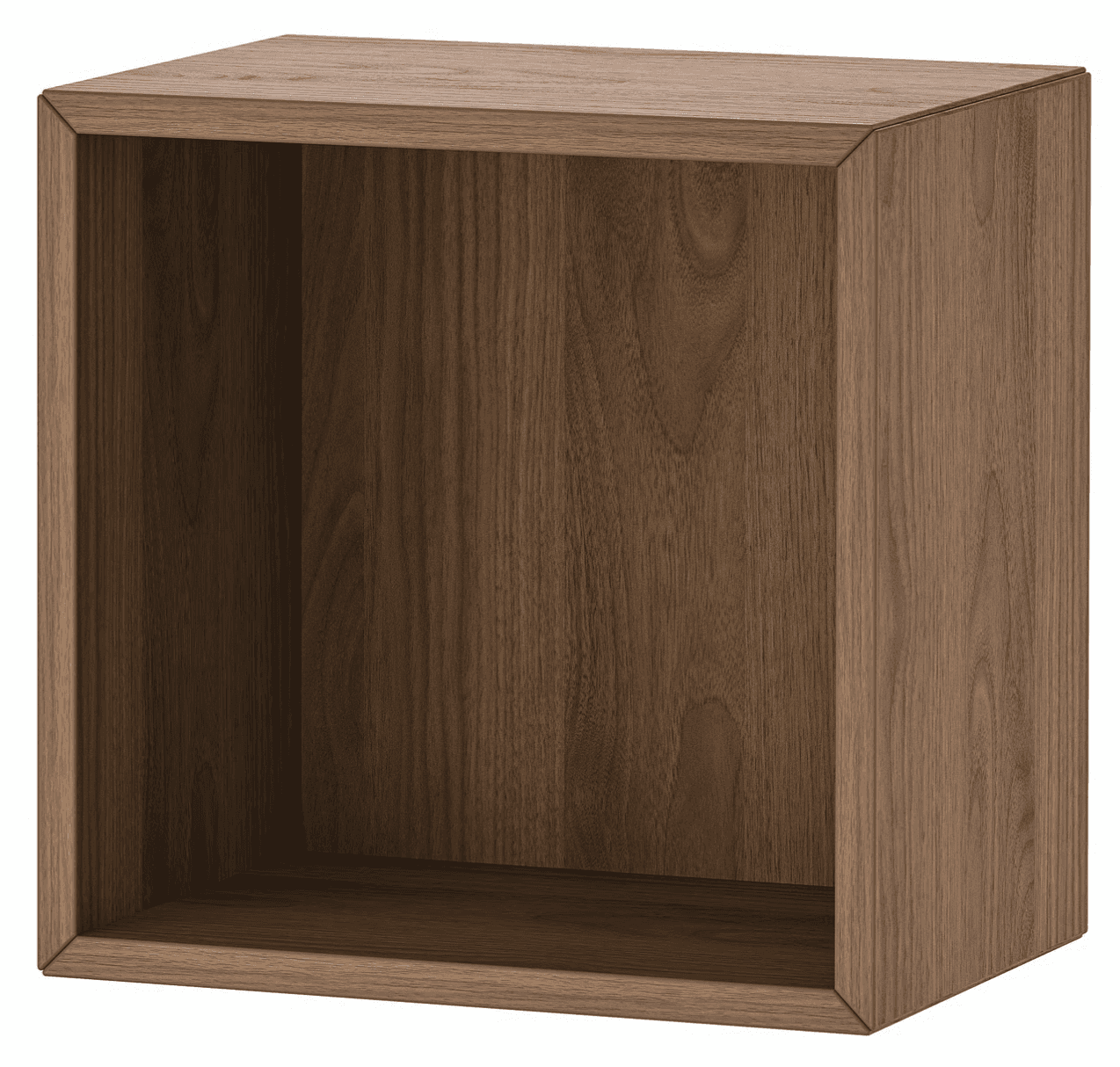
I chose to present the rose as blue: a true blue rose does not occur naturally, which gives it a slightly fantastical quality. I illuminated a white rose with blue LED light while filming a friend slowly spinning the stem. That footage became the source for a projected rose appearing beneath a cloche inside a wall-mounted cube, using Pepper's Ghost to give it a spectral, contained presence.
This is the piece where the work shifts from observation into participation. Duration becomes the material the project records, measured minute by minute through staying.
I chose to present the rose as blue: a true blue rose does not occur naturally, which gives it a slightly fantastical quality. I illuminated a white rose with blue LED light while filming a friend slowly spinning the stem. That footage became the source for a projected rose appearing beneath a cloche inside a wall-mounted cube, using
Pepper's Ghost to give it a spectral, contained presence.
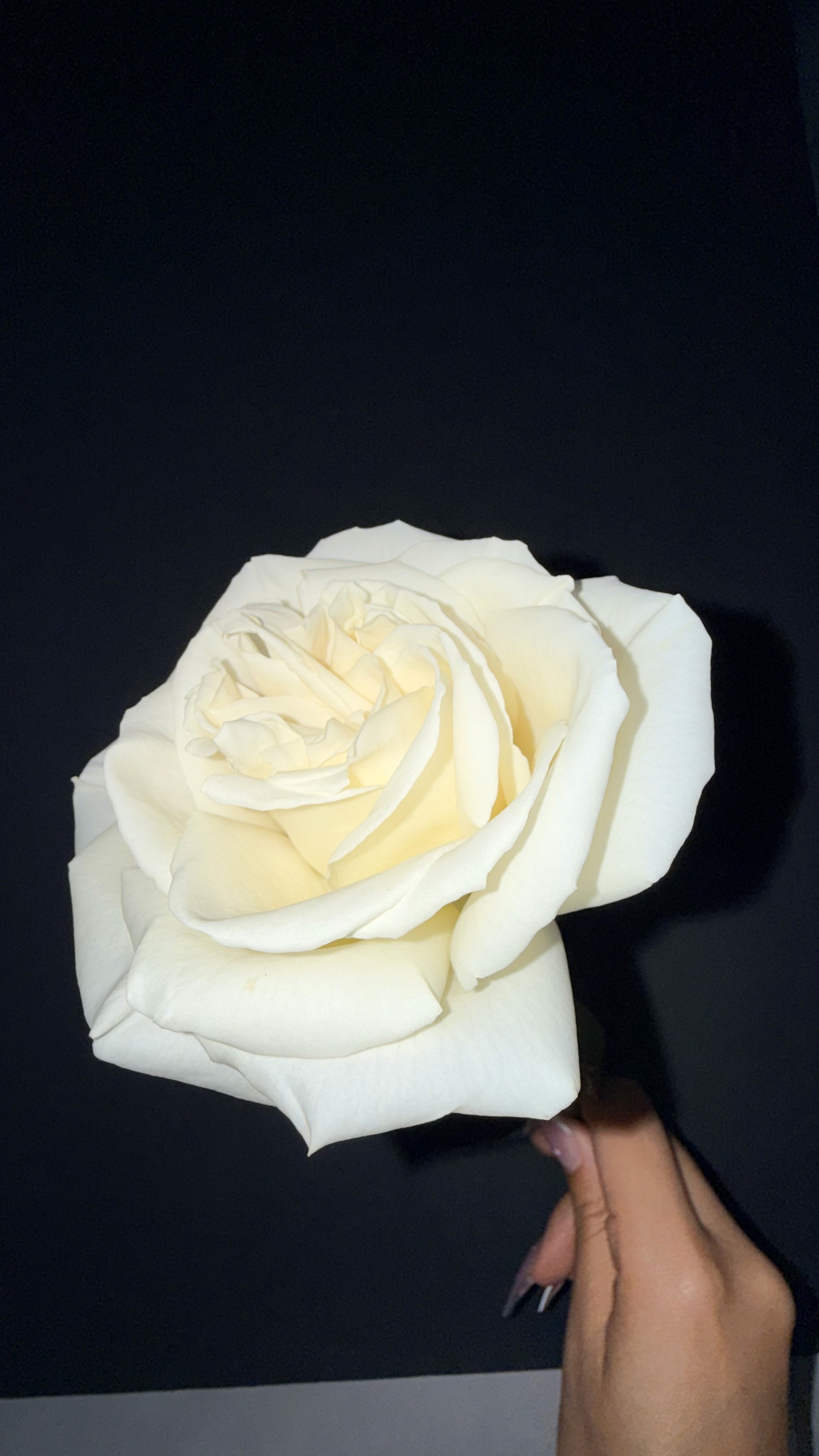
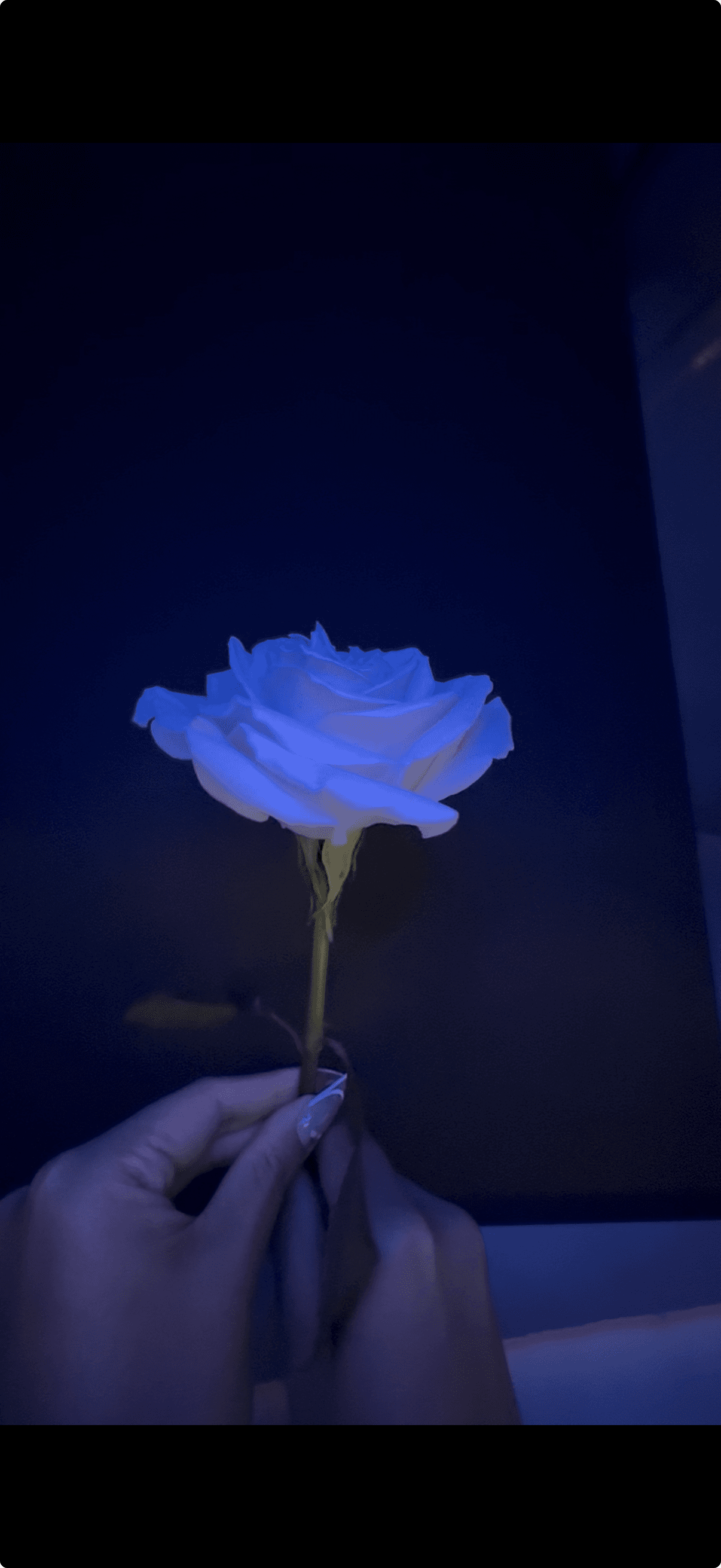
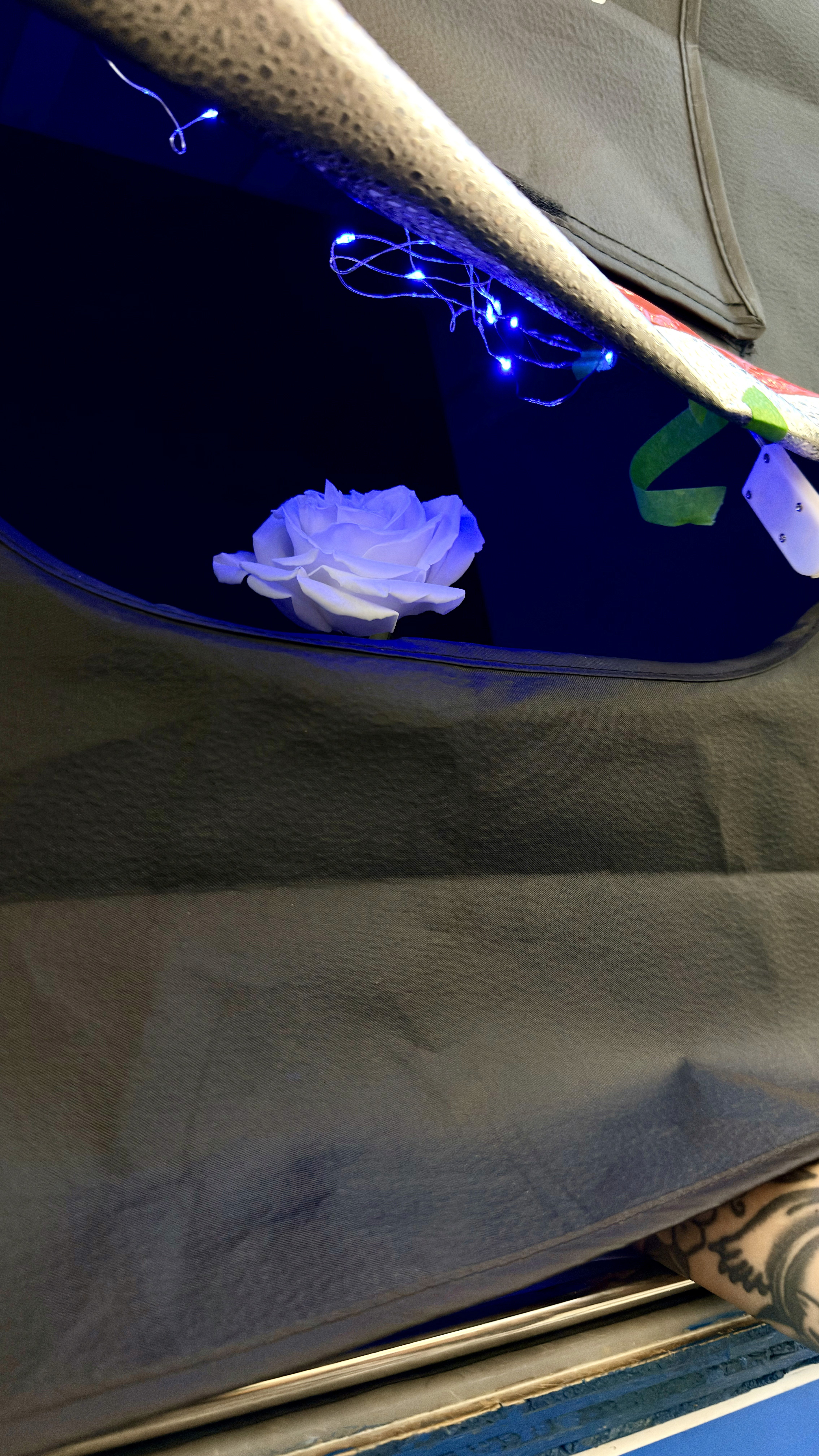
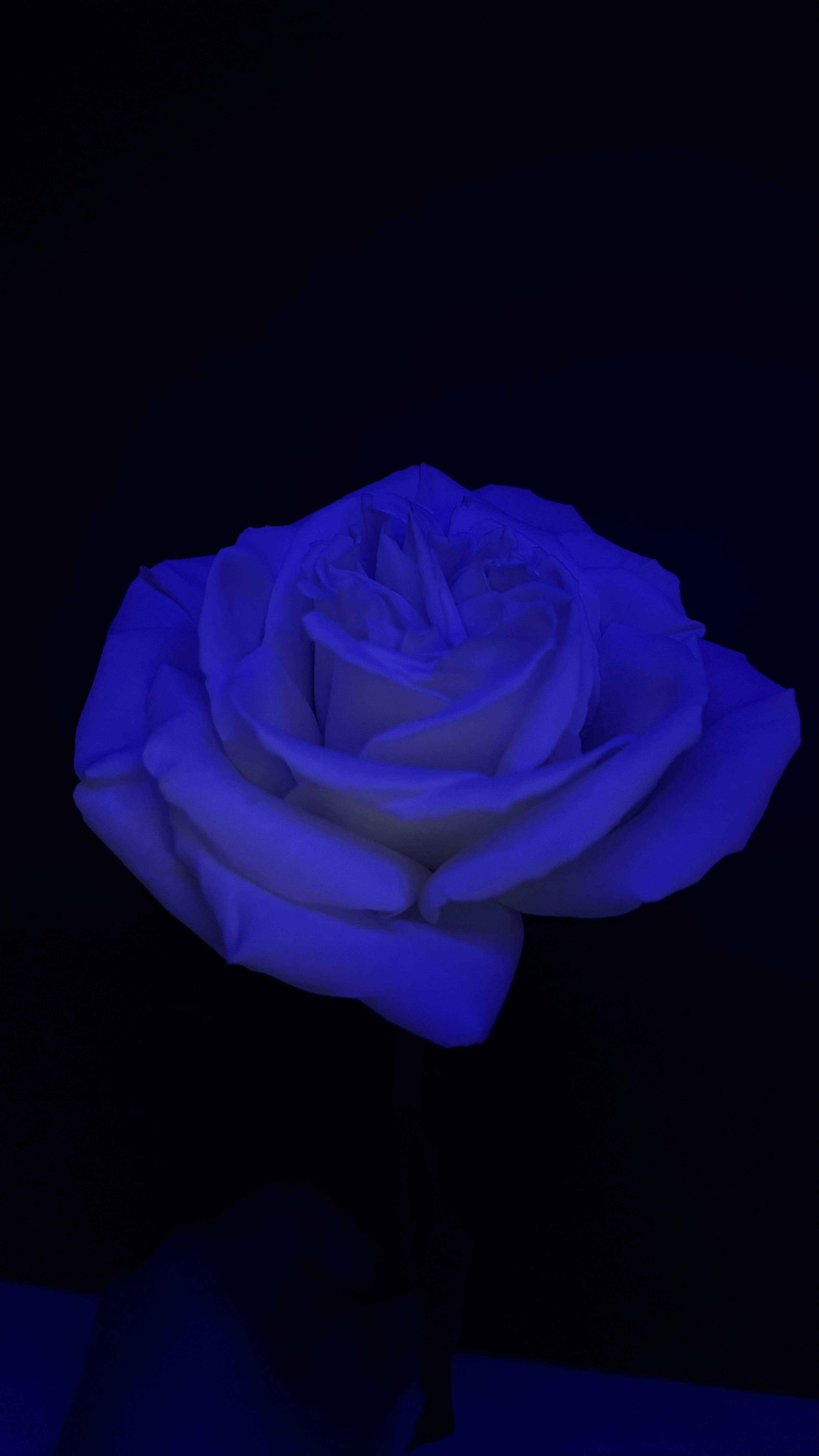
Blue string lights illuminate the rose being spun by Callie Huynh. This footage became the projected image.
Blue string lights illuminate the rose being spun by Callie Huynh. This footage became the projected image.
Blue string lights illuminate the rose being spun by Callie Huynh. This footage became the
projected image.
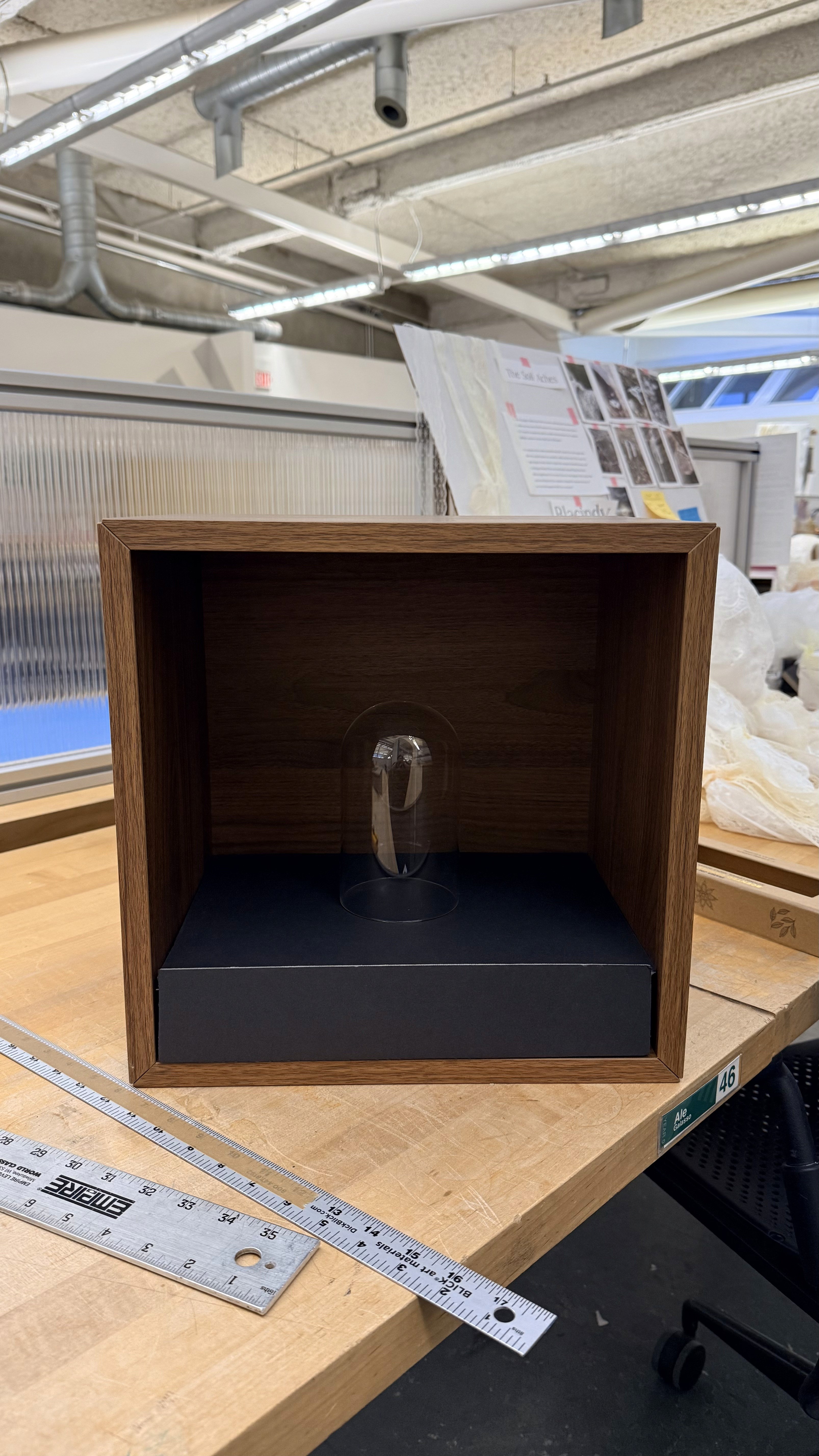
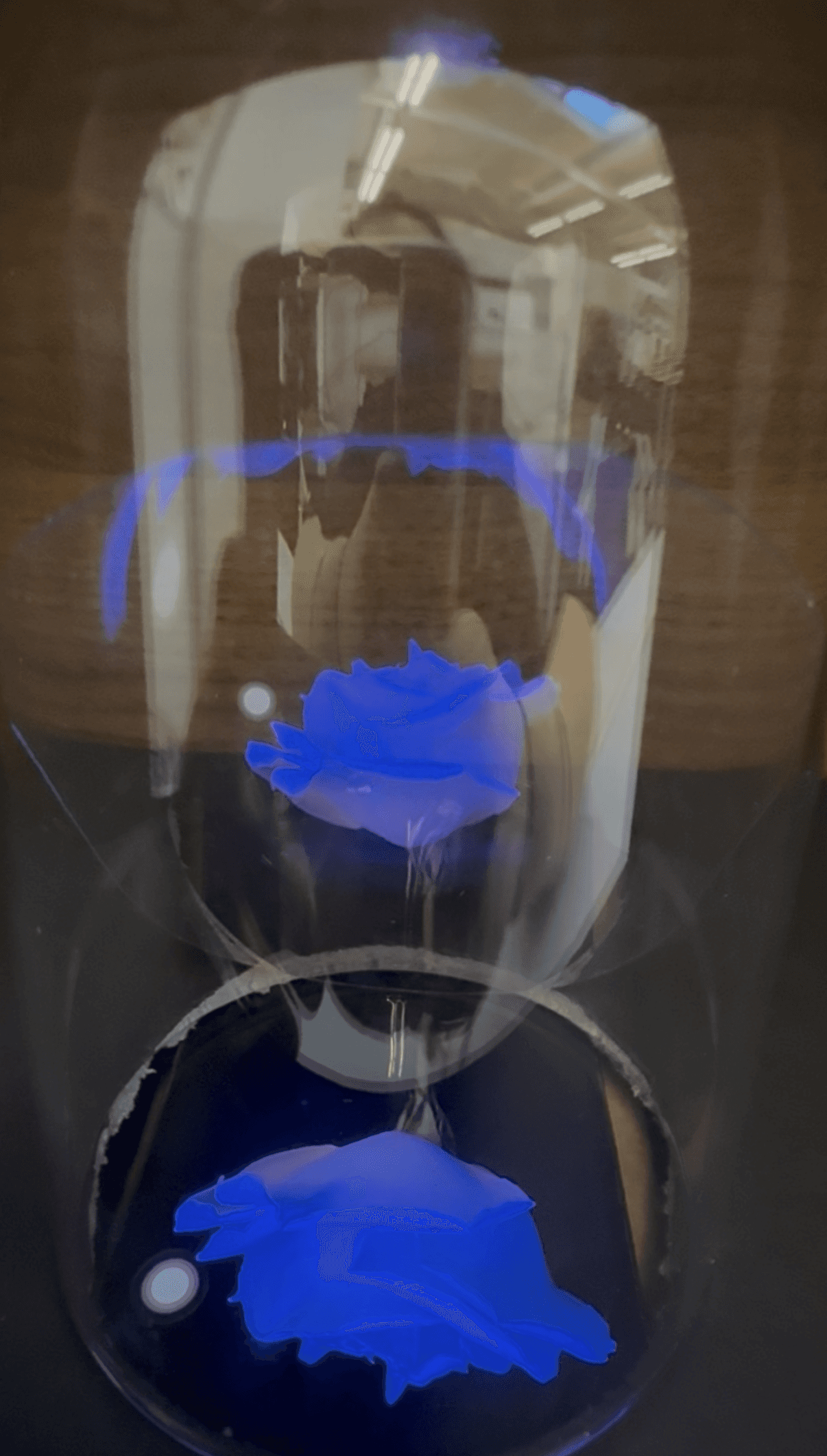
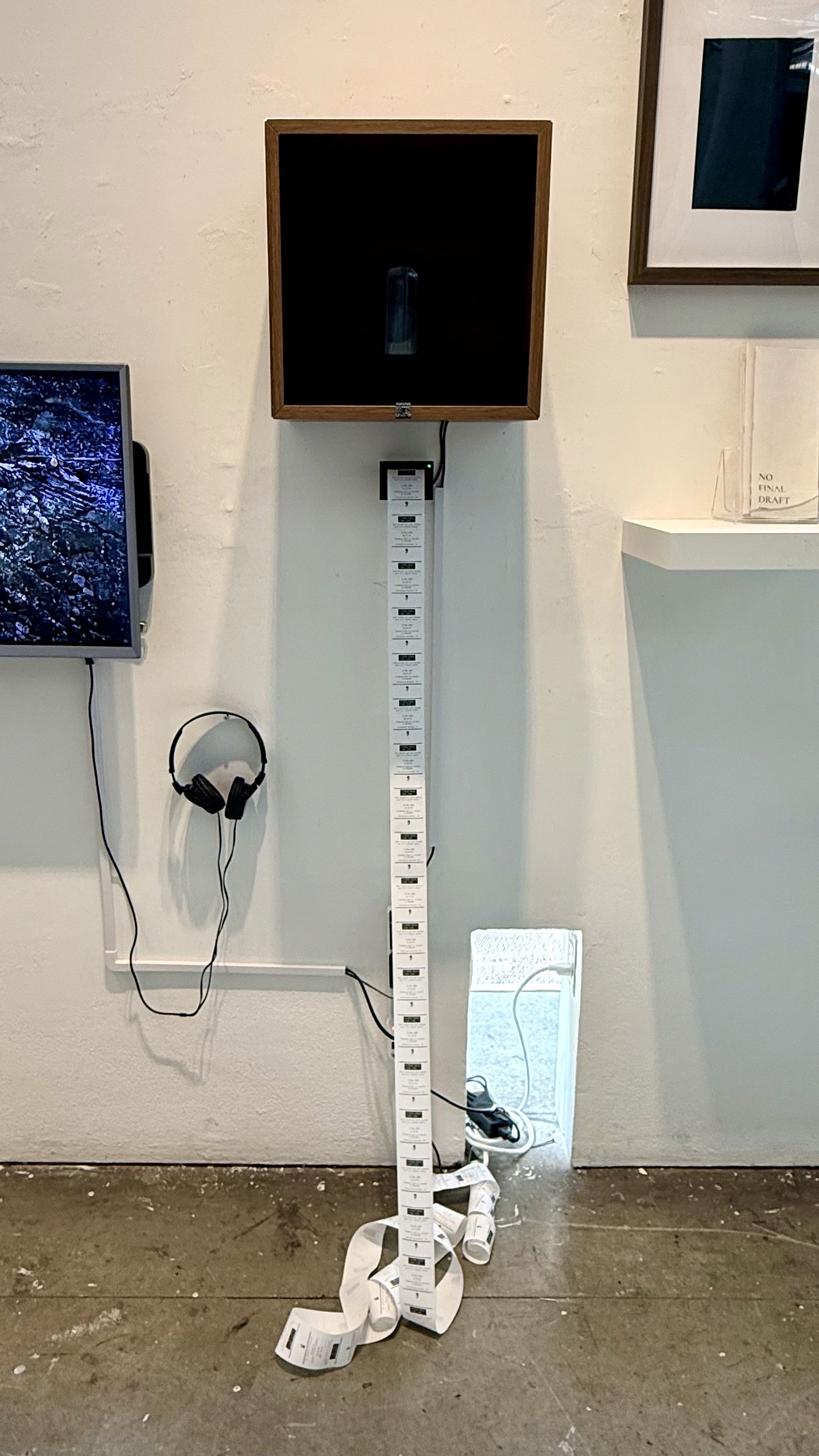
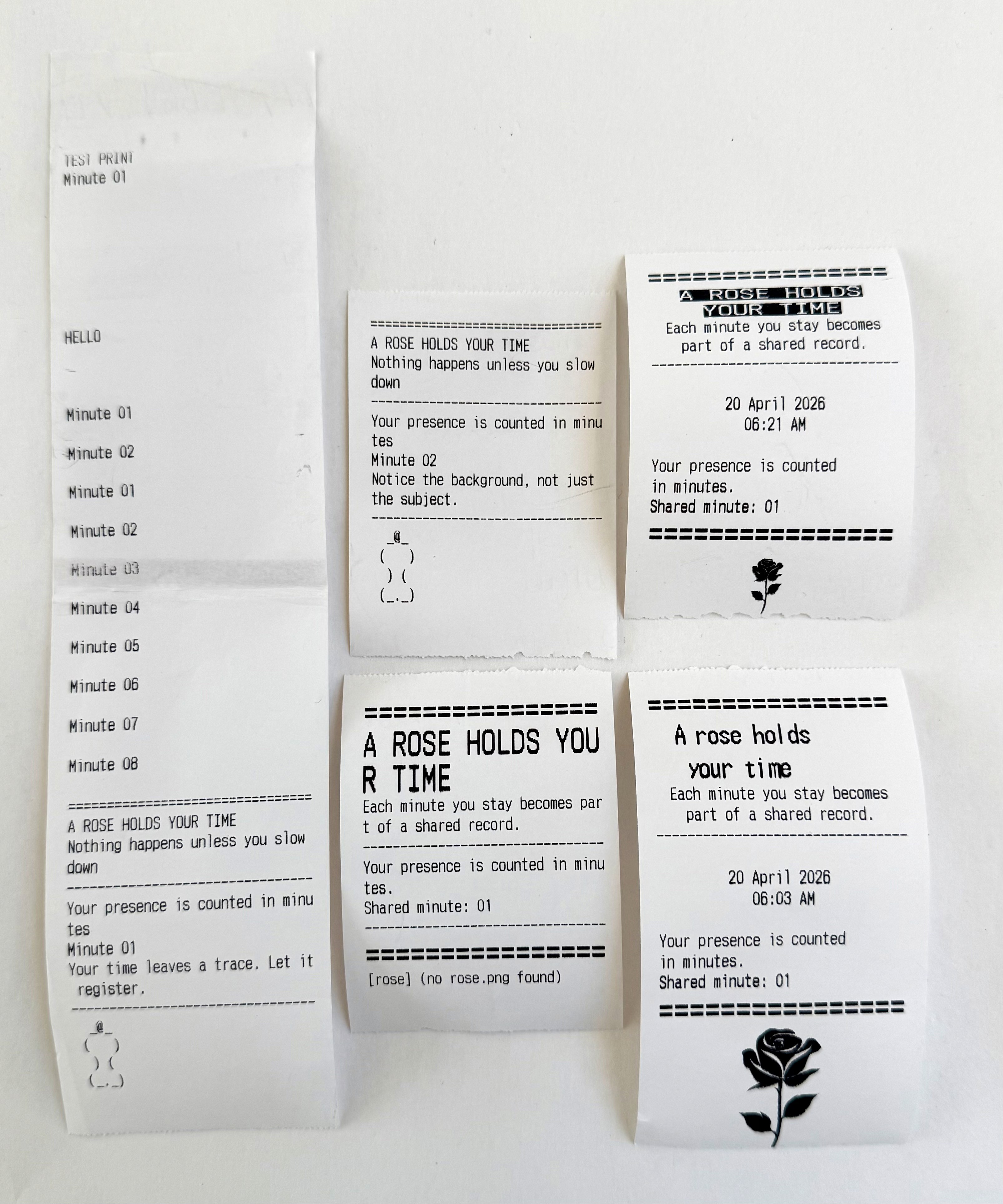
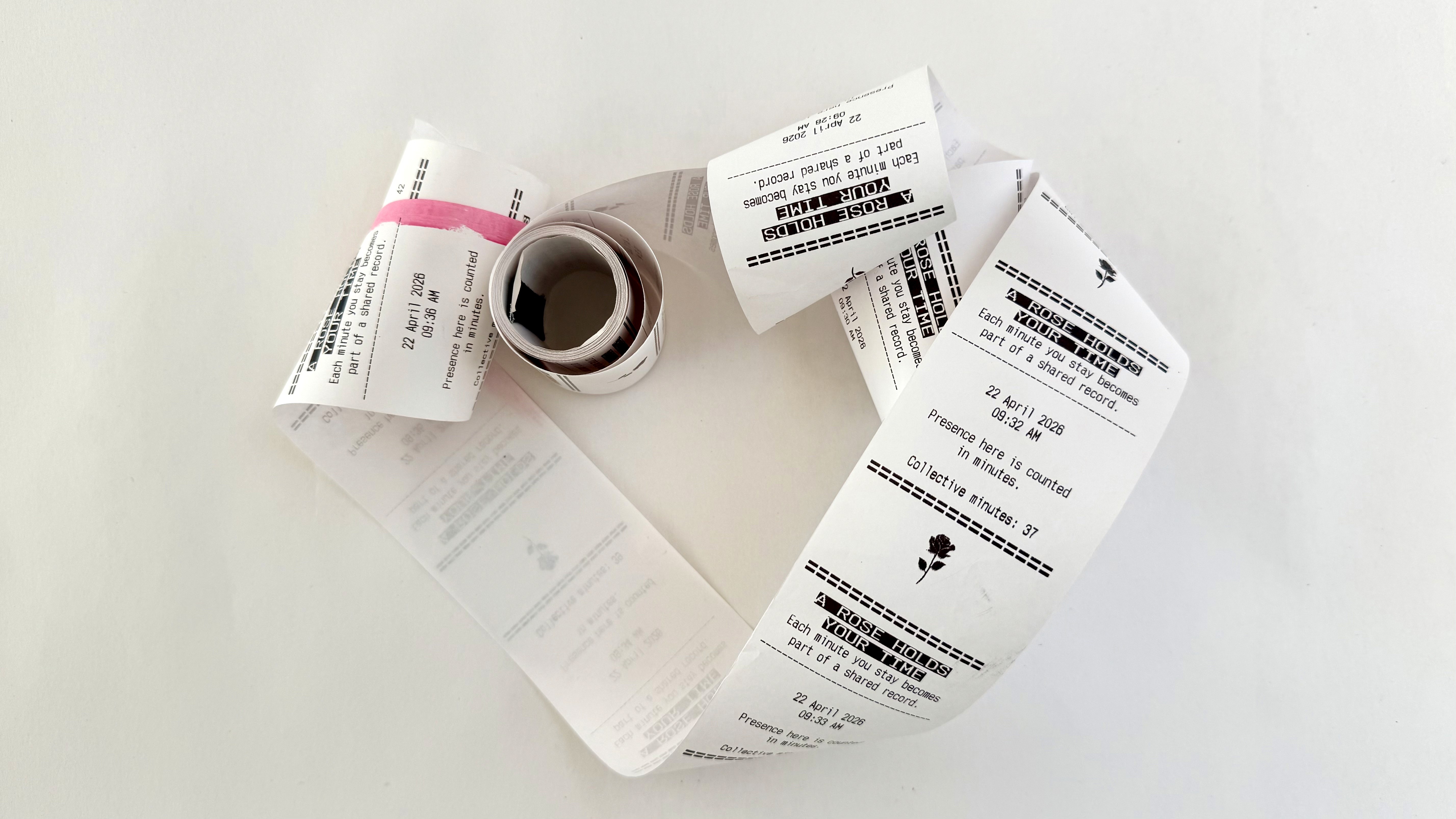
The rose and the thermal printer in the exhibition. The printer produces a receipt every sixty seconds someone remains close.
The rose and the thermal printer in the exhibition. The printer produces a receipt every sixty seconds someone remains close.
A proximity sensor detects when a viewer is close enough to activate the piece. When someone remains within range, the system begins counting time. Every sixty seconds, a thermal printer produces a receipt marking the total accumulated minutes viewers have stayed, collectively. Over the course of the exhibition, the paper trails downward from the printer and gathers on the floor. Time becomes a physical record. The receipts make duration visible as a material outcome rather than only a number. As the paper lengthens, the record becomes harder to ignore.
A proximity sensor detects when a viewer is close enough to activate the piece. When someone remains within range, the system begins counting time. Every sixty seconds, a thermal printer produces a receipt marking the total accumulated minutes viewers have stayed, collectively. Over the course of the exhibition, the paper trails downward from the printer and gathers on the floor. Time becomes a physical record. The receipts make duration visible as a material
outcome rather than only a number. As the paper lengthens, the record becomes harder to ignore.
A viewer may arrive because the rose catches their eye. What remains is a growing record of how long people chose to stay.
A viewer may arrive because the rose catches their eye. What remains is a growing record of how long people chose to stay.
A viewer may arrive because the rose catches their eye. What remains is a growing record of how long people chose to stay.
STUDY 07
STUDY 07
STUDY 07
Decay to Bloom
Decay to Bloom
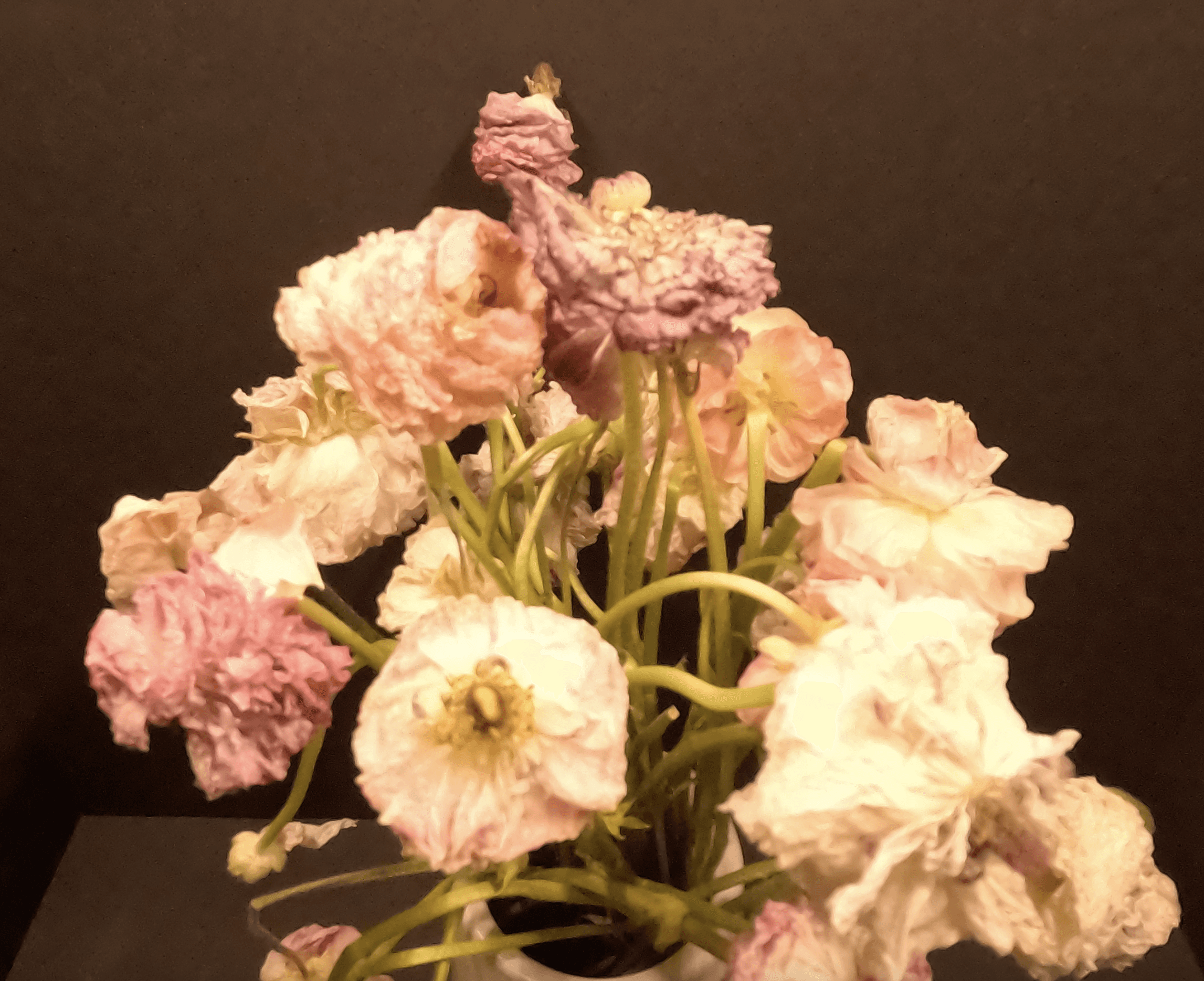
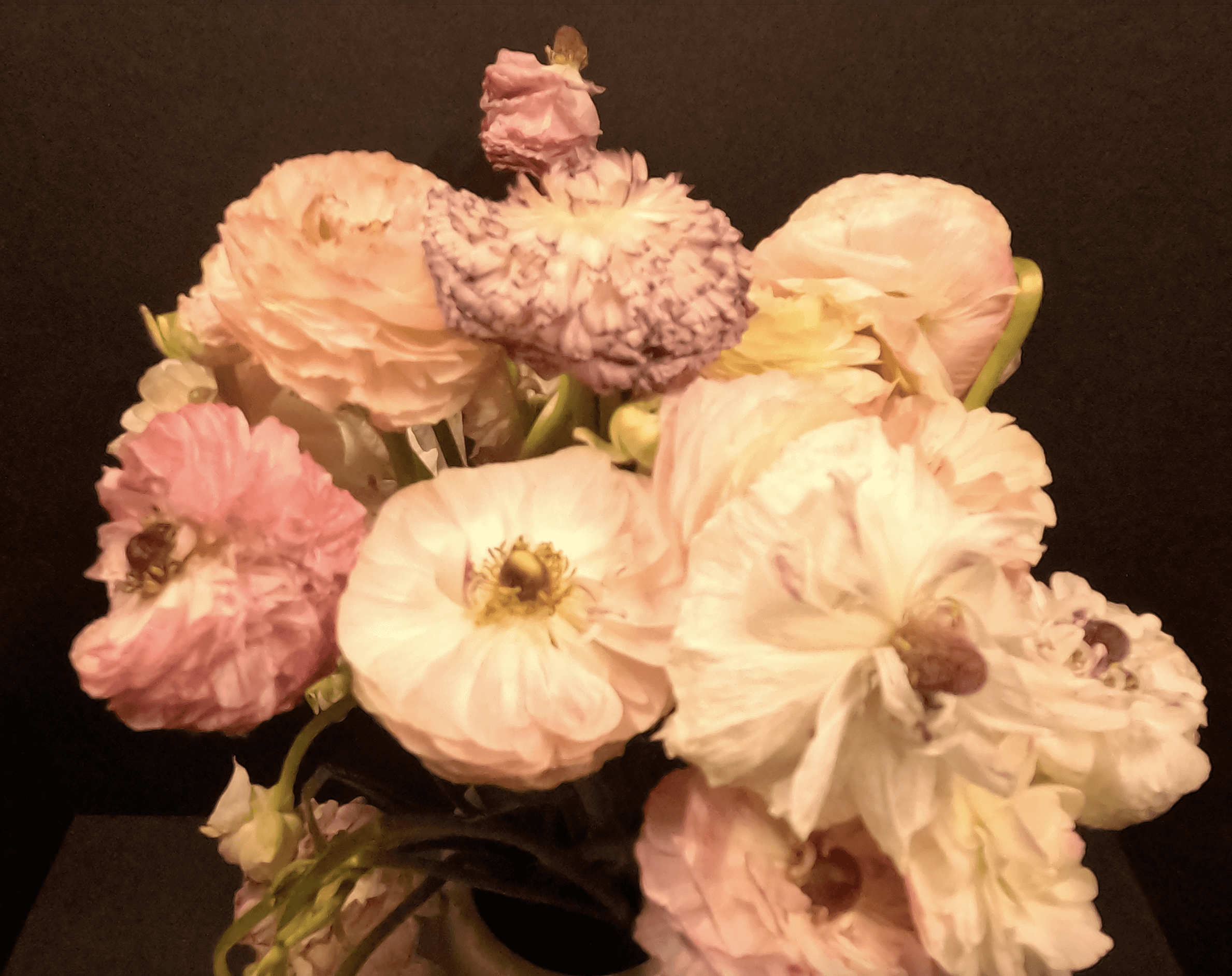
A flower is never stable. It is always moving toward collapse, even when it still looks full. I chose ranunculus because it makes that movement visible: thin, layered petals that change quickly once cut, holding beauty and loss in the same form.
The work is built from a durational recording of that decline. The resting state is the first frame of decay, the point where the arrangement still looks presentable but the shift has started. When a viewer approaches, the footage plays in reverse and the flowers appear to return toward bloom. When the viewer steps away, the image resets. The piece teaches its own rules by what it allows the viewer to see.
A flower is never stable. It is always moving toward collapse, even when it still looks full. I chose ranunculus because it makes that movement visible: thin, layered petals that change quickly once cut, holding beauty and loss in the same form.
The work is built from a durational recording of that decline. The resting state is the first frame of decay, the point where the arrangement still looks presentable but the shift has started. When a viewer approaches, the footage plays in reverse and the flowers appear to return toward bloom. When the viewer steps away, the image resets. The piece teaches its own rules by what it allows the viewer to see.
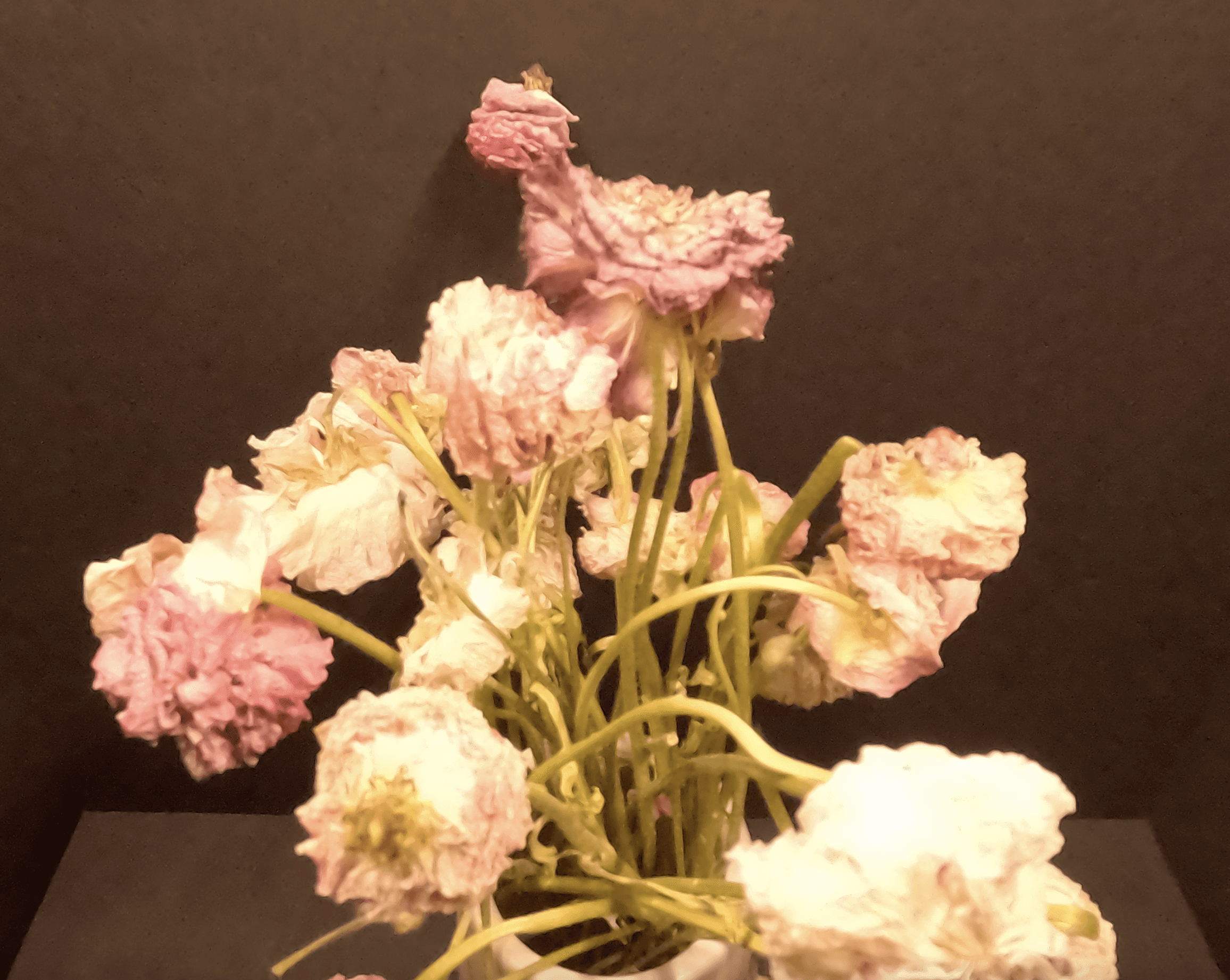
The initial resting frame: the point where the arrangement has decayed.
The initial resting frame: the point where the arrangement has decayed.
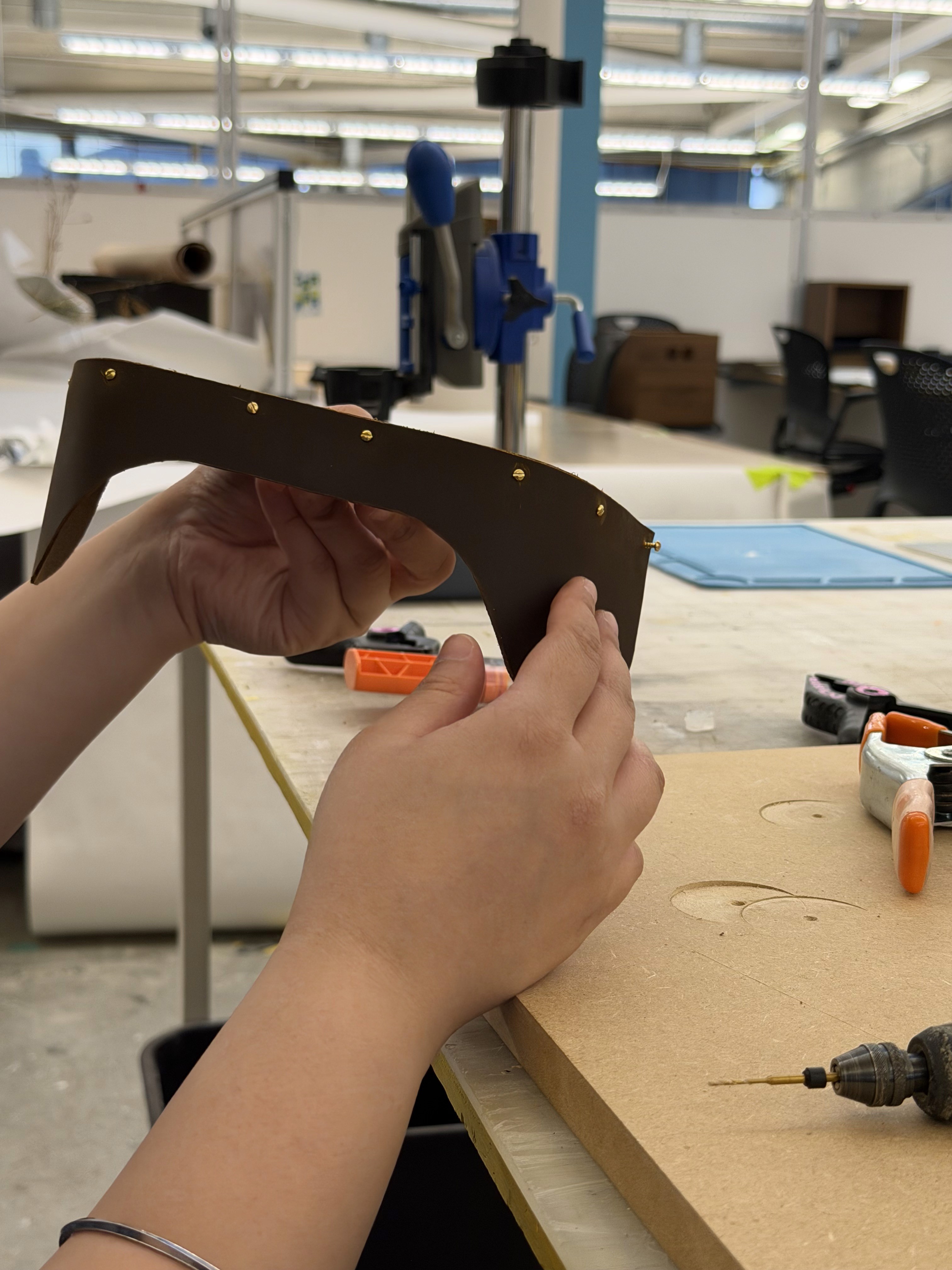
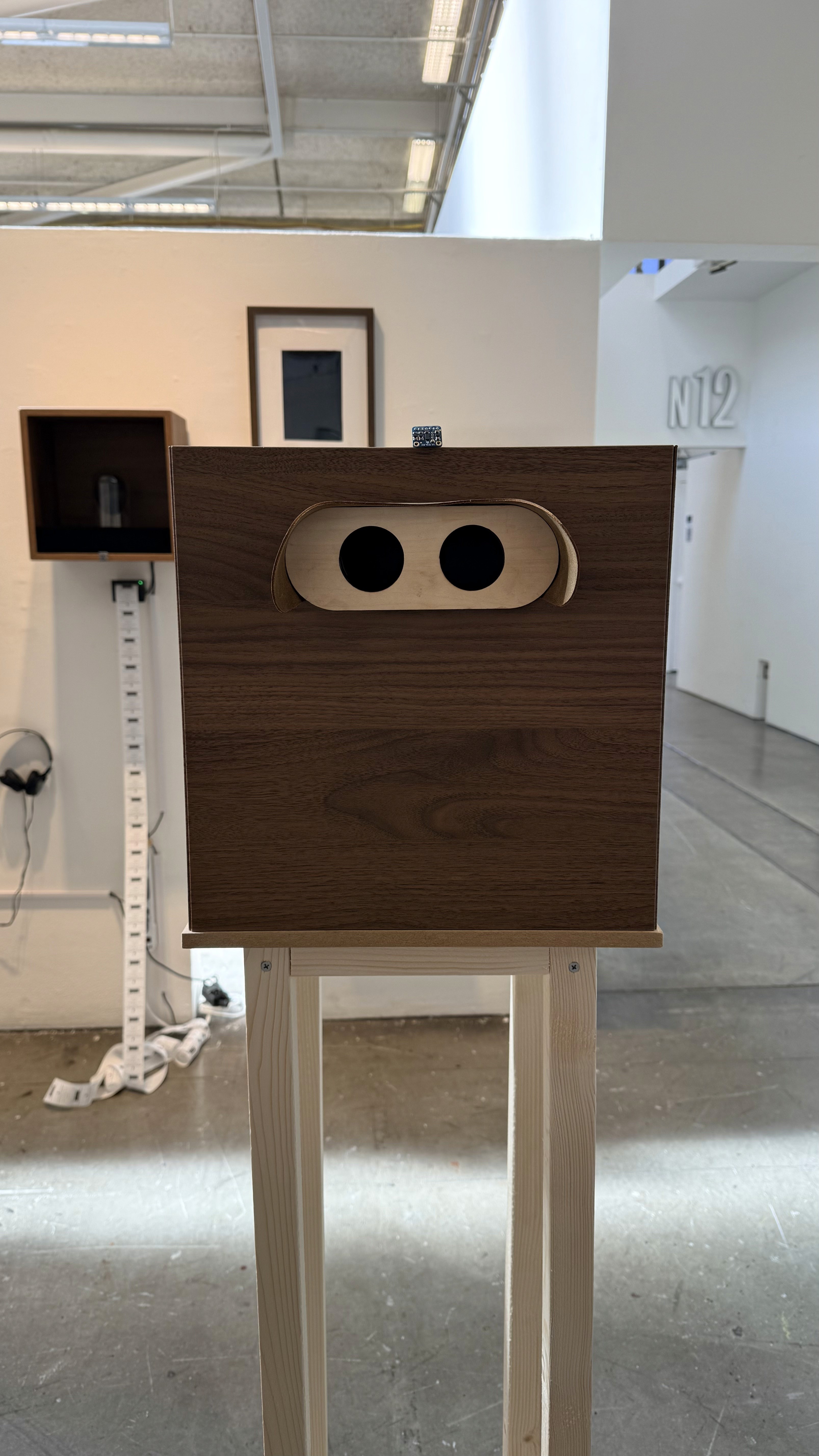
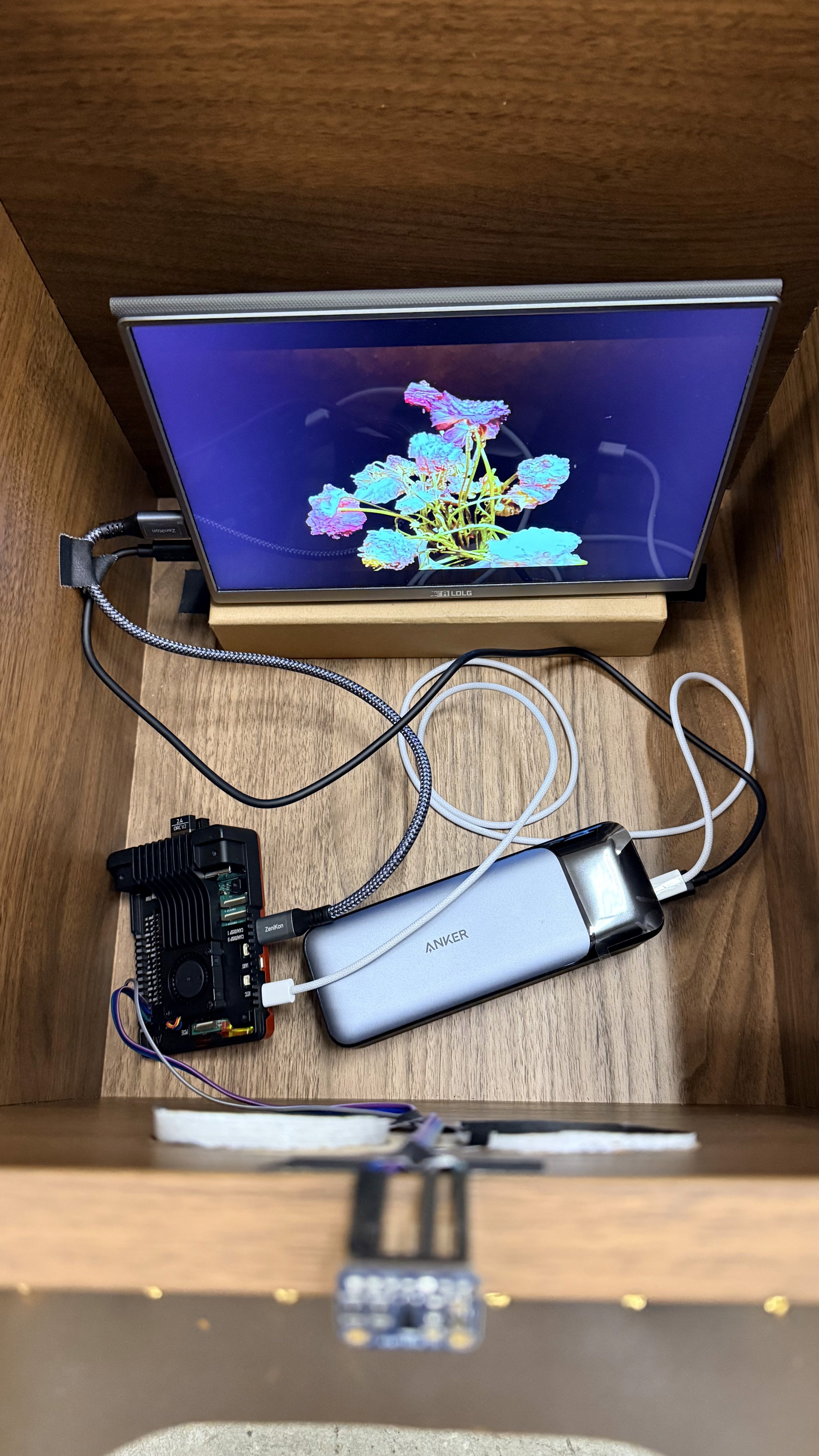
The piece on a pedestal inside a closed-door cube unit. Opening the door and holding position is part of the posture of viewing.
The piece on a pedestal inside a closed-door cube unit. Opening the door and holding position is part of the posture of viewing.


The reversal does not cancel decay. It makes it more legible. The project holds two temporal directions in tension: the original recording, where time
unravels the bouquet, and the exhibited behavior, where proximity invites it to re-form. Leaving early interrupts the unfolding. Staying changes what
becomes available.
The reversal does not cancel decay. It makes it more legible. The project holds two temporal directions in tension: the original recording, where time unravels the bouquet, and the exhibited behavior, where proximity invites it to re-form. Leaving early interrupts the unfolding. Staying changes what becomes available.
The reversal does not cancel decay. It makes it more legible. The project holds two temporal directions in tension: the original recording, where time unravels the bouquet, and the exhibited behavior, where proximity invites it to re-form. Leaving early interrupts the unfolding. Staying changes what becomes available.
FUTURE WORK
FUTURE WORK
Sea Urchin Spine Table
Sea Urchin Spine Table
In collaboration with Christina Gatmaitan. A table-based experience that extends the thesis into a more explicitly shared setting.
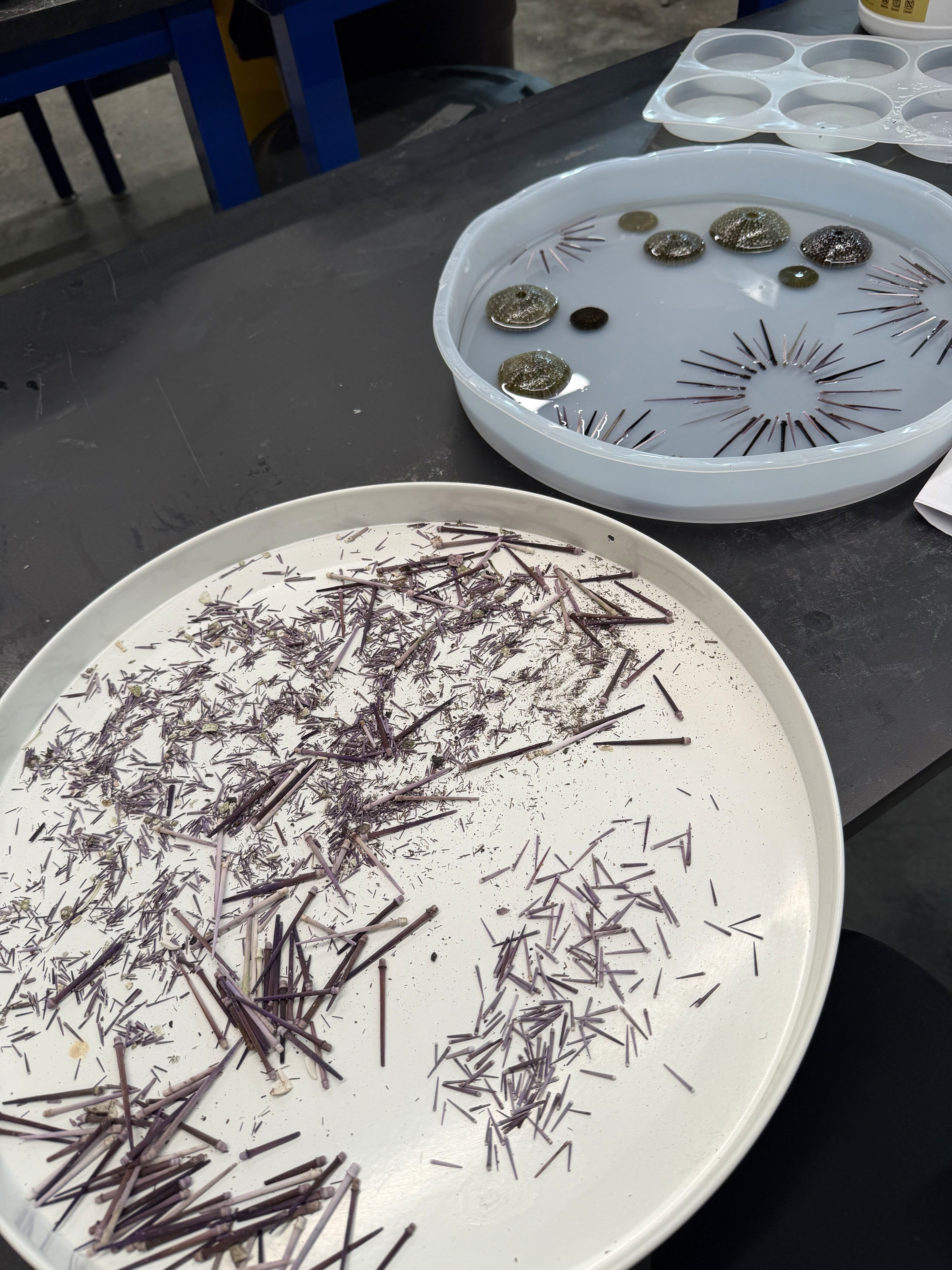
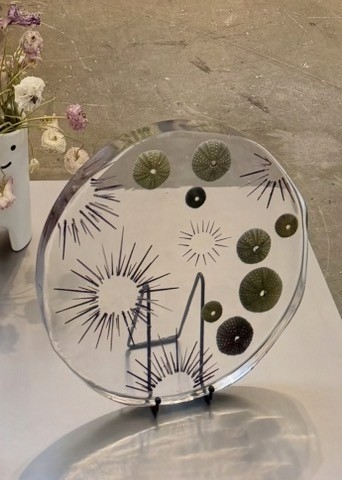
The table uses sea urchin spines embedded in resin as a tabletop surface, designed for at least two people to sit together, eat, and remain with one another in shared time. Attunement here is treated as relational rather than private: shaped through conversation and silence, posture and pacing, and the small shifts that become noticeable when people stay at the same surface long enough for the encounter to deepen. Sea urchin spines carry an immediate visual charge, sharp, rhythmic, and structurally precise, and in resin they produce depth that rewards sustained looking and gives people something to point to and interpret together.
In collaboration with Christina Gatmaitan. A table-based experience that extends the thesis into a more explicitly shared setting.
The table uses sea urchin spines embedded in resin as a tabletop surface, designed for at least two people to sit together, eat, and remain with one another in shared time. Attunement here is treated as relational rather than private: shaped through conversation and silence, posture and pacing, and the small shifts that become noticeable when people stay at the same surface long enough for the encounter to deepen. Sea urchin spines carry an immediate visual charge, sharp, rhythmic, and structurally precise, and in resin they produce depth that rewards sustained looking and gives people something to point to and interpret together.