Beyond the Surface
Beyond the Surface
Beyond the Surface
A portable archive of coastal materials, made for slow looking.
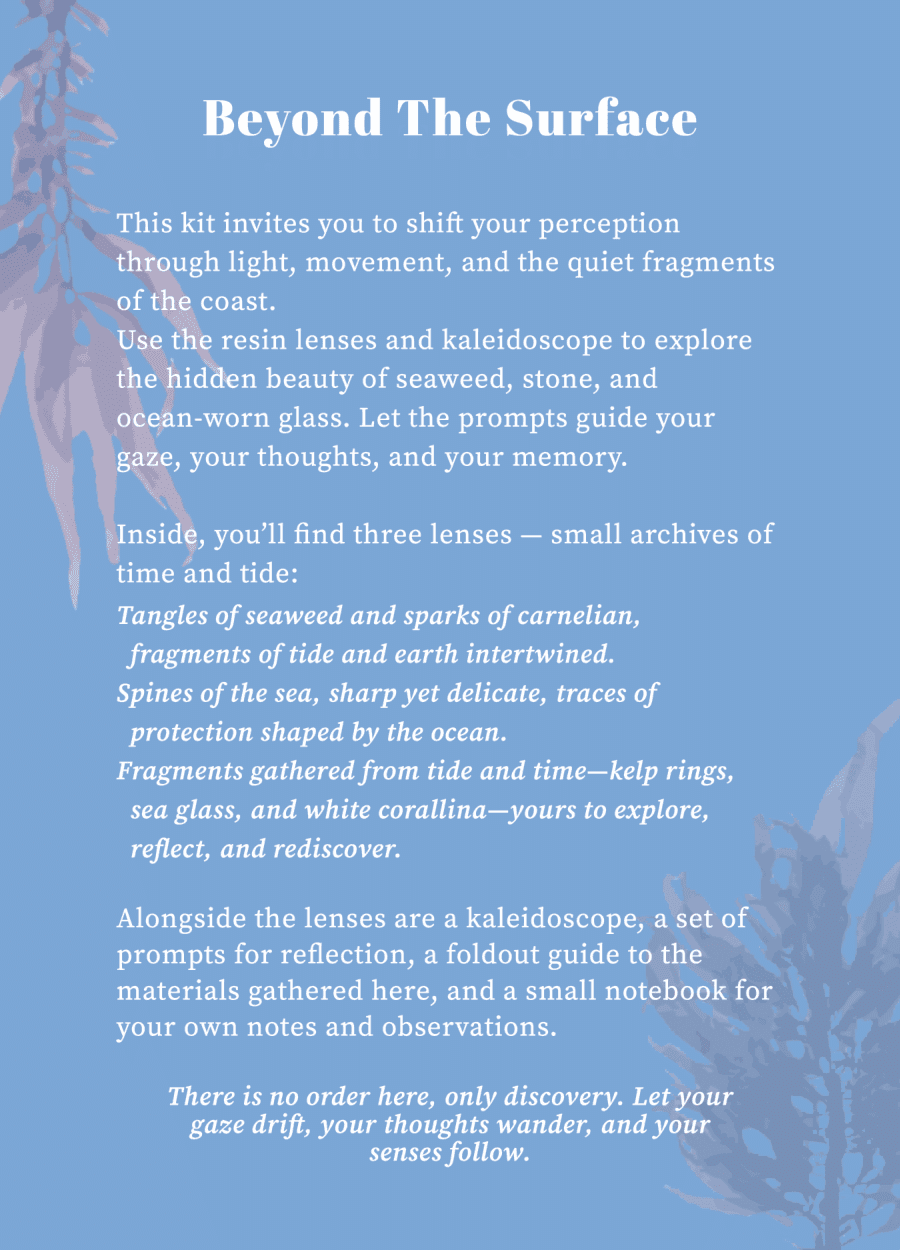
Three resin lenses, a kaleidoscope, and a set of prompts: a portable experience for looking closely at coastal materials, taken home and returned to.
A portable archive of coastal materials, made for slow looking.
Three resin lenses, a kaleidoscope, and a set of prompts: a portable experience for looking closely at coastal materials, taken home and returned to.
A portable archive of coastal materials, made for slow looking.
Three resin lenses, a kaleidoscope, and a set of prompts: a portable experience for looking closely at coastal materials, taken home and returned to.

Role
Role
Role
Solo: concept, material design, resin casting,
print design, assembly
Solo: concept, material design, resin casting, print design, assembly
Solo: concept, material design,
resin casting, print design, assembly
Context
Context
Context
Hybrid Business Practice, CCA MFA Design
Spring 2025
Hybrid Business Practice,
CCA MFA Design, Spring 2025
Hybrid Business Practice,
CCA MFA Design, Spring 2025
Type
Type
Type
Physical product, edition of 12 · 3 sold at $60 each
Physical product, edition of 12 3 sold at $60 each
Physical product, edition of 12
3 sold at $60 each
Tools
Tools
Tools
Resin casting, silicone molds, laser printing, hand assembly
Resin casting, silicone molds,
laser printing, hand assembly
Resin casting, silicone molds,
laser printing, hand assembly
Exhibited
2025 Hybrid Editions, Letterform Archive
May 29 - June 22, 2025
Exhibited
2025 Hybrid Editions, Letterform Archive
May 29 - June 22, 2025
Exhibited
2025 Hybrid Editions, Letterform Archive
May 29 - June 22, 2025
THE BRIEF
Design for a sense we don't usually share
The studio asked for a mobile peripheral inspired by nature, sitting between speculative and real. I chose the hardest thing for people to share: how we actually feel. We can send words and images instantly, but the feeling underneath stays private, especially across distance.
THE BRIEF
THE BRIEF
A gallery experience that fits in your hands
Specimens in Suspension is a shared, gallery-scale object. I wanted to know what that experience felt like held in a single pair of hands, personal
and portable.
At gallery scale, you come to the object. The context frames it for you. What changes when the object is yours to take home, pick up on a different day, in different light, without anyone else in the room?
Specimens in Suspension is a shared, gallery-scale object. I wanted to know what that experience felt like held in a single pair of hands, personal and portable.
At gallery scale, you come to the object. The context frames it for you. What changes when the object is yours to take home, pick up on a different day, in different light, without anyone else in the room?
THE SYSTEM
A kit designed for no particular order
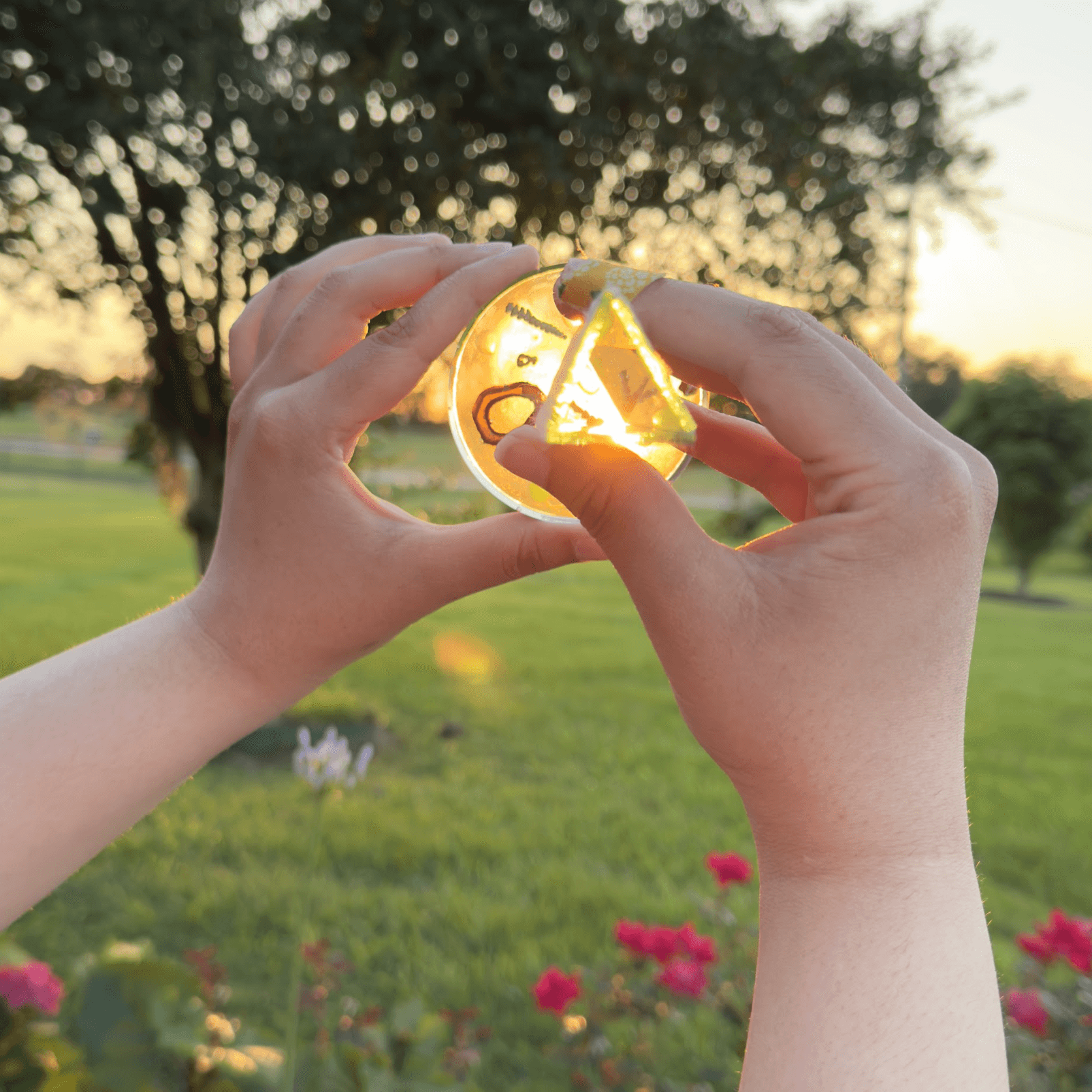
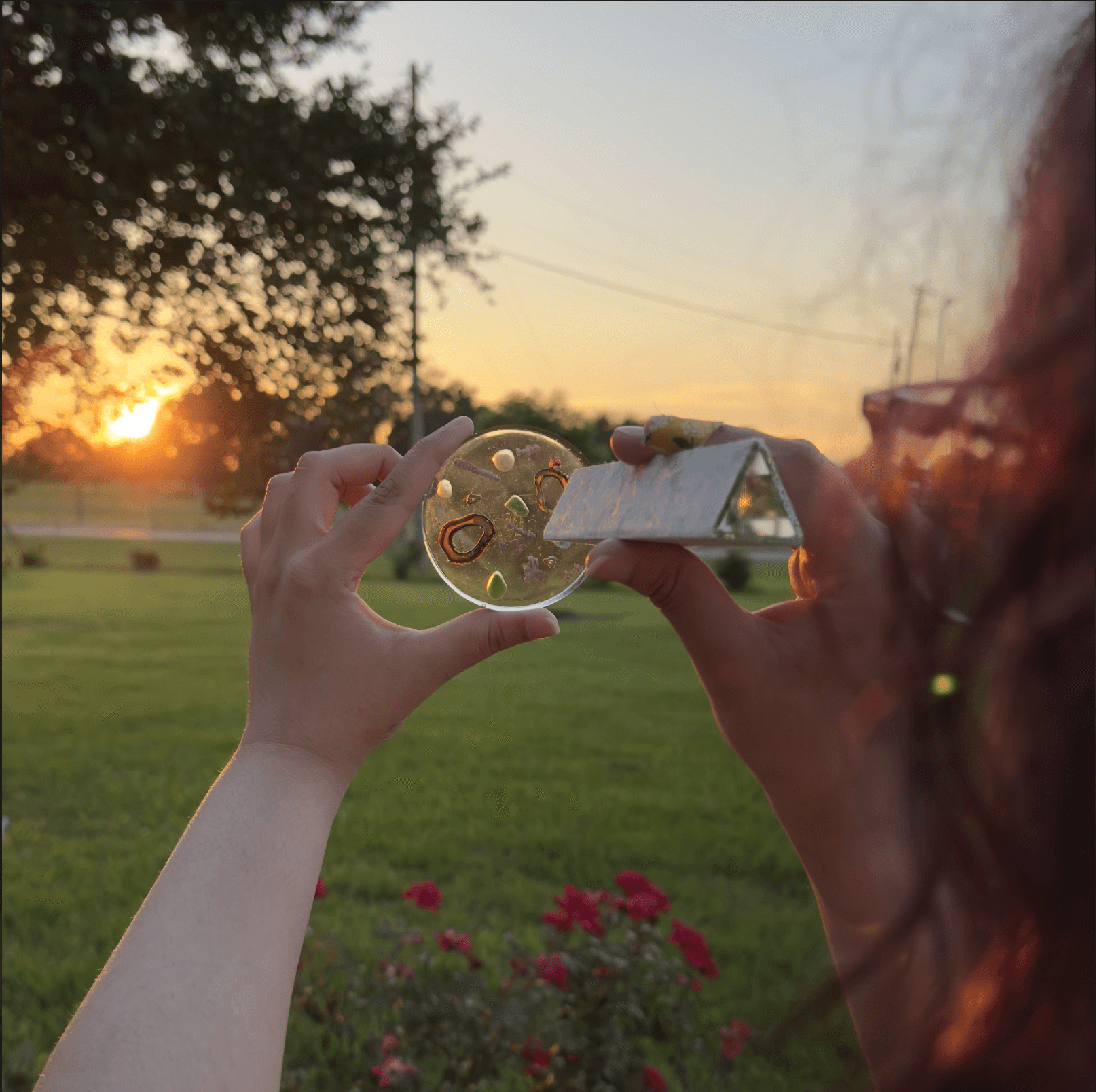
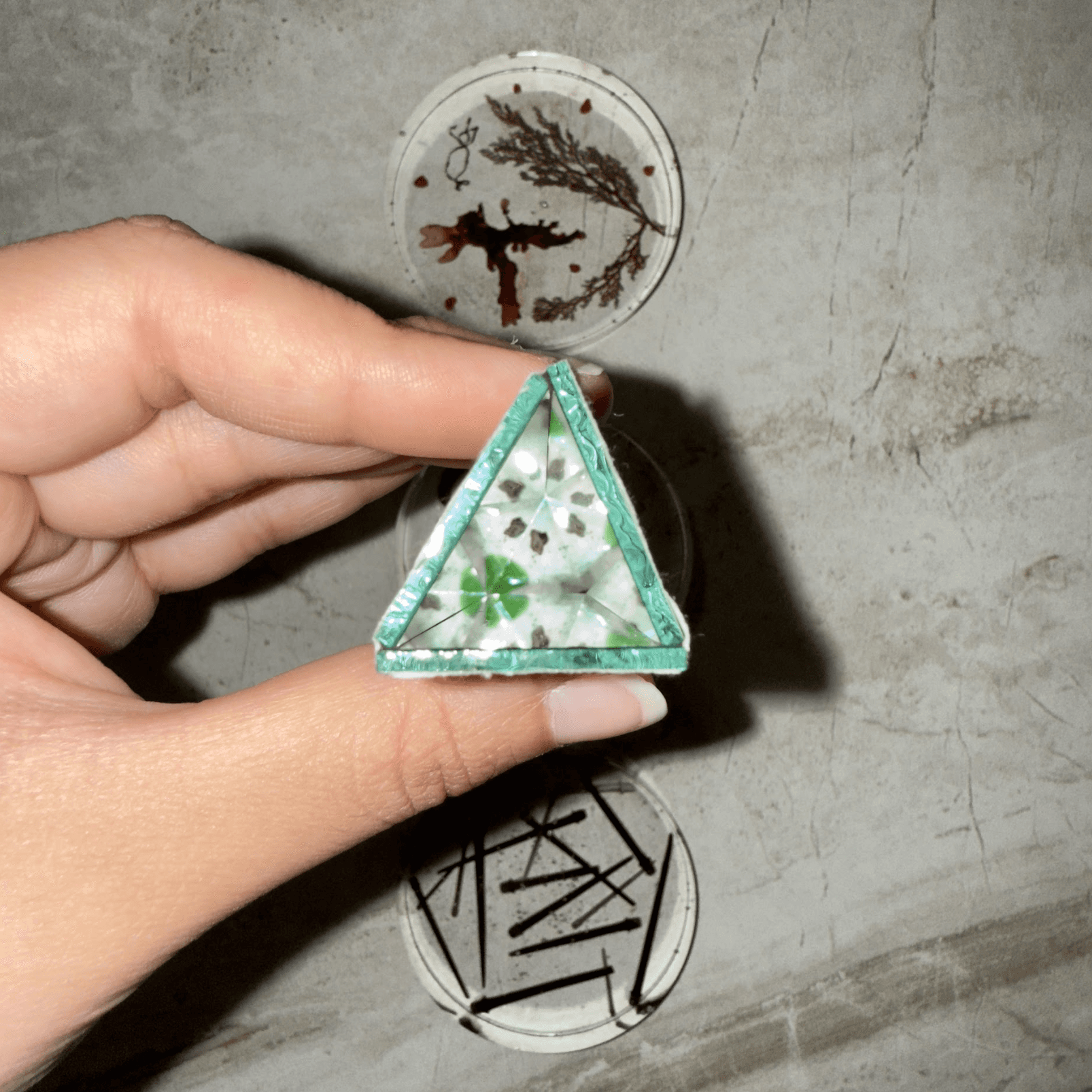
The kit contains three resin lenses, each one a small archive of coastal material, alongside a kaleidoscope that breaks light differently through each specimen. A foldout guide names what is inside the lenses. A set of reflection prompts and a small notebook give the experience a place
to land.
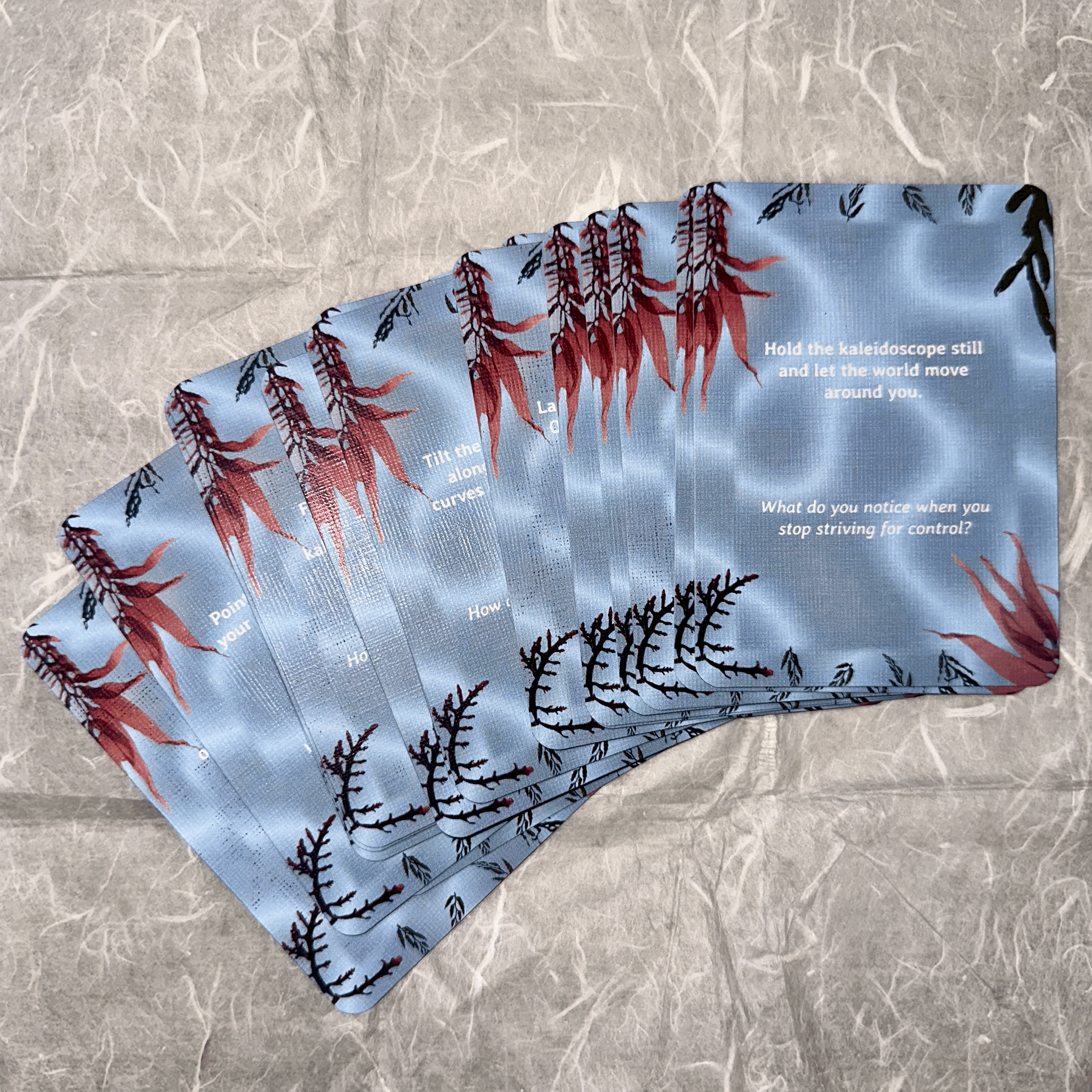
The decision not to include instructions was deliberate. The opening card says: "There is no order here, only discovery." The prompts exist to guide attention, not to sequence it.
WHAT'S INSIDE
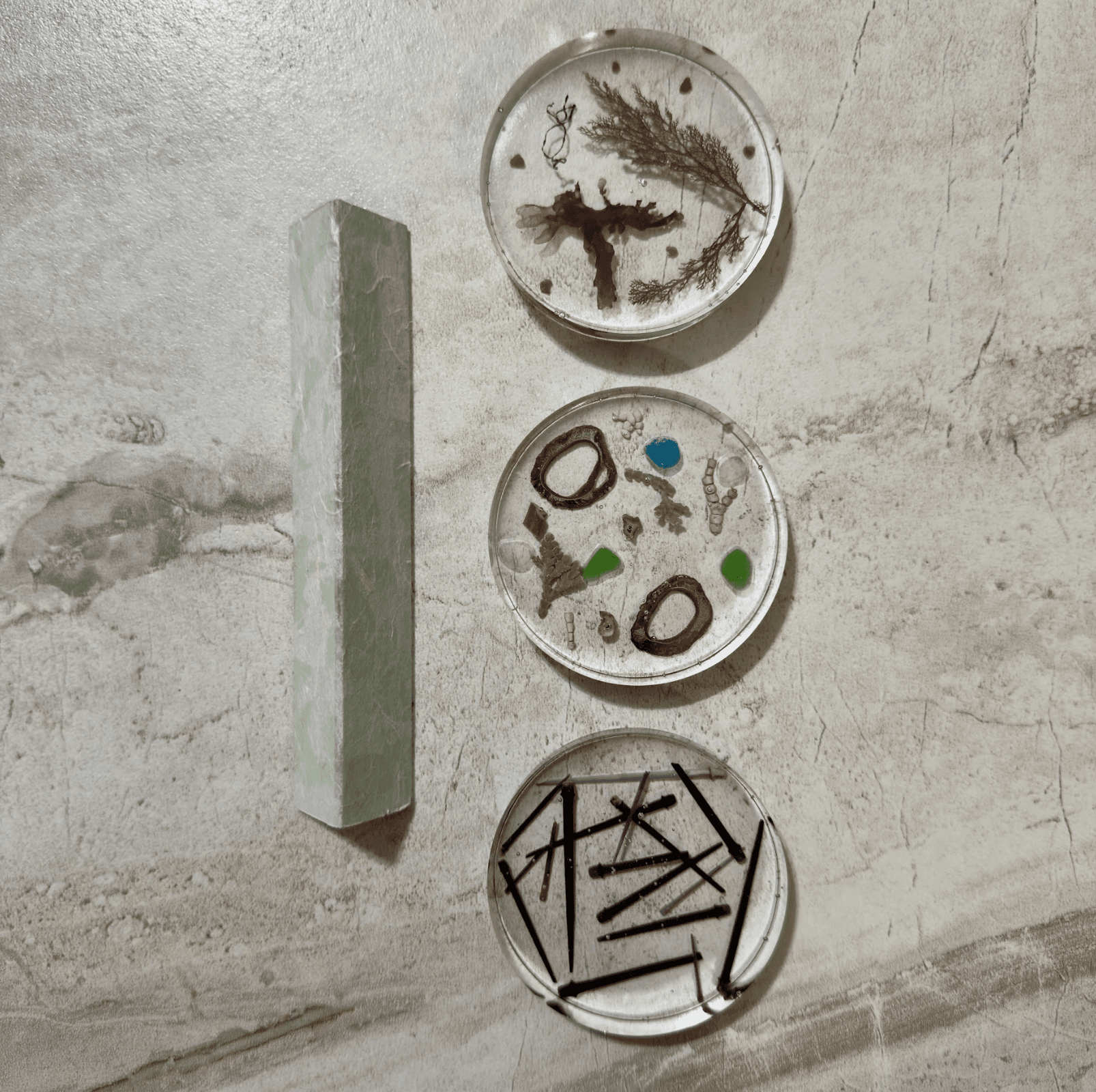
Lens 01: Urchin Spines
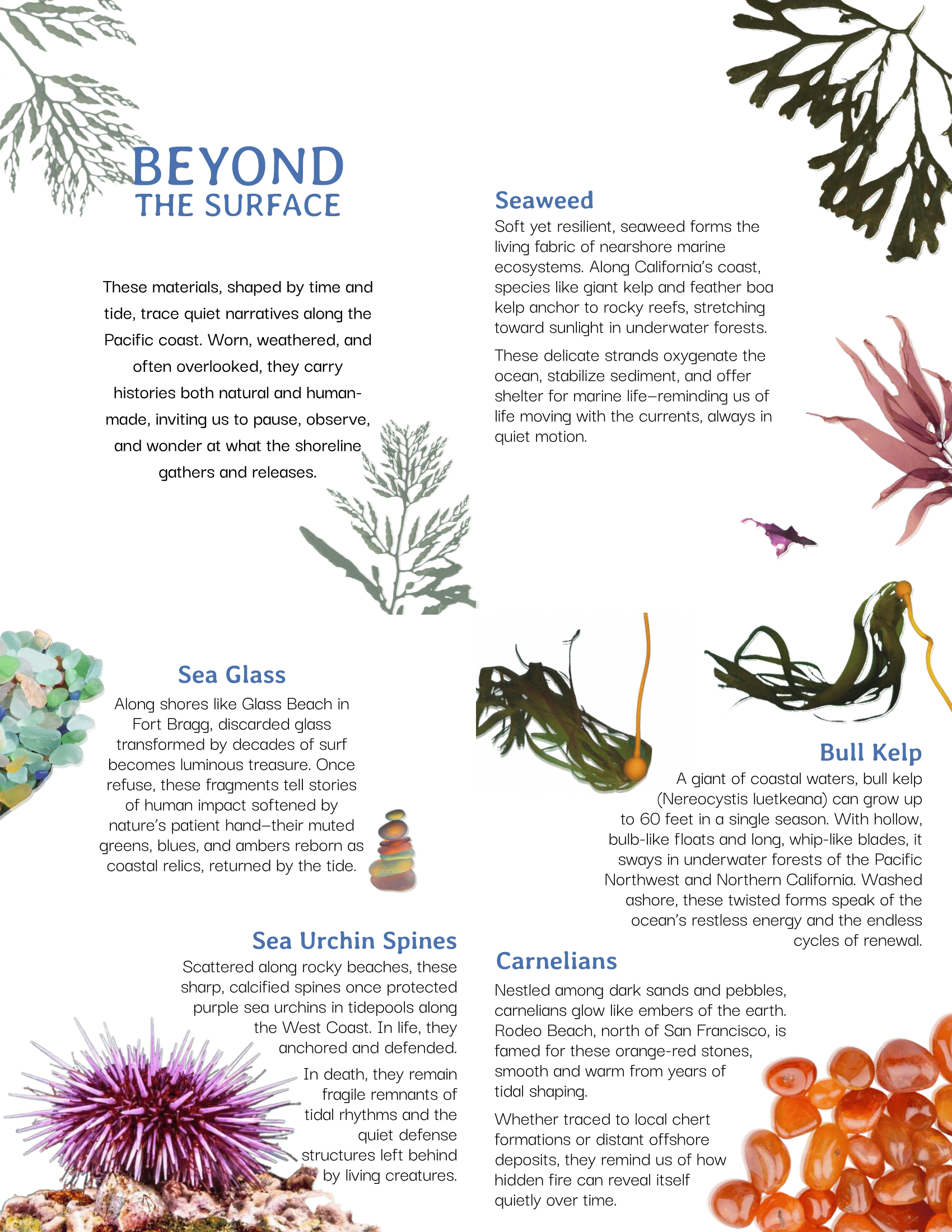
Sea urchin spines suspended in resin. Sharp, rhythmic, structurally precise: a grid the eye follows without instruction.
Pressed seaweed held alongside fragments of carnelian. Organic branching form against polished, warm-toned stone.
Lens 02: Seaweed and Carnelian
Kelp rings, ocean-worn sea glass, and white corallina. Each material shaped by tide and time, gathered from the same stretch of coast.
Lens 03: Kelp Rings, Sea Glass, Corallina
One material, two jobs: folded into an envelope to hold the prompt cards, and wrapped as a cover for the kaleidoscope.
To look through, reflect with, read from, and write in. No required sequence; the prompts invite, they don't instruct.
Japanese Paper
Kaleidoscope, Prompts, Foldout, Notebook
THE QUESTION THAT DROVE IT
How might I make an experience of slow, tactile looking into something a person can hold, take home, and return to?
THE QUESTION THAT DROVE IT
How might I make an experience of slow, tactile looking into something a person can hold, take home, and return to?
THE QUESTION THAT DROVE IT
How might I make an experience of slow, tactile looking into something a person can hold, take home, and return to?
THE SYSTEM
THE SYSTEM
A kit designed for no particular order
The kit contains three resin lenses, each one a small archive of coastal material, alongside a kaleidoscope that breaks light differently through each specimen. A foldout guide names what is inside the lenses. A set of reflection prompts and a small notebook give the experience a place to land.
The decision not to include instructions was deliberate. The opening card says: "There is no order here, only discovery." The prompts exist to guide attention, not to sequence it.
WHAT'S INSIDE
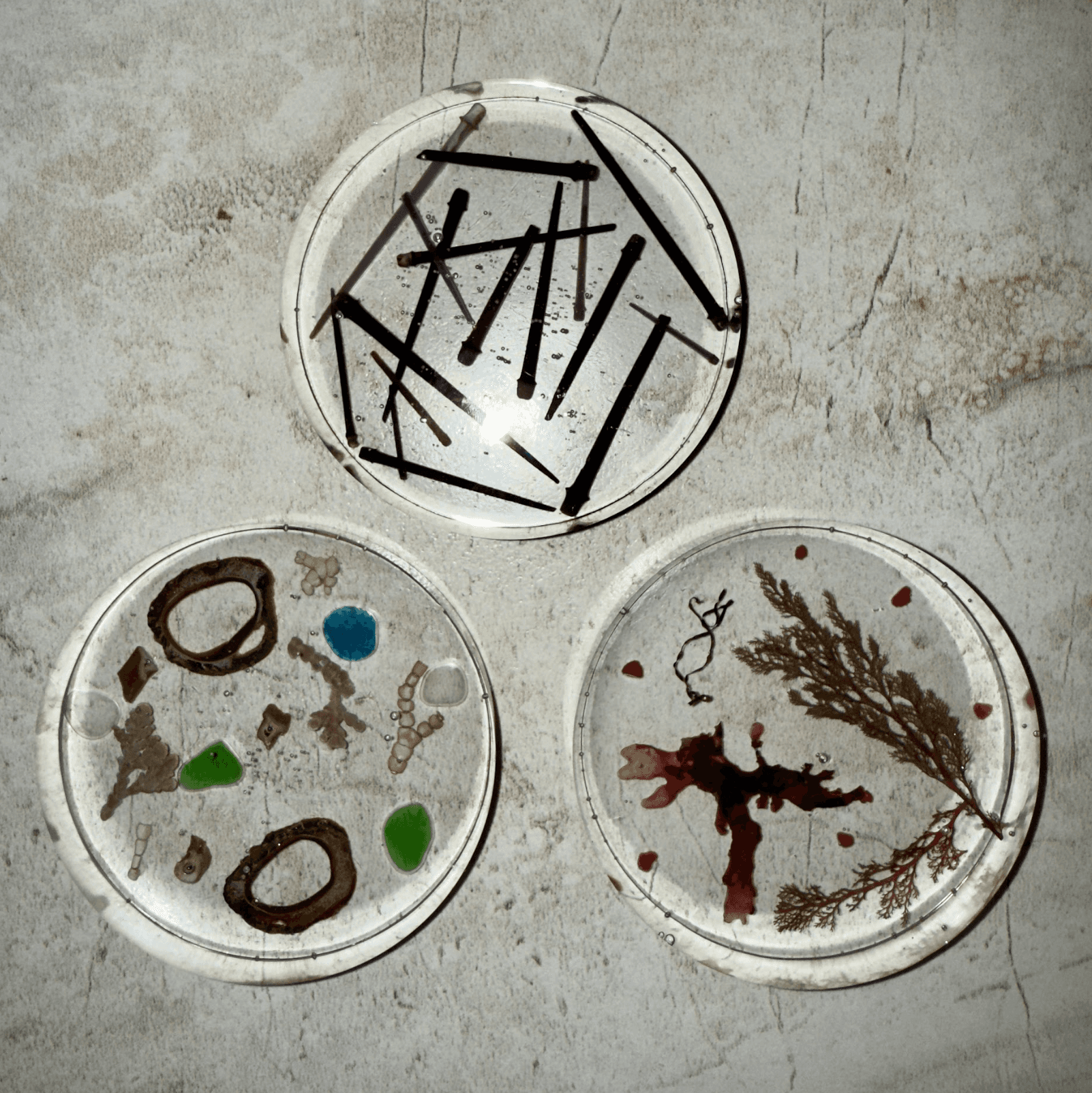
Lens 01: Urchin Spines
Sea urchin spines suspended in resin. Sharp, rhythmic, structurally precise: a grid the eye follows without instruction.
Lens 02: Seaweed and Carnelian
Pressed seaweed held alongside fragments of carnelian. Organic branching form against polished,
warm-toned stone.
Pressed seaweed held alongside fragments of carnelian. Organic branching form against polished, warm-toned stone.
Lens 03: Kelp Rings, Sea Glass, Corallina
Kelp rings, ocean-worn sea glass, and white corallina. Each material shaped by tide and time, gathered from the same stretch of coast.
Kaleidoscope, Prompts, Foldout, Notebook
To look through, reflect with, read from, and write in. No required sequence; the prompts invite, they don't instruct.
Japanese Paper
One material, two jobs: folded into an envelope to hold the prompt cards, and wrapped as a cover for
the kaleidoscope.
One material, two jobs: folded into an envelope to hold the prompt cards, and wrapped as a cover for the kaleidoscope.
PROCESS
Making the lenses
Each lens begins with gathered material: specimens collected from the California coast, dried, and arranged inside silicone molds before resin is poured.
The arrangement decisions matter more than they first seem. Density, layering, what sits at the surface and what recedes: each choice changes what a viewer encounters first and what they find after staying longer. I ran multiple iterations across all twelve mold wells before settling on three distinct lenses with different material characters.
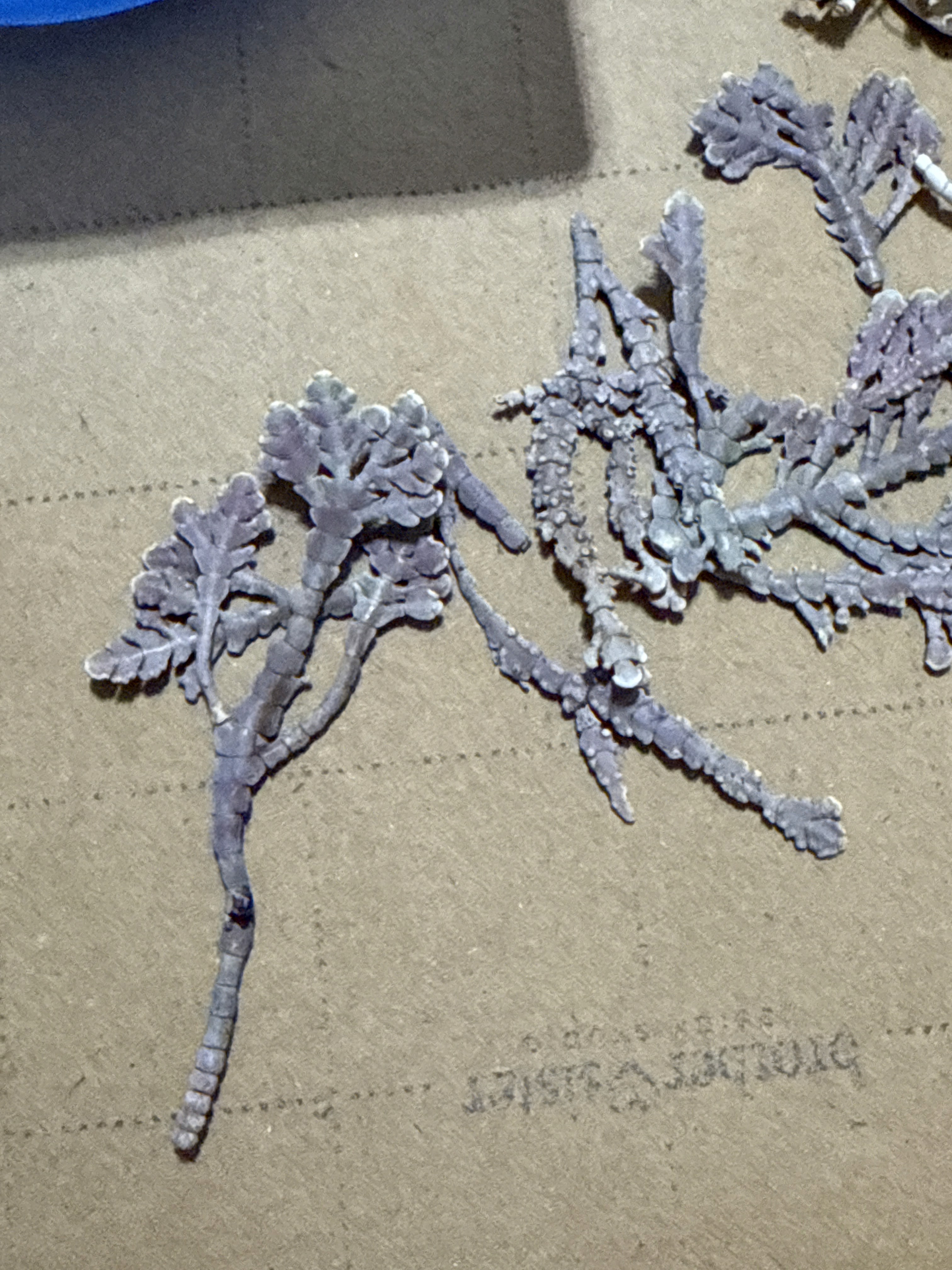
Specimens on a flat cardboard surface, showing their skeletal structure in detail.
The final three lenses came from testing density, depth, and what rewards a second look.

At gallery scale, the viewer moves to find the right angle. At lens scale, the lens moves to find the right light.
THE EDITION
Making twelve, selling three
The class brief asked for a limited edition of three. Two sold through word of mouth before the semester was out. That was enough signal to keep going. Over the summer I made nine more, bringing the total edition to twelve.
The price was a design decision as much as a business one. $60 placed the kit in the range of a considered gift: close to a book or a candle, not a toy and not a luxury. That framing shaped what the object needed to feel like assembled carefully enough that someone would be comfortable giving it or receiving it.
In fall 2025, the work was displayed in Hybrid Editions, an exhibit and pop-up shop at the Letterform Archive in San Francisco.
One more kit sold there.

Kits displayed at the Hybrid Editions Exhibition at the Letterform Archive.
REFLECTION
What I'd carry forward
Beyond the Surface answered the question it started with: the experience does translate to something personal and held. Taking the gallery context away places more weight on the object itself. That is either the point or a problem, depending on whether the specimen inside is strong enough to hold a person's attention alone.
Three kits sold at $60 each: two through word of mouth, one at the Letterform Archive. Nine remain. The work moved outside school and sold in a real venue, which is a different thing from being reviewed in class. Whether the remaining nine need a different audience, a different channel, or a different price is still an open question worth answering.
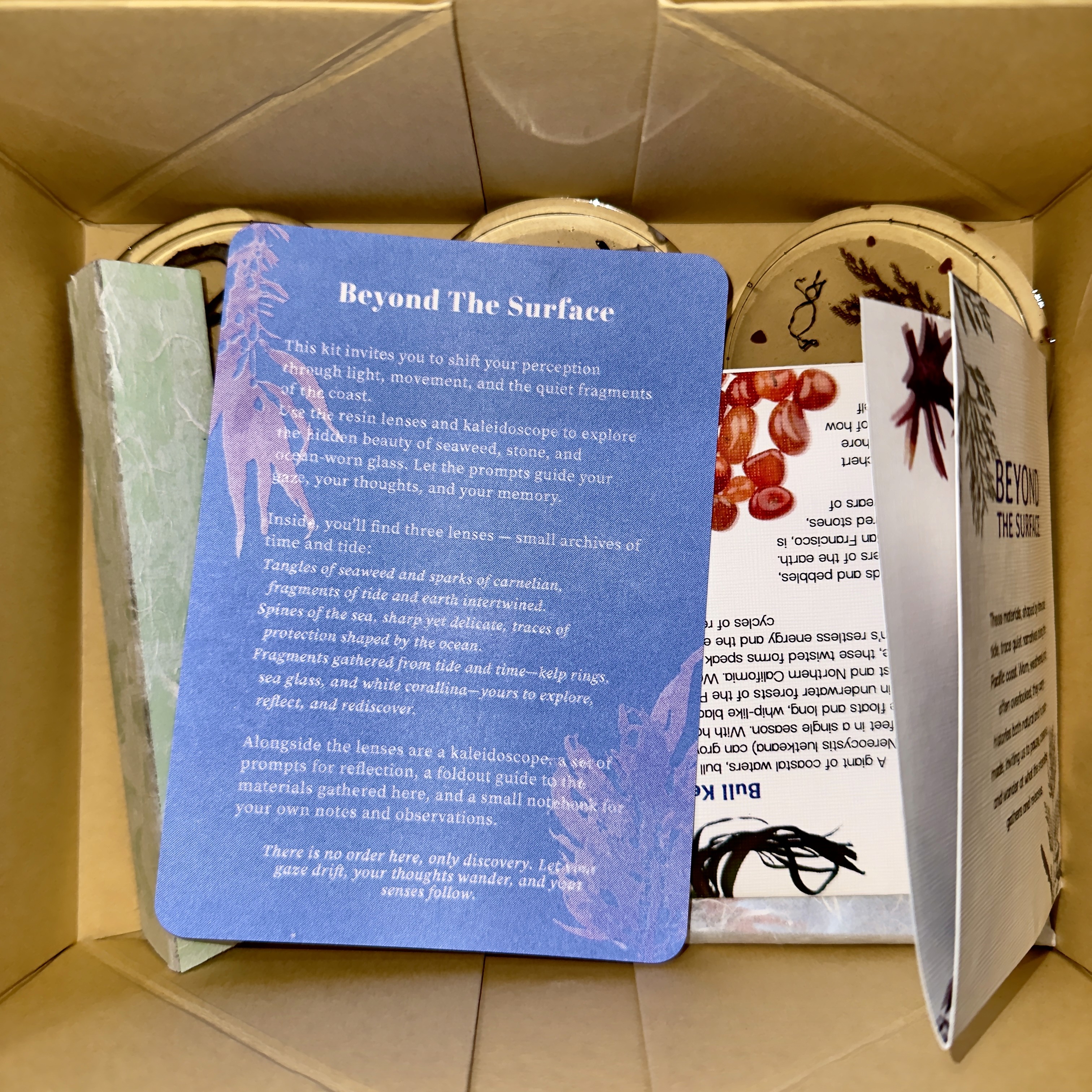
The prompt card is the first thing visible when the box opens. The lenses and foldout sit behind it, waiting.
PROCESS
PROCESS
Making the lenses
Each lens begins with gathered material: specimens collected from the California coast, dried, and arranged inside silicone molds before resin is poured.
The arrangement decisions matter more than they first seem. Density, layering, what sits at the surface and what recedes: each choice changes what a viewer encounters first and what they find after staying longer. I ran multiple iterations across all twelve mold wells before settling on three distinct lenses with different material characters.
Specimens on a flat cardboard surface, showing their skeletal structure in detail.
The final three lenses came from testing density, depth, and what rewards a
second look.
The final three lenses came from testing density, depth, and what rewards a second look.
At gallery scale, the viewer moves to find the right angle. At lens scale, the lens moves to find the right light.
THE EDITION
THE EDITION
Making twelve, selling three
The class brief asked for a limited edition of three. Two sold through word of mouth before the semester was out. That was enough signal to keep going. Over the summer I made nine more, bringing the total edition to twelve.
The price was a design decision as much as a business one. $60 placed the kit in the range of a considered gift: close to a book or a candle, not a toy and not a luxury. That framing shaped what the object needed to feel like assembled carefully enough that someone would be comfortable giving it or
receiving it.
In fall 2025, the work was displayed in Hybrid Editions, an exhibit and pop-up shop at the Letterform Archive in San Francisco. One more kit sold there.
The class brief asked for a limited edition of three. Two sold through word of mouth before the semester was out. That was enough signal to keep going. Over the summer I made nine more, bringing the total edition to twelve.
The price was a design decision as much as a business one. $60 placed the kit in the range of a considered gift: close to a book or a candle, not a toy and not a luxury. That framing shaped what the object needed to feel like assembled carefully enough that someone would be comfortable giving it or receiving it.
In fall 2025, the work was displayed in Hybrid Editions, an exhibit and pop-up shop at the Letterform Archive in San Francisco. One more kit sold there.